|
Return Create A Forum - Home |
 |
--------------------------------------------------------- |
|
True Left |
 |
https://trueleft.createaforum.com |
|
--------------------------------------------------------- |
|
***************************************************** |
|
Return to: Mythical World |
|
***************************************************** |
|
#Post#: 4381-------------------------------------------------- |
|
Aryan and Turanian Diffussion Video Series |
|
By: guest5 Date: February 21, 2021, 4:19 pm |
|
--------------------------------------------------------- |
|
I will upload the image assets for the Aryan and Turanian |
|
diffusion video series I'm working on here. Aryanists have |
|
permission to use them for their projects and I also welcome any |
|
constructive criticism. I would also appreciate any music |
|
suggestions Aryanists would wish to hear in that series? |
|
[img width=1280 |
|
height=1124] |
|
https://pro2-bar-s3-cdn-cf2.myportfolio.com/e5242cb6-11af-4654-bd56-08c186850e7… |
|
#Post#: 4464-------------------------------------------------- |
|
Re: Aryan and Turanian Diffussion Video Series |
|
By: Zea_mays Date: February 25, 2021, 9:04 pm |
|
--------------------------------------------------------- |
|
I would be careful with the color scheme. Anatolia was |
|
agricultural at a very early date: |
|
https://commons.wikimedia.org/wiki/File:Expansion_n%C3%A9olithique.png |
|
There is also the BMAC culture, who were agricultural. |
|
Unfortunately, given their proximity to the northern Turanian |
|
cultures, they were probably one of the first in the region to |
|
be besieged by Turanian culture and genetic admixture. |
|
https://en.wikipedia.org/wiki/File:Indo-Iranian_origins.png |
|
[quote]He explains this by proposing that Indo-Aryan speakers |
|
probably formed the vanguard of the movement into south-central |
|
Asia and many of the BMAC loanwords which entered Iranian may |
|
have been mediated through Indo-Aryan.[31]:306 Michael Witzel |
|
points out that the borrowed vocabulary includes words from |
|
agriculture, village and town life, flora and fauna, ritual and |
|
religion, so providing evidence for the acculturation of |
|
Indo-Iranian speakers into the world of urban |
|
civilisation.[30][/quote] |
|
https://en.wikipedia.org/wiki/Bactria%E2%80%93Margiana_Archaeological_Complex#P… |
|
[quote]A follow-up study by Narasimhan and co-authors (2019) |
|
suggested the primary BMAC population largely derived from |
|
preceding local Copper Age peoples who were in turn related to |
|
prehistoric farmers from the Iranian plateau and to a lesser |
|
extent early Anatolian farmers and hunter-gatherers from Western |
|
Siberia, and they did not contribute substantially to later |
|
populations further south in the Indus Valley. They found no |
|
evidence that the samples extracted from the BMAC sites derived |
|
any part of their ancestry from Yamnaya culture people, who are |
|
seen as Proto-Indo-Europeans in the Kurgan hypothesis, the most |
|
influential theory on the Proto-Indo-European |
|
homeland.[32][/quote] |
|
https://en.wikipedia.org/wiki/Bactria%E2%80%93Margiana_Archaeological_Complex#G… |
|
(In other words, the Turanian 'Indo-Iranian' speakers borrowed |
|
words for agriculture and sedentary civilization from the BMAC |
|
people.) |
|
And, of course, there is the Indus Valley civilization which was |
|
destroyed by the Turanian Vedic invaders. |
|
https://commons.wikimedia.org/wiki/File:Indus_Valley_Civilization,_Early_Phase_… |
|
https://commons.wikimedia.org/wiki/File:Indus_Valley_Civilization,_Mature_Phase… |
|
Central Arabia is colored green while it consisted of pastoral |
|
nomads. |
|
One more consideration--while I don't know the extent of what |
|
the video series covers, Iran vs Turan may be the origin of |
|
these words we use to describe races, we must not forget the |
|
Aryan vs Turanian struggle is much wider than just this |
|
geographic region. |
|
#Post#: 4471-------------------------------------------------- |
|
Re: Aryan and Turanian Diffussion Video Series |
|
By: guest5 Date: February 25, 2021, 10:59 pm |
|
--------------------------------------------------------- |
|
[quote]I would be careful with the color scheme. Anatolia was |
|
agricultural at a very early date:[/quote] |
|
Noted, thank you. |
|
[quote]Central Arabia is colored green while it consisted of |
|
pastoral nomads.[/quote] |
|
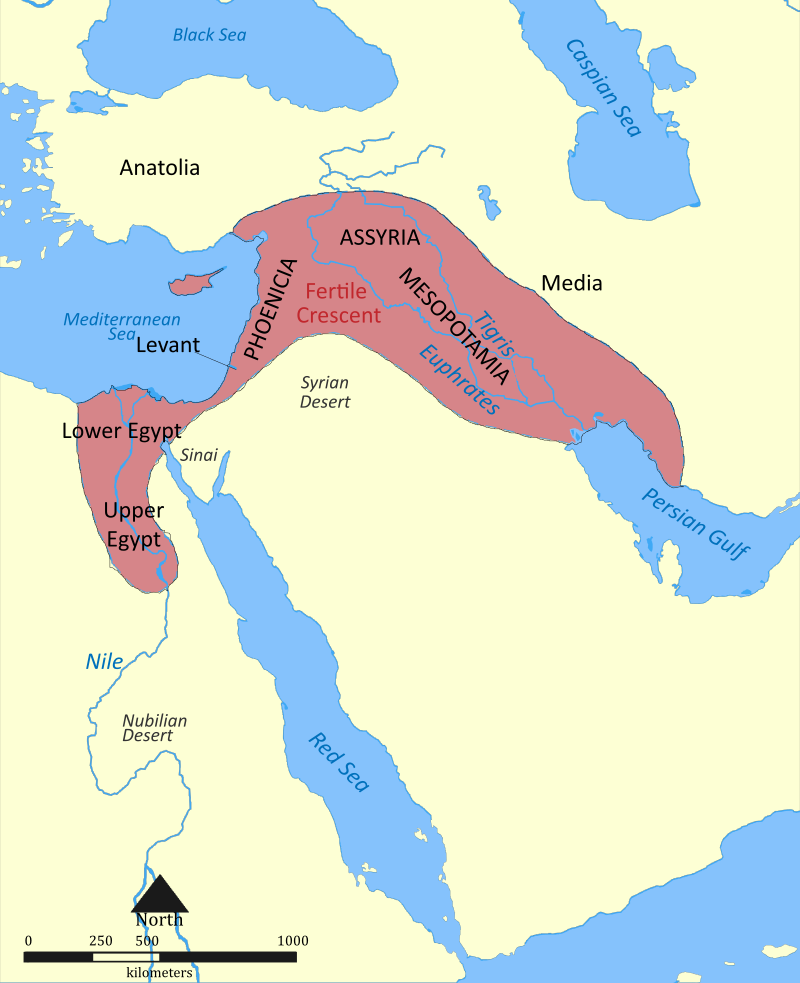
I did so because I used the map which shows the largest area |
|
that the Fertile Crescent covered: |
|
https://upload.wikimedia.org/wikipedia/commons/thumb/7/7b/Map_of_fertile_cresce… |
|
https://en.wikipedia.org/wiki/Fertile_Crescent |
|
[quote]One more consideration--while I don't know the extent of |
|
what the video series covers, Iran vs Turan may be the origin of |
|
these words we use to describe races, we must not forget the |
|
Aryan vs Turanian struggle is much wider than just this |
|
geographic region.[/quote] |
|
I was thinking of starting the series as far back as possible, |
|
perhaps in the same time frame as the "Cult of the Skulls" |
|
documentary: ? |
|
https://trueleft.createaforum.com/mythical-world/the-birth-of-civilisation-cult… |
|
Thank you for the input. Very helpful! |
|
#Post#: 4500-------------------------------------------------- |
|
Re: Aryan and Turanian Diffussion Video Series |
|
By: Zea_mays Date: February 27, 2021, 2:16 pm |
|
--------------------------------------------------------- |
|
Yes, the Fertile Crescent is arable, but the core of the Arabian |
|
peninsula (the bottom left corner on your map, in green), is |
|
arid desert: |
|
https://en.wikipedia.org/wiki/File:Ecoregion_PA1303.svg |
|
[quote]I was thinking of starting the series as far back as |
|
possible, perhaps in the same time frame as the "Cult of the |
|
Skulls" documentary: ? |
|
https://trueleft.createaforum.com/mythical-world/the-birth-of-civilisation-cult… |
|
I haven't had a chance to watch that video yet, but I think the |
|
culture in the link you post is probably the first known culture |
|
to practice agriculture at an early civilization level. But I |
|
wonder if the best approach isn't to necessarily focus on a |
|
single "first" place of agricultural origin. |
|
People in the Western world are likely aware of the Fertile |
|
Crescent as a "cradle of civilization" which eventually ended up |
|
diffusing west-ward. But have they ever heard of the Kuk swamp |
|
culture which had agriculture around 8,000 BC--during the same |
|
time as the Fertile Crescent? |
|
https://en.wikipedia.org/wiki/Kuk_Swamp |
|
Or the east-ward diffusion of agriculture into the Indosphere |
|
before the Cardium culture and Linear Pottery culture made it |
|
into "Europe"? |
|
7,000s BC: |
|
https://en.wikipedia.org/wiki/Mehrgarh |
|
https://en.wikipedia.org/wiki/Bhirrana |
|
https://en.wikipedia.org/wiki/File:Early_Neolithic_sites_in_the_Near_East_and_S… |
|
vs 6,000s BC: |
|
https://commons.wikimedia.org/wiki/File:Expansion_n%C3%A9olithique.png |
|
Looking more broadly at the archaeological evidence of plant |
|
domestication, it seems all throughout the world there is |
|
evidence of domestication from around 10,000-8,000 BC--in all |
|
geographic regions. (Due to the end of the ice age and new |
|
environmental conditions making things favorable for |
|
agriculture). Evidence has not necessarily been found of |
|
wide-scale agricultural civilizations in all areas. This could |
|
mean either such evidence has simply not yet been found (due to |
|
the fact that for hundreds of years archaeologists have focused |
|
almost exclusively on 'Europe' and the Fertile Crescent, rather |
|
than elsewhere), or that various small groups of |
|
hunter-gatherers around the world heroically rejected hunting |
|
and began farming, but their cultivation efforts did not reach |
|
critical mass to reach a 'civilization' level until later. |
|
Going civilization-by-civilization on a timeline misses this |
|
sort of big picture of global transition to agriculture (i.e. |
|
global Aryanization process happening concurrently, but with |
|
different levels of success/speed in different regions, likely |
|
due to various geographic/environmental and demographic |
|
reasons). |
|
These are the things that it is most important to stress and |
|
teach to people--facts and cultures they have never even heard |
|
of before, in order to challenge the Western Eurocentric |
|
education that "their culture" was the first, best, and only one |
|
to have deeply ancient predecessors. |
|
By taking a broader approach examining all early origins of |
|
agriculture at once, we can stress the similarity of all |
|
agricultural societies worldwide (regardless of ethnicity), |
|
while stressing how all these societies faced a parallel |
|
struggle against hunters who refused to embrace agriculture and |
|
herders (who became technologically more advanced than the |
|
hunters, but adopted a way of life alien to sedentary and |
|
plant-based agriculturalists). |
|
This presents a completely unique narrative of history and |
|
unique way of framing civilization. |
|
Due to different climatic and geographic factors, some |
|
civilizations and domestication events came earlier or later |
|
than others (not all areas had the same level of arability in |
|
the soil or levels of rainfall; some likely faced stronger |
|
pressures from hunter-gatherers or early herders who destroyed |
|
their efforts to establish agriculture; some areas did not have |
|
as many edible plants to domesticate; and different crops |
|
offered different levels of nutrition, perhaps making it more |
|
difficult to make the full leap to an entirely |
|
agricultural-based lifestyle, etc.). But in all regions of the |
|
globe, we've all had the thematically-identical story of 10,000 |
|
years of struggle against hunters and herders. |
|
It would of course be fine to explain the etymology of Aryan vs |
|
Turanian before zooming back out to the big picture. But these |
|
are just my opinions for how such a series would be most useful. |
|
#Post#: 4821-------------------------------------------------- |
|
Re: Aryan and Turanian Diffussion Video Series |
|
By: Zea_mays Date: March 14, 2021, 6:14 pm |
|
--------------------------------------------------------- |
|
I came across this article--apparently one of the reasons why |
|
West African/Sahel plant domestication has traditionally been |
|
overlooked (besides Eurocentrism) is because it did not fit in |
|
with the traditional "center of origin" model developed by |
|
Westerners. This construct basically considered the Fertile |
|
Crescent to be its perfect example, but in reality the |
|
archaeological evidence shows the Fertile Crescent doesn't fit |
|
the traditional model either. |
|
I don't think "center of origin" is necessarily a bad concept, |
|
but obviously we should keep in mind the Fertile |
|
Crescent-centric connotations this term has traditionally had, |
|
and do our best to promote a broader and more-encompassing |
|
meaning. |
|
http://archaeobotanist.blogspot.com/2011/12/de-centering-fertile-crescent.html |
|
Also, regarding Turanian diffusion, a major theme should focus |
|
around how Proto-Indo-European language diffusion is the classic |
|
example of Turanian diffusion. For far too long people have been |
|
associating Indo-European/"Indo-Aryan" languages with the Aryan |
|
race. |
|
https://en.wikipedia.org/wiki/Kurgan_hypothesis |
|
https://en.wikipedia.org/wiki/Yamnaya_culture |
|
I remember some bloggers calling the Sintashta culture and |
|
Andronovo culture (Turanians) the "original Aryans", because |
|
they were likely the direct predecessors or participants in the |
|
Vedic Invasion of the Indus Valley Civilization (actual Aryans). |
|
https://en.wikipedia.org/wiki/Sintashta_culture |
|
https://en.wikipedia.org/wiki/Andronovo_culture |
|
The existence and migration of the swastika at a much earlier |
|
date than the Vedic and Yamnaya invasions should be enough to |
|
debunk the association of the |
|
Vedic/Yamnaya/Sintashta/Andronovo/Indo-European-speaker |
|
diffusion with the "Aryans". But, of course, stressing Turanian |
|
diffusion over and over again visually on a map is powerful as |
|
well: |
|
https://en.wikipedia.org/wiki/File:IE_expansion.png |
|
https://commons.wikimedia.org/wiki/File:Indo-Iranian_origins.png |
|
https://en.wikipedia.org/wiki/File:Scythia-Parthia_100_BC.png |
|
https://en.wikipedia.org/wiki/Khazars |
|
https://en.wikipedia.org/wiki/File:Mongol_Empire_map.gif |
|
#Post#: 4907-------------------------------------------------- |
|
Re: Aryan and Turanian Diffussion Video Series |
|
By: guest5 Date: March 17, 2021, 11:58 pm |
|
--------------------------------------------------------- |
|
[quote]But these are just my opinions for how such a series |
|
would be most useful.[/quote] |
|
Thank you for sharing them! I have even more to think about now. |
|
I'll get back to this thread as I make progress and questions |
|
arise. |
|
#Post#: 16867-------------------------------------------------- |
|
No Dugin, Turanians did not Invent the Wheel! |
|
By: guest78 Date: December 4, 2022, 4:43 pm |
|
--------------------------------------------------------- |
|
[quote]By what means were they able to extend their influence to |
|
practically the whole of Eurasia? The wheel. We can see how this |
|
process of the Indo-Europeans� expansion continued into the |
|
colonial period. Even today�s cars are part of the Turanian |
|
worldview, the new chariots. This is the line of the expansion |
|
of chariots, the expansion of martial style, the Indo-European |
|
languages, and the Indo-European political system � which is |
|
patriarchal, masculine, and androcratic.[/quote] |
|
http://www.4pt.su/en/content/turan-key-understanding-russian-logos |
|
Aryans invented the wheel: |
|
[quote]The wheel is believed to date to the Neolithic period |
|
(about 12,000 years ago) appearing at different stages in |
|
different civilizations. The earliest use was probably for |
|
turning pottery; Mesopotamian diagrams show that use as early as |
|
3500 B.C.[/quote] |
|
Turanians stole the idea and made it more complex in order to |
|
give them an unfair advantage in war: |
|
[quote]A wheel with spokes first appeared on Sumarian chariots |
|
around 2000 B.C., and wheels seem to have developed in Europe by |
|
1400 B.C. After about 400 B.C. Nubians used wheels to turn |
|
pottery and as water wheels. The earliest record of a |
|
wheelbarrow comes from China in the Three Kingdoms period (A.D. |
|
184-280).[/quote] |
|
https://www.farmcollector.com/equipment/invention-of-the-wheel-zmmz13augzbea/ |
|
#Post#: 31273-------------------------------------------------- |
|
Re: Aryan and Turanian Diffussion Video Series |
|
By: SodaPop Date: November 2, 2025, 8:10 pm |
|
--------------------------------------------------------- |
|
I am finding this lecture to be very interesting, and I think |
|
you folks will as well. Would love to hear RP's and 90SRF |
|
feedback and insights in regard to the points made in this |
|
lecture! (I am only 32 minutes in at time of posting here). |
|
Secret History #14: Legacy of the Steppes |
|
[quote]In this Friday, October 31, 2025 lecture to his Beijing |
|
high school students, Professor Jiang explains that the people |
|
of the steppes were history's greatest conquerors because they |
|
were the most open, energetic, cohesive. |
|
Notes and References: |
|
1. The Language of the Goddess by Marija Gimbutas |
|
2. The Civilization of the Goddess by Marija Gimbutas |
|
3. Sex at Dawn by Christopher Ryan and Cacilda Jetha |
|
4. The Horse the Wheel and Language by David Anthony[/quote] |
|
https://www.youtube.com/watch?v=JpTI2gFYWrU |
|
***************************************************** |



.png)
.png)