|
Return Create A Forum - Home |
 |
--------------------------------------------------------- |
|
True Left |
 |
https://trueleft.createaforum.com |
|
--------------------------------------------------------- |
|
***************************************************** |
|
Return to: Colonial Era |
|
***************************************************** |
|
#Post#: 12806-------------------------------------------------- |
|
Re: Russia, the Last Colonial Empire |
|
By: guest55 Date: April 13, 2022, 10:35 pm |
|
--------------------------------------------------------- |
|
Trivia: Many Polish folk songs are in Lydian mode.... |
|
#Post#: 12899-------------------------------------------------- |
|
Re: Russia, the Last Colonial Empire |
|
By: rp Date: April 19, 2022, 3:05 am |
|
--------------------------------------------------------- |
|
Westernized "Asian" YouTuber makes video claiming that Russia |
|
and China have no border disputes, and that China can't claim |
|
Outer Manchuria because it is "ethnically and culturally |
|
Russian/Jewish".: |
|
https://youtu.be/8fJ7FuQByjc |
|
#Post#: 13558-------------------------------------------------- |
|
How Russia Became an Empire |
|
By: guest55 Date: May 22, 2022, 11:32 pm |
|
--------------------------------------------------------- |
|
How Russia Became an Empire - Great Northern War DOCUMENTARY |
|
[quote]Kings and Generals animated historical animated |
|
documentary series on the Early Modern history continues with a |
|
video on the Great Northern War in which we will talk about the |
|
conflict in which the Swedish king Charles XII attempted to win |
|
against an alliance of Russia, Denmark, Prussia, |
|
Polish-Lithuanian Commonwealth and the others. This conflict led |
|
to the rise of the Russian empire under Peter I, the fall of the |
|
Swedish empire and the destabilization of the Polish-Lithuanian |
|
Commonwealth. We will cover all the major battles of this |
|
conflict, including Gedebusch, Gangut, Narva, Poltava, Kliszow, |
|
Fraustadt, Lesnaya and many more.[/quote] |
|
https://www.youtube.com/watch?v=rDCFxgHDncc |
|
#Post#: 13645-------------------------------------------------- |
|
Why is the Russian army so brutal? | Military historian Antony B |
|
eevor |
|
By: guest55 Date: May 25, 2022, 4:59 pm |
|
--------------------------------------------------------- |
|
Why is the Russian army so brutal? | Military historian Antony |
|
Beevor |
|
[quote]There seems no doubt that atrocities and war crimes have |
|
been committed on a massive scale by Russian soldiers in |
|
Ukraine. Why is the Russian army so brutal? We are joined by one |
|
of Britain's foremost historians Anthony Beevor whose new book |
|
is �Russia: Revolution and Civil War 1917-1921�[/quote] |
|
https://www.youtube.com/watch?v=UvhI_mS1zx8 |
|
#Post#: 13916-------------------------------------------------- |
|
Re: Russia, the Last Colonial Empire |
|
By: 90sRetroFan Date: June 7, 2022, 7:52 pm |
|
--------------------------------------------------------- |
|
https://www.eurocanadians.ca/wp-content/uploads/2022/06/985bbeaceb4aed30.jpg |
|
#Post#: 15079-------------------------------------------------- |
|
Re: Russia, the Last Colonial Empire |
|
By: 90sRetroFan Date: August 10, 2022, 9:12 pm |
|
--------------------------------------------------------- |
|
Continuing from: |
|
https://trueleft.createaforum.com/true-left-vs-false-left/war/msg15051/#msg15051 |
|
[quote] |
|
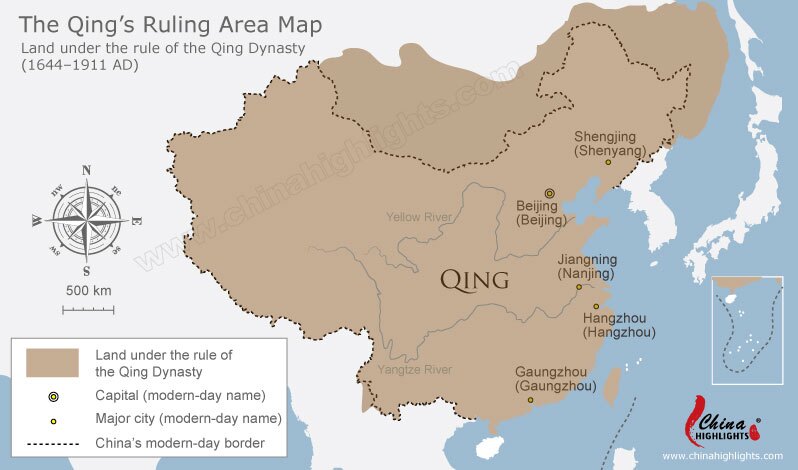
https://images.chinahighlights.com/allpicture/2021/11/fa706736f71647e980a59460.… |
|
besides Outer Manchuria being directly stolen by Russia, who was |
|
really behind the breakaway of Mongolia? Answer: |
|
https://en.wikipedia.org/wiki/Mongolian_Revolution_of_1921 |
|
[quote]Although nominally independent, the Mongolian People's |
|
Republic was a satellite state of the Soviet Union until a third |
|
Mongolian revolution in January 1990. |
|
... |
|
Early in 1919, Grigori Semyonov, a White Guard general, had |
|
assembled a group of Buryats and Inner Mongols in Siberia for |
|
the formation of a pan-Mongolian state. The Khalkhas were |
|
invited to join, but they refused. Semyonov threatened an |
|
invasion to force them to participate. This threat galvanized |
|
the lay princes, who now saw a larger opportunity: the end of |
|
theocratic rule. In August, the Mongolian Foreign Minister |
|
approached Chen Yi with a message from the "representatives of |
|
the four aimags" (i.e., the Khalkhas) with a request for |
|
military assistance against Semyonov. More importantly, perhaps, |
|
it contained a declaration that the Khalkhas were unanimous in |
|
their desire to abolish autonomy and restore the previous Qing |
|
system. |
|
... |
|
Russian expatriates in Urga had elected a revolutionary |
|
"Municipal Duma", headed by Bolshevik sympathisers, which had |
|
learned of the Consular Hill group. In early March 1920, the |
|
Duma was sending one of its members, I. Sorokovikov, to Irkutsk. |
|
It decided that he should also take a report with him about |
|
these Mongolians. Sorokovikov met with representatives of the |
|
two groups. On his return to Urga in June, he met with them |
|
again, promising that the Soviet government would provide |
|
"assistance of all kinds" to the Mongolian "workers". He invited |
|
them to send representatives to Russia for further |
|
discussions.[20] |
|
A new sense of purposefulness now animated both groups. They had |
|
maintained a wary distance from one another, perhaps because of |
|
their different agendas�the Consular Hill group espousing a |
|
rather progressive social program while the East Urga group was |
|
more nationalistic in its goals�and there had been little |
|
cooperation between the two. The Soviet invitation changed that. |
|
The two groups met on 25 June, and formed the "Mongolian |
|
People's Party" (renamed later the Mongolian People's |
|
Revolutionary Party), adopted a "Party Oath", and agreed to send |
|
Danzan and Choibalsan as delegates to Russia.[21] |
|
Danzan and Choibalsan arrived in Verkhneudinsk, the capital of |
|
the pro-Soviet Far Eastern Republic, in the first part of July. |
|
They met with Boris Shumyatsky, then acting head of the |
|
government. Shumyatsky knew little about them, and for three |
|
weeks dodged their demands for a speedy Soviet decision whether |
|
or not to provide military assistance to the Mongolians against |
|
the Chinese. Finally, perhaps at Shumyatsky's suggestion, they |
|
sent a telegram to members of the MPP in Urga with a coded |
|
message that they should obtain a letter, stamped with the seal |
|
of the Bogd Khan, formally requesting Soviet assistance. |
|
... |
|
After several meetings with Soviet authorities in Omsk, the |
|
Mongolian delegation was told that such an important matter |
|
could be decided only in Moscow. Danzan and his compatriots left |
|
for Moscow, arriving in about mid-September. For over a month |
|
they met frequently but inconclusively with Soviet and Comintern |
|
officials. |
|
A White Guard invasion of Mongolia under Baron Roman von |
|
Ungern-Sternberg, however, forced the Soviet government into |
|
action. In late October to early November 1920, around 1,000 |
|
troops under his command had laid siege to the Chinese garrison |
|
in Urga numbered about 7,000. |
|
... |
|
The Chinese garrison in Urga, however, successfully repulsed von |
|
Ungern-Sternberg's attack. This altered the Soviet strategy. The |
|
army of the Far Eastern Republic was already exhausted. Only the |
|
Fifth Army of the Reds was left on the eastern front, and |
|
already by late 1920 many of its more experienced units had |
|
either been demobilized, or sent west to fight in Poland, or |
|
assigned to the labor front, where they were needed to repair |
|
the badly damaged Siberian economy.[27] Thus, when the Chinese |
|
repulsed von Ungern-Sternberg, the Soviets on 28 November |
|
withdrew their order for an invasion.[28] |
|
However, von Ungern-Sternberg launched a second attack in early |
|
February 1921. This time he was successful. Chinese soldiers and |
|
civilians fled the city in panic. With the fall of Urga, the |
|
Chinese administrations and military garrisons at Uliastai and |
|
Khovd departed quickly for Xinjiang. The Bogd Khan was restored |
|
as Mongolian monarch by von Ungern-Sternberg. The Bogd Khan and |
|
his government were also restored, and a solemn ceremony held on |
|
22 February. |
|
... |
|
News of von Ungern-Sternberg's seizure of Urga again influenced |
|
Soviet plans. A plenary session of the Comintern in Irkutsk on |
|
February 10 passed a formal resolution to aid the "struggle of |
|
the Mongolian people for liberation and independence with money, |
|
guns and military instructors".[29] With Soviet support, the MPP |
|
was now a serious contender for power. The Party, hitherto |
|
rather amorphous and loosely connected, required better |
|
organisational and ideological definition. A party conference |
|
(subsequently regarded as the first congress of the Mongolian |
|
People's Revolutionary Party) met secretly on 1�3 March at |
|
Kyakhta. The first session was attended by 17 persons, the |
|
second by 26. The Party approved the creation of an army command |
|
staff headed by S�khbaatar with two Russian advisors, elected a |
|
central committee chaired by Danzan with one representative from |
|
the Comintern, and adopted a party manifesto composed by the |
|
progressive Buryat Jamsrangiin Tseveen.[30] On 13 March, a |
|
provisional government of seven men was formed, soon to be |
|
headed by Bodoo. On 18 March, the Mongolian guerrilla army, its |
|
ranks now enlarged to 400 through recruitment and conscription, |
|
seized the Chinese garrison at Kyakhta Maimaicheng (the Chinese |
|
portion of Kyakhta). A new confidence now animated the Party. It |
|
issued a proclamation announcing the formation of the |
|
government, the expulsion of the Chinese, and the promise to |
|
convene a congress of "representatives of the masses" to elect a |
|
permanent government.[31][/quote] |
|
About ultra-Turanist von Ungern-Sternberg: |
|
https://en.wikipedia.org/wiki/Roman_von_Ungern-Sternberg |
|
[quote]He also had Hungarian roots and claimed descent from Batu |
|
Khan, Genghis Khan's grandson, which played a role in his dream |
|
of reviving the Mongol Empire.[4] |
|
... |
|
As a boy, Ungern-Sternberg was noted for being such a ferocious |
|
bully that even the other bullies feared him and several parents |
|
forbade their children from playing with him as he was a |
|
"terror".[7] Ungern was well known for his love of torturing |
|
animals, and at the age of 12 he tried to strangle to death his |
|
cousin's pet owl for no particularly good reason other than his |
|
cruelty towards animals.[7] |
|
... |
|
Ungern-Sternberg believed that return to monarchies in Europe |
|
was possible with the aid of "cavalry people" � meaning Russian |
|
Cossacks, Buryats, Tatars, Mongols, Kyrgyz, Kalmyks, etc.[10] |
|
... |
|
In 1905, he left the school to join the fighting in eastern |
|
Russia during the Russo-Japanese War, but it is unclear whether |
|
he participated in operations against the Japanese or if all |
|
military operations had ceased before his arrival in |
|
Manchuria,[13] although he was awarded the Russo-Japanese War |
|
Medal in 1913.[14] |
|
... |
|
There is a widespread view that he was viewed by Mongols as the |
|
incarnation of the "God of War" (the figure of Jamsaran in |
|
Tibetan and Mongol folklore). Although many Mongols may have |
|
believed him to be a deity or at the very least a re-incarnation |
|
of Genghis Khan, Ungern was never officially proclaimed to be |
|
any of those incarnations.[20] |
|
After graduating, he served as an officer in eastern Siberia in |
|
the 1st Argunsky and then in the 1st Amursky Cossack regiments, |
|
where he became enthralled with the lifestyle of nomadic |
|
peoples, such as the Mongols and Buryats. |
|
... |
|
Ungern was an excellent horseman, who earned the respect of the |
|
Mongols and the Buryats because of his skill at riding and |
|
fighting from a horse and for being equally adept at using both |
|
a gun and his sword.[25][/quote] |
|
#Post#: 15214-------------------------------------------------- |
|
Re: Russia, the Last Colonial Empire |
|
By: guest78 Date: August 19, 2022, 1:43 am |
|
--------------------------------------------------------- |
|
The World's Last Colonial Empire: Collapse or Survival? |
|
[quote]Is Russian society ready to make the full sacrifice for |
|
the country's superpower? Or, is it however exactly the |
|
opposite?[/quote] |
|
https://www.youtube.com/watch?v=H5p--KQ0ly0 |
|
Another excellent video from the Good Times Bad Times channel. |
|
#Post#: 15778-------------------------------------------------- |
|
Re: Russia, the Last Colonial Empire |
|
By: 90sRetroFan Date: September 23, 2022, 3:23 am |
|
--------------------------------------------------------- |
|
A useful summary: |
|
https://chinapower.csis.org/china-russia-relationship-weaknesses-mistrust/ |
|
[quote]In the 19th century, the Russian Empire was party to many |
|
of the �unequal treaties� that compelled China to hand over |
|
territory, money, and other spoils to European powers. The 1858 |
|
Treaty of Aigun and 1860 Treaty of Peking were particularly |
|
harsh, forcing China to forfeit approximately 1 million square |
|
kilometers (km) of territory to the Russian Empire. |
|
Treaty of Kulja (1851) |
|
in Xinjiang. |
|
Treaty of Aigun (1858) |
|
kilometers of land to Russia. |
|
Treaty of Tientsin (1858) |
|
treaty ports by sea, as well as expanded extraterritoriality in |
|
treaty ports. Russia also established a legation in Beijing. |
|
Treaty of Peking (1860) |
|
northeastern territory to Russia. |
|
Treaty of St. Petersburg (1881) |
|
silver rubles. Russia expanded its consular network in Western |
|
China and Russian traders were allowed duty-free trade in |
|
Xinjiang and Mongolia. |
|
Li-Lobanov Treaty (1896) |
|
Chinese ports. Russia was permitted to build a railway through |
|
Heilongjiang and Jilin Provinces and station troops to protect |
|
it. China reduced tariff rates on Russian goods. |
|
Convention for the Lease of the Liaotung Peninsula (1898) |
|
was granted the lease to Port Arthur (in modern day Dalian) and |
|
Russian railways were permitted to extend to the port. |
|
Boxer Protocol (1900) |
|
of silver to 8 powers, with the lion�s share (29 percent) going |
|
to Russia. |
|
Sino-Soviet Border Conflicts (1968-1969) |
|
engaged in multiple border skirmishes, including at Zhenbao |
|
Island, where 72 were killed and 68 wounded on the Chinese |
|
side.[/quote] |
|
NEVER FORGIVE. NEVER FORGET. |
|
#Post#: 16086-------------------------------------------------- |
|
Re: Russia, the Last Colonial Empire |
|
By: 90sRetroFan Date: October 17, 2022, 2:46 am |
|
--------------------------------------------------------- |
|
Today let's look at: |
|
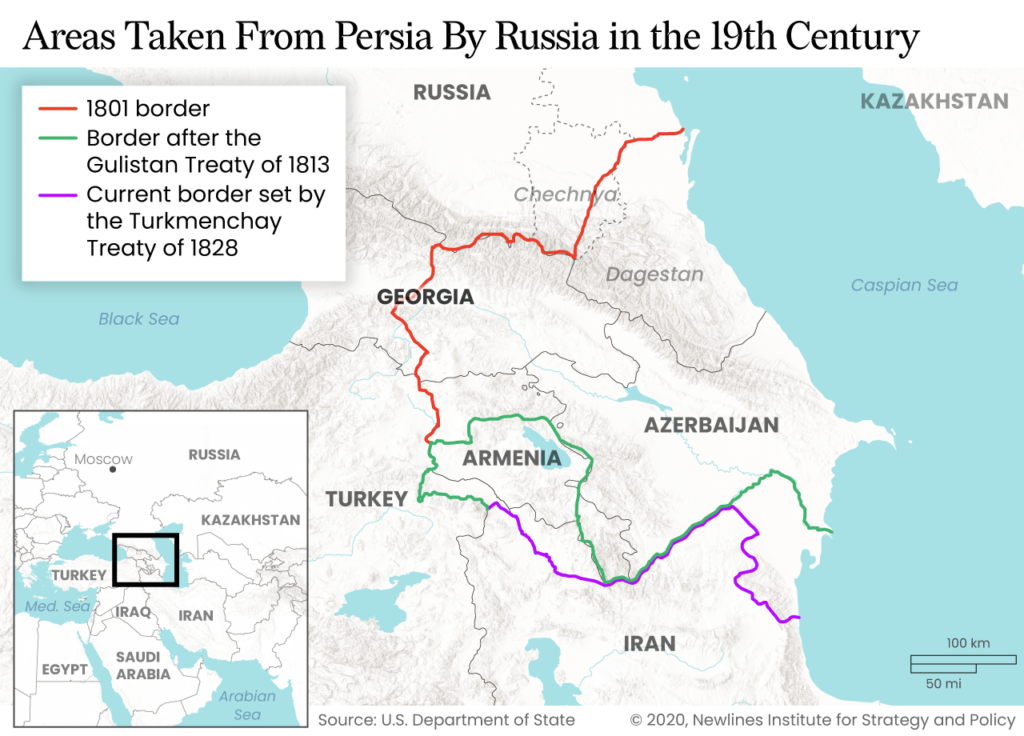
https://newlinesinstitute.org/wp-content/uploads/20201217-Caucasus-4-AreasTaken… |
|
https://en.wikipedia.org/wiki/Russo-Persian_War_(1722%E2%80%931723) |
|
[quote]The Russo-Persian War of 1722�1723, known in Russian |
|
historiography as the Persian campaign of Peter the Great,[9] |
|
was a war between the Russian Empire and Safavid Iran, triggered |
|
by the tsar's attempt to expand Russian influence in the Caspian |
|
and Caucasus regions and to prevent its rival, the Ottoman |
|
Empire, from territorial gains in the region at the expense of |
|
declining Safavid Iran. |
|
The Russian victory ratified for Safavid Iran's cession of their |
|
territories in the North Caucasus, South Caucasus and |
|
contemporary northern Iran to Russia, comprising the cities of |
|
Derbent (southern Dagestan) and Baku and their nearby |
|
surrounding lands, as well as the provinces of Gilan, Shirvan, |
|
Mazandaran and Astarabad conform the Treaty of Saint Petersburg |
|
(1723).[8][/quote] |
|
https://en.wikipedia.org/wiki/Treaty_of_Saint_Petersburg_(1723) |
|
[quote]The Treaty of Saint Petersburg of 23 September [O.S. 12 |
|
September] 1723[1][2] concluded the Russo-Persian War of |
|
1722-1723 between Imperial Russia and Safavid Iran. It ratified |
|
Iran's forced ceding of its territories in the North Caucasus, |
|
South Caucasus, and contemporary mainland Northern Iran, |
|
comprising Derbent (Dagestan), Baku, the respective surrounding |
|
lands of Shirvan, as well as the provinces of Gilan, Mazandaran, |
|
and Astarabad.[3] The treaty further specified that the Iranian |
|
king would receive Russian troops for domestic peacekeeping.[4] |
|
As the Cambridge History of Iran states; |
|
"On 23 September 1723, his ambassador in Saint Petersburg, |
|
Ismail Beg, signed a humiliating treaty which stipulated that |
|
the Tsar would accord the shah friendship and help against |
|
rebels and would maintain the shah in tranquil possession of his |
|
throne. In return the shah promised to permanently cede to |
|
Russia: ... the towns of Darband (Derbent), Baku, with all the |
|
territories belonging to them, as well as the provinces: Gilan, |
|
Mazandaran, and Astarabad[/quote] |
|
[quote]Peter was determined to keep the newly conquered Iranian |
|
territories in the Caucasus and northern mainland Iran. However, |
|
he was concerned about their safety and thus ordered the |
|
fortifications at Derbent and Holy Cross to be strengthened.[8] |
|
He was determined to attach Gilan and Mazandaran to Russia.[8] |
|
In May 1724, the Tsar wrote to Matiushkin, Russian commander in |
|
Rasht, that he should invite "Armenians and other Christians, if |
|
there are such, to Gilan and Mazandaran and settle them, while |
|
Muslims should be very quietly, so that they would not know it, |
|
diminished in number as much as possible."[8][/quote] |
|
https://en.wikipedia.org/wiki/Russo-Persian_War_(1804%E2%80%931813) |
|
[quote]The 1804�1813 Russo-Persian War was one of the many wars |
|
between the Persian Empire and Imperial Russia, and began like |
|
many of their wars as a territorial dispute. The new Persian |
|
king, Fath Ali Shah Qajar, wanted to consolidate the |
|
northernmost reaches of his kingdom�modern-day Georgia�which had |
|
been annexed by Tsar Paul I several years after the |
|
Russo-Persian War of 1796. Like his Persian counterpart, the |
|
Tsar Alexander I was also new to the throne and equally |
|
determined to control the disputed territories. |
|
The war ended in 1813 with the Treaty of Gulistan which ceded |
|
the previously disputed territory of Georgia to Imperial Russia, |
|
and also the Iranian territories of Dagestan, most of what is |
|
nowadays Azerbaijan, and minor parts of Armenia.[/quote] |
|
https://en.wikipedia.org/wiki/Treaty_of_Gulistan |
|
[quote]The Treaty of Gulistan (Russian: |
|
Гюлистанс& |
|
#1082;ий |
|
договор; Persian: |
|
عهدنامه |
|
گلستان) was a peace treaty |
|
concluded between the Russian Empire and Iran on 24 October 1813 |
|
in the village of Gulistan (now in the Goranboy District of |
|
Azerbaijan) as a result of the first full-scale Russo-Persian |
|
War (1804 to 1813). The peace negotiations were precipitated by |
|
the successful storming of Lankaran by General Pyotr |
|
Kotlyarevsky on 1 January 1813. It was the first of the series |
|
of treaties (the last being the Akhal Treaty) signed between |
|
Qajar Iran and Imperial Russia that forced Persia to cede or |
|
recognize Russian influence over the territories that formerly |
|
were part of Iran.[1][2] |
|
The treaty confirmed the ceding and inclusion of what is now |
|
Dagestan, eastern Georgia, most of the Republic of Azerbaijan |
|
and parts of northern Armenia from Iran into the Russian Empire. |
|
... |
|
Terms |
|
"Russia by this instrument was confirmed in possession of all |
|
the khanates -- Karabagh, Ganja, Shekeen, Shirvan, Derbend, |
|
Kouba, and Baku, together with part of Talish and the fortress |
|
of Lenkoran. Persia further abandoned all pretensions to |
|
Daghestan, Georgia, Mingrelia, Imeretia, and Abkhazia."[18] |
|
The lands include: |
|
All the cities, towns, and villages of Georgia, including all |
|
the villages and towns on the coast of the Black Sea, such as: |
|
Megrelia, |
|
Abkhazia, |
|
Imeretia, |
|
Guria; |
|
Almost all cities, towns, and villages of the khanates in the |
|
South Caucasus and partly North Caucasus: |
|
Baku khanate, |
|
Shirvan Khanate, |
|
Derbent Khanate, |
|
Karabakh khanate, |
|
Ganja khanate, |
|
Shaki Khanate, |
|
Quba Khanate, |
|
part of the Talysh Khanate; |
|
Iran loses all rights to navigate the Caspian Sea, and Russia is |
|
granted exclusive rights to station its military fleet in the |
|
Caspian Sea. |
|
... |
|
Even today, Iran officially sees it and the later Treaty of |
|
Turkmenchay as some of its most humiliating treaties ever |
|
signed.[/quote] |
|
https://en.wikipedia.org/wiki/Russo-Persian_War_(1826%E2%80%931828) |
|
[quote]The war had even more disastrous results for Persia than |
|
the 1804-1813 war, as the ensuing Treaty of Turkmenchay stripped |
|
Persia of its last remaining territories in the Caucasus, which |
|
comprised all of modern Armenia, the southern remainder of |
|
modern Azerbaijan, and modern Igdir in Turkey. Through the |
|
Gulistan and Turkmenchay treaties Persia lost all of its |
|
territories in the Caucasus to Russia. These territories had |
|
once extended throughout most of Transcaucasia and part of the |
|
North Caucasus. |
|
The war marked the end of the era of the Russo-Persian Wars, |
|
with Russia now the unquestioned dominant power in the Caucasus. |
|
Persia (Iran) was forced to cede swaths of territories that it |
|
never regained. The conquered territories spent more than 160 |
|
years under Russian domination before establishing their |
|
independence, except Dagestan, which is still a Russian |
|
possession.[/quote] |
|
https://en.wikipedia.org/wiki/Treaty_of_Turkmenchay |
|
[quote]The Treaty of Turkmenchay (Persian: |
|
عهدنامه |
|
ترکمنچای; |
|
Russian: |
|
Туркманча& |
|
#1081;ский |
|
договор) was an |
|
agreement between Qajar Iran and the Russian Empire, which |
|
concluded the Russo-Persian War (1826�28). It was second of the |
|
series of treaties (the first was the 1813 Treaty of Gulistan |
|
and the last, the 1881 Treaty of Akhal) signed between Qajar |
|
Iran and Imperial Russia that forced Persia to cede or recognize |
|
Russian influence over the territories that formerly were part |
|
of Iran.[1][2] |
|
... |
|
Similarly to the 1813 Treaty of Gulistan, the treaty was imposed |
|
on Persia following a Russian military victory. Paskievich |
|
threatened to occupy Tehran in five days unless the treaty was |
|
signed.[4] |
|
... |
|
Following this treaty, as well as the Treaty of Gulistan, Russia |
|
had finished conquering all the Caucasus territories from Qajar |
|
Iran what is now Dagestan, eastern Georgia, Azerbaijan, and |
|
Armenia, all of which had formed part of its very concept for |
|
centuries.[5] The areas north of the Aras River, such as the |
|
territory of the contemporary nations of Georgia, Azerbaijan, |
|
Armenia and the North Caucasian Republic of Dagestan, were |
|
Iranian until they were occupied by Russia during the 19th |
|
century.[6][7][8][9][10][11] |
|
Following the two treaties, the formerly Iranian territories |
|
came under the Russian, and later the Soviet control for |
|
approximately 180 years, and Dagestan remains a constituent |
|
republic within the Russian Federation to this day. Comprising |
|
most of the territory ceded in Gulistan and Turkmenchay |
|
treaties, three separate nations would gain independence |
|
following the dissolution of the Soviet Union in 1991: Georgia, |
|
Azerbaijan and Armenia.[/quote] |
|
NEVER FORGIVE. NEVER FORGET. |
|
The only good part: |
|
[quote]In the aftermath of the war and the signing of the |
|
treaty, anti-Russian sentiment in Persia was rampant. On 11 |
|
February 1829, an angry mob stormed the Russian embassy in |
|
Tehran and killed almost everyone inside. Among those killed in |
|
the massacre was the newly-appointed ambassador to Persia, |
|
Aleksander Griboyedov, a celebrated Russian playwright. |
|
Griboyedov had played an active role in negotiating the terms of |
|
the treaty.[21][/quote] |
|
#Post#: 16699-------------------------------------------------- |
|
The Forgotten US Invasion of Russia |
|
By: guest78 Date: November 26, 2022, 7:41 pm |
|
--------------------------------------------------------- |
|
The Forgotten US Invasion of Russia |
|
[quote]Decades before the beginning of the Cold War, the |
|
relationship between the US and the Soviet Government had |
|
already become heated. President Reagan had forgot to mention - |
|
or had simply forgotten - that American and Soviet troops had |
|
already engaged in active combat on several occasions, from |
|
August 1918 to April 1920. This is the story of the almost |
|
forgotten American invasion of Soviet Russia.[/quote] |
|
https://www.youtube.com/watch?v=1OUv3dXD0T4 |
|
***************************************************** |
|
Previous Page |
|
Next Page |