|
Return Create A Forum - Home |
 |
--------------------------------------------------------- |
|
True Left |
 |
https://trueleft.createaforum.com |
|
--------------------------------------------------------- |
|
***************************************************** |
|
Return to: Issues |
|
***************************************************** |
|
#Post#: 8408-------------------------------------------------- |
|
Re: Medical decolonization |
|
By: guest55 Date: August 27, 2021, 10:55 pm |
|
--------------------------------------------------------- |
|
[quote author=90sRetroFan link=topic=245.msg8404#msg8404 |
|
date=1630120942] |
|
It is clear that whoever wrote the article has perhaps the |
|
poorest understanding of all! A true introvert is someone who |
|
doesn't feel sad from being alone (and hence who would not |
|
self-report as feeling "lonely"), most likely because they have |
|
such high self-esteem that they regard most people not worth |
|
interacting with. The article, however, conflates "introversion" |
|
with loneliness and low-self-esteem, as if the only reason why |
|
anyone would be introverted is because they can't socialize |
|
despite wanting to (e.g. incels), completely ignoring the |
|
existence of those (e.g. us) who are disgusted by the idea of |
|
socializing with barbarians. |
|
[/quote] |
|
Such a great point!!! I never feel lonely or bored by myself. |
|
The only time I feel lonely and bored is when I interact with |
|
human-beings. I definitely prefer humans also! But, |
|
unfortunately they are very rare! |
|
#Post#: 8552-------------------------------------------------- |
|
Re: Medical decolonization |
|
By: Zea_mays Date: September 2, 2021, 12:23 pm |
|
--------------------------------------------------------- |
|
I think the writer is saying all those traits were treated as |
|
separate variables, which just so happened to have similar |
|
responses, not that they necessarily all co-occurred in the same |
|
individuals. |
|
#Post#: 8608-------------------------------------------------- |
|
Re: Western civilization is a health hazard |
|
By: guest55 Date: September 6, 2021, 1:15 pm |
|
--------------------------------------------------------- |
|
Drug Trial Goes Terribly Wrong: Emergency At The Hospital |
|
(Medical Documentary) | Real Stories |
|
[quote]On Monday 13 March 2006, eight healthy young men took |
|
part in a clinical trial of an experimental drug known as |
|
TGN1412. The drug was intended to treat leukaemia and had |
|
already been successfully tested on monkeys but never on humans. |
|
It should have been a routine clinical trial but it soon |
|
spiralled into one of the most infamous medical emergencies in |
|
recent British history.[/quote] |
|
https://www.youtube.com/watch?v=a9_sX93RHOk |
|
#Post#: 9754-------------------------------------------------- |
|
Re: Medical decolonization |
|
By: guest55 Date: November 12, 2021, 7:01 pm |
|
--------------------------------------------------------- |
|
On the Body as Machine |
|
[quote]Thinking of our bodies as machines has led to widespread, |
|
unhelpful, and even militaristic approach to medicine.[/quote] |
|
[quote]It used to be that when I looked in the mirror, I saw |
|
many things: a body; a collection of cells; a fantastic kind of |
|
machinery. I didn�t see these things because they were a |
|
reflection of reality, or because the body and brain are, in |
|
fact, machines. I saw them because I was born in America, and |
|
that is my culture. [/quote] |
|
This thinking does not derive from American culture at all but |
|
rather Western culture. The Industrial Revolution began in |
|
Britain, America's former colonizer! |
|
[quote]The Industrial Revolution was the transition to new |
|
manufacturing processes in Britain, continental Europe and the |
|
United States, in the period from between 1760 to 1820 and |
|
1840.[1] This transition included going from hand production |
|
methods to machines, new chemical manufacturing and iron |
|
production processes, the increasing use of steam power and |
|
water power, the development of machine tools and the rise of |
|
the mechanized factory system. The Industrial Revolution also |
|
led to an unprecedented rise in the rate of population growth. |
|
[/quote] |
|
https://en.wikipedia.org/wiki/Industrial_Revolution |
|
Continuing with the article: |
|
[quote]In our country, we have what�s known as a mechanistic |
|
understanding of our bodies. We imagine ourselves to be machines |
|
made of meat and bone. We see the doctor as a mechanic whose job |
|
is to find the broken parts and fix them. For at least a century |
|
this has been our primary metaphor for talking about sickness |
|
and health, about how our bodies work and break down. In its |
|
popular 1960s television special, National Geographic flatly |
|
described the human body as �The Incredible Machine.� |
|
The body is incredible, but my view of it as a machine � the |
|
validity of that metaphor � started to break down in the process |
|
of researching my book, �The Geography of Madness,� about the |
|
so-called �cultural syndromes.�[/quote] |
|
Entire article: |
|
https://undark.org/2016/07/06/mind-machine-medicine-militaristic-healthcare/ |
|
[quote]The Body Is Not A Machine |
|
... |
|
The origins of the machine metaphor |
|
Once dissections became common and anatomical drawings by |
|
Leonardo da Vinci and Andreas Vesalius began to circulate in the |
|
early 1500s, it became pretty obvious that bones and muscles |
|
were just fancy systems of levers, ropes and pulleys. Nothing |
|
mysterious, just things. But it was not until the early 1600�s |
|
that the French philosopher Ren� Descartes replaced vitalism |
|
with scientific materialism. Most people think, �Oh yeah, |
|
Descartes. He is the cogito ergo sum guy who created the big |
|
nuisance of the mind-body problem, isn�t he?� Yes, that�s him. |
|
But give the guy a break! Convincing the world that the body is |
|
a machine was a very big deal. He got into plenty of trouble for |
|
proposing the radical concept of the body as a machine. |
|
Suggesting that the mind too was a machine would have been |
|
touching the third rail! |
|
As the industrial revolution transformed society, the metaphor |
|
of body as machine became increasingly influential. By the start |
|
of the 20th century, the idea dominated thinking in biology and |
|
medicine, probably because it is so useful. It has improved our |
|
lives by encouraging detailed analysis of the body�s mechanisms |
|
at all levels, from the details of anatomy, to understanding how |
|
hormones like insulin regulate chemicals like glucose. It |
|
encouraged reductionism, the idea that everything large could be |
|
explained by analysis of smaller things. We are now down to |
|
genes, molecules, and atomic forces. What an extraordinary |
|
bounty we have reaped from a metaphor! The metaphor of body as a |
|
machine provided a ladder that allowed biology to bring |
|
phenomena up from a dark pit of mysterious forces into the light |
|
where organic mechanisms can be analyzed as if they are |
|
machines.[/quote] |
|
[quote]The body is not a machine |
|
However, the body is not a machine. Machines are products of |
|
design, bodies are products of natural selection, and that makes |
|
them different in fundamental ways. The organic complexity of |
|
bodily mechanisms is qualitatively different from the mechanical |
|
complexities of machines. Machines have discrete parts with |
|
specific functions connected to each other in straightforward |
|
ways. Bodies have parts that may have blurry boundaries and many |
|
functions and the parts are often connected to each other in |
|
ways hard for human minds to fathom. Bodies and machines fail |
|
for different reasons. Engineers can start from scratch if they |
|
need to in order to fix weak spot in the design of a machine. If |
|
only our human spine could be redesigned from scratch! Its |
|
limits and compromises are the source of vast pain, but natural |
|
selection can�t start fresh, so we are stuck with a substandard |
|
design that can be improved only by small changes. The Table |
|
illustrates the substantial differences between machines and |
|
bodies. These differences are, however, often ignored, in large |
|
part thanks to the power of the metaphor, and the fear that |
|
setting it aside will lead to the resurgence of vitalism. |
|
For many scientists, hearing the phrase �the body is not a |
|
machine� arouses an attack on vitalism that is almost automatic. |
|
They assume that any derogation of the machine metaphor is an |
|
attempt to sneak in vitalism in a new vestige. Their wariness is |
|
understandable. Na�ve talk about the life force or energy fields |
|
has to be weeded out of medicine as steadily as crab grass from |
|
a lawn. However, far from endorsing vitalism, my thesis is that |
|
the metaphor of body as machine is as pervasive and pernicious |
|
now as vitalism was in the Middle Ages. OK, that is an |
|
exaggeration. The metaphor is not AS bad as vitalism. It does, |
|
however, distort thinking in ways that slows progress. |
|
One powerful example is how we teach biochemistry and |
|
physiology. We describe systems using idealized diagrams with |
|
boxes and arrows. For instance, every medical student memorizes |
|
(then forgets) the chain of chemical interactions that make |
|
blood clot. This knowledge is essential for understanding |
|
clotting disorders, but the diagram is distant from the reality. |
|
Current research often relies on tacit models of body systems as |
|
if they were designed. A multi-billion dollar effort has been |
|
started to discover the �wiring diagram of the brain.� But is |
|
there a master wiring diagram? The White House Brain Initiative |
|
will be most effective when based on recognition that there is |
|
no one normal genome, no one normal brain, and no one wiring |
|
diagram. Similarly, huge efforts continue to discover the |
|
functions of each location in the brain. The amygdala, a tiny |
|
almond shaped area deep in the side of our brains, has often |
|
been described as the locus of fear learning. Yes, if the |
|
amygdala is damaged, fear learning suffers. However, many other |
|
regions are involved in regulating fear, and the amygdala serves |
|
many other functions including social responses, self-control, |
|
aggression, and learning to get positive rewards. |
|
This is a serious business with major costs. In psychiatry, |
|
thinking about the mind as a machine has led to a debacle about |
|
diagnosis. Many neuroscientists want to abandon the standard |
|
system because they cannot find specific brain abnormalities for |
|
any of the major disorders. They are sure that for every disease |
|
there is some findable broken part. If only. Many mental |
|
disorders are, like heart failure, failures of systems with |
|
multiple causes and diverse symptoms.[/quote] |
|
https://evmed.asu.edu/blog/body-not-machine |
|
#Post#: 9990-------------------------------------------------- |
|
Re: Medical decolonization |
|
By: Zea_mays Date: December 4, 2021, 6:16 am |
|
--------------------------------------------------------- |
|
[quote]Tremendous indeed: The blood program saved many lives. |
|
But it also initially excluded African-American donors like |
|
Sylvia Tucker. When it did accept them, in January 1942, it did |
|
so on a segregated basis. |
|
[...] |
|
To what extent military commanders segregated blood in the field |
|
was, during the war and afterwards, a matter of some debate. |
|
Officially, at least, the distinction between bloods remained in |
|
place for years. It was not until 1950 that the Red Cross |
|
stopped requiring the segregation of so-called Negro blood. And |
|
it was not until the late 1960s and early 1970s that Southern |
|
states such as Arkansas and Louisiana overturned similar |
|
requirements. |
|
A forgotten civil rights struggle |
|
In one internal memorandum, the Red Cross called its donor |
|
program democratic, since �the point of view of the majority � � |
|
� which its leaders assumed demanded blood segregation � �must |
|
be taken into account in a democracy.� [/quote] |
|
https://theconversation.com/desegregating-blood-a-civil-rights-struggle-to-reme… |
|
The point about democracy is very important. |
|
For some reason these days "democratization" is utilized by many |
|
organizations as a meaningless buzzword used to mean expanding |
|
accessibility and equity of things (or something along those |
|
lines). In reality, "democratization" has always been about |
|
tyranny of the majority. |
|
#Post#: 10485-------------------------------------------------- |
|
Re: Medical decolonization |
|
By: guest55 Date: January 10, 2022, 8:31 pm |
|
--------------------------------------------------------- |
|
Gravitas Plus: How Big Pharma pushes dangerous drugs and reaps |
|
profits |
|
[quote]The pandemic has revealed the power of big pharma. Major |
|
drug manufacturers and suppliers have the power to set prices, |
|
influence regulators and lobby lawmakers. This power has allowed |
|
big pharma to push potentially dangerous drugs. How? Palki |
|
Sharma tells you. |
|
#Pandemic #Pharma #GravitasPlus[/quote] |
|
https://www.youtube.com/watch?v=XCciAJJMt9Q |
|
#Post#: 11579-------------------------------------------------- |
|
Re: Medical decolonization |
|
By: acc9 Date: March 1, 2022, 3:08 am |
|
--------------------------------------------------------- |
|
https://std.stheadline.com/daily/article/2445338/%E6%97%A5%E5%A0%B1-%E6%B8%AF%E… |
|
.....and in Hong Kong, packs of Chinese medicine from mainland |
|
China are being unloaded for free distribution as more and more |
|
people are self-tested positive and have to help themselves |
|
recover at home due to hospital overload. This medicine has been |
|
widely used during outbreaks on the Mainland and proved to be |
|
very effective in alleviating symptoms. What a welcomed and |
|
timely support! |
|
#Post#: 11580-------------------------------------------------- |
|
Re: Medical decolonization |
|
By: 90sRetroFan Date: March 1, 2022, 3:47 am |
|
--------------------------------------------------------- |
|
This medicine has its own Wikipedia page: |
|
https://en.wikipedia.org/wiki/Lianhua_Qingwen |
|
[quote]Its formulation includes 13 herbs which is said to have |
|
been used for medical purposes as early as the Han dynasty.[2] |
|
Sources of its formulation reportedly include apricot kernel, |
|
isatis root, weeping forsythia, Japanese honeysuckle flowers and |
|
ephedra.[/quote] |
|
Consider: |
|
https://en.wikipedia.org/wiki/Ephedra_(plant) |
|
[quote]The Ephedra alkaloids, ephedrine and pseudoephedrine � |
|
constituents of E. sinica and other members of the genus � have |
|
sympathomimetic and decongestant qualities,[18] and have been |
|
used as dietary supplements, mainly for weight loss.[19] |
|
[/quote] |
|
https://en.wikipedia.org/wiki/Forsythia_suspensa |
|
[quote]It is one of the 50 fundamental herbs used in traditional |
|
Chinese medicine.[7] It contains the lignans Pinoresinol[8] and |
|
phillyrin.[/quote] |
|
https://en.wikipedia.org/wiki/Phillyrin |
|
[quote]Phillyrin is an endophytic fungal isolate with |
|
anti-obesity activity.[/quote] |
|
Then recall: |
|
https://trueleft.createaforum.com/human-evolution/aryan-immune-system/msg11352/… |
|
It all fits. |
|
Pictures: |
|
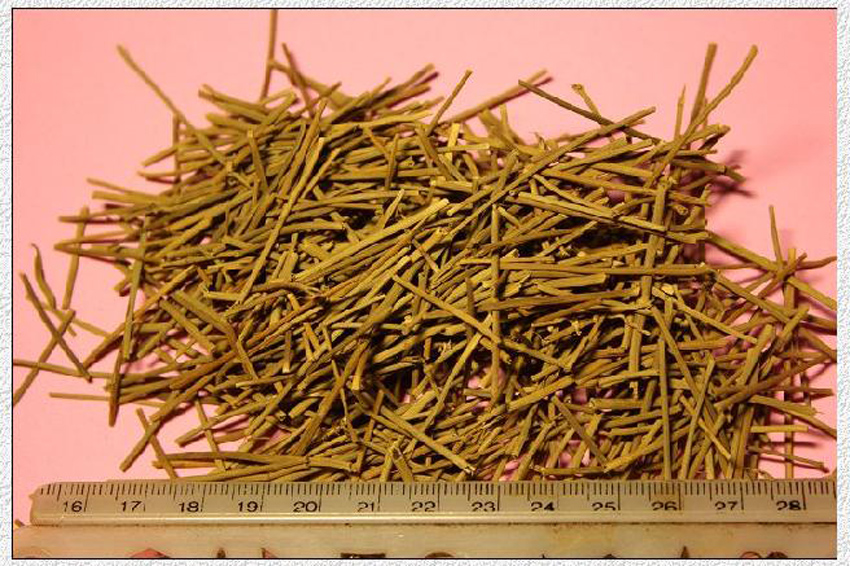
https://www.newton.com.tw/img/6/ec4/cGcq5SZxYTOxQmNzcTZ0UzYlJ2N1kDZhBDM2QTMwkzM… |
|
https://www.penzai.com/uploads/img/202105/03/1620009745904978.jpeg |
|
#Post#: 12000-------------------------------------------------- |
|
Re: Medical decolonization |
|
By: Zea_mays Date: March 14, 2022, 12:57 am |
|
--------------------------------------------------------- |
|
Western medicine vs ... ants. |
|
[quote]Cancer detection is a major public health challenge, and |
|
the methods currently available to achieve it, for example MRIs |
|
and mammograms, are often expensive and invasive. This limits |
|
their large-scale use. To bypass these constraints, alternative |
|
methods are being studied, like the use of animals' sense of |
|
smell. |
|
A team of scientists from the CNRS, Universit� Sorbonne Paris |
|
Nord, Institut Curie and Inserm1 have demonstrated how a species |
|
of ants, Formica fusca, has performed in the area. After a few |
|
minutes of training, these insects, which use smell for daily |
|
tasks, were able to differentiate healthy human cells from |
|
cancerous human cells.[/quote] |
|
https://phys.org/news/2022-03-ants-cancer.html |
|
#Post#: 12009-------------------------------------------------- |
|
Re: Medical decolonization |
|
By: 90sRetroFan Date: March 14, 2022, 1:50 am |
|
--------------------------------------------------------- |
|
I would classify such training of ants to detect cancer also as |
|
Western medicine. While I do not doubt that ants' sense of smell |
|
can technically be used in such a way, I am already worried that |
|
this will just be yet another route towards exploitation of |
|
non-humans. I can already envisage Westerners deliberately |
|
breeding a new type of ant to be especially adept at this task, |
|
without ethical regard for what else such breeding might mean |
|
for the ants themselves..... |
|
What we need fundamentally is a non-Western medical model that |
|
perceives what Westerners currently call "cancer" as something |
|
else altogether. For example: |
|
https://apm.amegroups.com/article/view/2239%20/3341 |
|
[quote]From the perspective of TCM, tumor is not only the |
|
morphological changes of a specific tissue or organ but also, |
|
and more importantly, the functional changes of tissues or |
|
organs. The pathological changes of tumors are clinically |
|
presented as dampness, toxin, phlegm, stasis (obstruction), and |
|
deficiency. Therefore, from the perspective of TCM, the |
|
mechanism of tumor can be summarized as: stagnation of toxin and |
|
heat, obstruction of phlegm/dampness, Qi stagnation and blood |
|
stasis, and imbalanced yin and yang in viscera and bowels. |
|
Patients often have the dysfunction of viscera and bowels (e.g., |
|
deficiency in liver, spleen, and kidney) and deficiency of the |
|
original qi. In addition, pathological changes can also occur |
|
due to the emotional impairment. The imbalance between yin and |
|
yang in viscera and bowels can be particularly obvious in |
|
patients with advanced cancers. According to the ancient Chinese |
|
physicians, the development of tumors is often associated with |
|
the dysfunction of viscera and bowels, particularly the spleen |
|
and kidney deficiencies. Kidney is the root of innate endowment, |
|
and spleen is the root of acquired constitution. Spleen and |
|
kidney deficiencies can result in the weak healthy qi, and the |
|
insufficient defense qi can not prevent the invasion of |
|
pathogen. If the healthy qi can not effectively eliminate the |
|
pathogen, it will easily spread inside body. As mentioned in the |
|
classic books, �When there is sufficient health qi inside, the |
|
pathogenic qi have no way to invade the health body�; or, �Where |
|
pathogenic factors accumulate, the parts of the body must be |
|
deficient in the vital-qi�.[/quote] |
|
This is the kind of vocabulary we need to be switching to. This |
|
in turn leads to therapy not necessarily involving going after |
|
the "cancer" itself: |
|
[quote]The largest difference between TCM and modern medicine in |
|
terms of efficacy is: after TCM treatment, the tumor does not |
|
shrink remarkably, but the patient has longer survival and |
|
dramatically improved subjective symptoms; after treatment with |
|
modern therapies, on the contrary, the tumor may obviously |
|
decrease in size but can recur rapidly, along with unprolonged |
|
survival and impaired quality of life.[/quote] |
|
Further details: |
|
https://www.ncbi.nlm.nih.gov/pmc/articles/PMC5506596/ |
|
[quote]Comparing to modern Western medicine, traditional Chinese |
|
medicine (TCM) comprises a particularly safe and effective |
|
strategy in the treatment of cancer. In TCM theory, |
|
disequilibrium between Yin and Yang and blockage of meridian and |
|
viscera caused by interior (long time stress, anxiety, depress, |
|
overwork, improper lifestyle, etc.) and exterior factors |
|
(physical and chemical hazards) leads to stasis of Chi (vital |
|
energy), blood, dampness and phlegm, where the pathogenic heat |
|
and toxins, which are similar to the factors that cause |
|
prominent inflammation, are generated and promote occurrence and |
|
development of cancer eventually after these long-lasting |
|
malfunctions. Therefore, heat-clearing and detoxicating (HCD) |
|
herbs, Chi-regulating herbs, circulation-enhancing herbs, |
|
dampness and phlegm-resolving herbs are often used to treat |
|
cancers in TCM. HCD herbs are mostly cold in nature and bitter |
|
in taste and commonly used to clear away heat, purge fire, dry |
|
dampness and cool blood, and relieve toxins. Since pathogenic |
|
heat and toxins are more directly related to cancer, HCD herbs |
|
or formulas play a predominant role in cancer management by TCM. |
|
[/quote] |
|
***************************************************** |
|
Previous Page |
|
Next Page |