|
Return Create A Forum - Home |
 |
--------------------------------------------------------- |
|
True Left |
 |
https://trueleft.createaforum.com |
|
--------------------------------------------------------- |
|
***************************************************** |
|
Return to: Issues |
|
***************************************************** |
|
#Post#: 2008-------------------------------------------------- |
|
Medical decolonization |
|
By: guest5 Date: November 6, 2020, 12:55 am |
|
--------------------------------------------------------- |
|
Western Conceptions of Depression and the Colonization of |
|
Women�s Emotions Worldwide |
|
[quote]In a chapter titled �Gender, Depression, and Emotion: |
|
Arguing for a De-colonized Psychology,� scholar-activist |
|
Bhargavi Davar investigates how narrow conceptions of emotions |
|
in the West have led to the medicalization of depression, the |
|
imposition of ineffective approaches to mental health throughout |
|
the Global South, and the pathologization of women�s experiences |
|
worldwide.[/quote] |
|
https://www.madinamerica.com/2020/08/western-conceptions-depression-colonizatio… |
|
Psilocybin therapy 4 times more effective than antidepressants, |
|
study finds |
|
[quote]A new study is presenting the first published data from |
|
preliminary human trials investigating the effect of |
|
psilocybin-assisted psychotherapy to treat major depressive |
|
disorder (MDD). The incredibly positive results have been |
|
described as just a �taste of things to come� with larger a |
|
Phase 2 trial well underway. |
|
The US Food and Drug Administration (FDA) has granted |
|
psilocybin, the primary psychoactive compound in magic |
|
mushrooms, a Breakthrough Therapy designation on two occasions |
|
over the past 24 months. Initially the designation was granted |
|
to help accelerate trials for severe treatment-resistant |
|
depression, but more recently the classification focused on |
|
trials for major depressive disorder.[/quote] |
|
https://newatlas.com/health-wellbeing/psilocybin-therapy-major-depression-trial… |
|
#Post#: 2258-------------------------------------------------- |
|
Re: Medical decolonization |
|
By: guest5 Date: November 16, 2020, 7:02 pm |
|
--------------------------------------------------------- |
|
30 medicinal plants the Native Americans used on a daily basis |
|
[quote]The Lost Book Of Remedies : |
|
http://bit.ly/natralremedybook |
|
Native Americans are renowned for their medicinal plant |
|
expertise. It is reported they initially started making use of |
|
plants as well as natural herbs for recovery after viewing |
|
animals consume certain plants when they were ill. In order to |
|
shield these plants from over harvesting, the medication men |
|
utilized to pick every 3rd plants they found. Right here are one |
|
of the most versatile plants the Indigenous Americans used in |
|
their daily lives.[/quote] |
|
https://www.youtube.com/watch?v=Y8e09BUquB8 |
|
#Post#: 2282-------------------------------------------------- |
|
Re: Medical decolonization |
|
By: 90sRetroFan Date: November 17, 2020, 1:44 am |
|
--------------------------------------------------------- |
|
OLD CONTENT |
|
In the light of the debate over 'Medicare for All' here in the |
|
States (which implies Western medical care, in other words, |
|
disease care) I think we should share different non-Western |
|
medical practices that we have tried. |
|
I'll start out: I started Urine therapy over a year ago. I don't |
|
get constipated anymore, I feel less hungry because I'm |
|
retaining more nutrients and enzymes, and I can go on longer |
|
fasts without loosing energy. The secret is urea: In the blood |
|
it's toxic, that's why it never gets reabsorbed from the bladder |
|
like other components of urine, but when it's swallowed it has a |
|
cleansing effect on the colon. |
|
I think UT is a really good example of non-western medicine |
|
because it precludes any kind of pharmaceuticals, drugs, |
|
alcohol, and even meat and dairy. |
|
https://www.youtube.com/watch?v=TE6vfWoJcuo |
|
--- |
|
Decolonization refers to rejection of culture and/or reversal of |
|
changes imposed during the colonial era. For example, putting up |
|
statues of people other than colonialists alongside the statues |
|
of colonialists is not decolonization. Only destroying the |
|
statues of colonialists is decolonization. |
|
Similarly, mere marketing of non-Western medicine is not |
|
decolonization. In the context of medicine, decolonization |
|
should strictly mean phasing out of Western medical practice or, |
|
better yet, Western medical knowledge. In practice, public |
|
availability of Western medicine (which is already widely the |
|
case around the world) has not anywhere led to demand for |
|
phasing out Western medicine. What happens instead is that the |
|
non-Western medicine is interpreted and judged by the standards |
|
of Western medicine. |
|
The video you posted is a good example of this. Look at what is |
|
on the whiteboard. "Urea": |
|
en.wikipedia.org/wiki/Urea#History |
|
[quote]Urea was first discovered in urine in 1727 by the Dutch |
|
scientist Herman Boerhaave,[30][/quote] |
|
"amino acids": |
|
en.wikipedia.org/wiki/Amino_acid#History |
|
[quote]The first few amino acids were discovered in the early |
|
19th century.[21][22] In 1806, French chemists Louis-Nicolas |
|
Vauquelin and Pierre Jean Robiquet isolated a compound in |
|
asparagus that was subsequently named asparagine, the first |
|
amino acid to be discovered.[23][24] Cystine was discovered in |
|
1810,[25] although its monomer, cysteine, remained undiscovered |
|
until 1884.[24][26] Glycine and leucine were discovered in |
|
1820.[27] The last of the 20 common amino acids to be discovered |
|
was threonine in 1935 by William Cumming Rose, who also |
|
determined the essential amino acids and established the minimum |
|
daily requirements of all amino acids for optimal |
|
growth.[28][29] |
|
The unity of the chemical category was recognized by Wurtz in |
|
1865, but he gave no particular name to it.[30] Usage of the |
|
term "amino acid" in the English language is from 1898,[31] |
|
while the German term, Aminos�ure, was used earlier.[32] |
|
Proteins were found to yield amino acids after enzymatic |
|
digestion or acid hydrolysis. In 1902, Emil Fischer and Franz |
|
Hofmeister independently proposed that proteins are formed from |
|
many amino acids, whereby bonds are formed between the amino |
|
group of one amino acid with the carboxyl group of another, |
|
resulting in a linear structure that Fischer termed |
|
"peptide".[33][/quote] |
|
"fatty acids": |
|
en.wikipedia.org/wiki/Michel_Eug�ne_Chevreul |
|
[quote]Michel Eug�ne Chevreul (31 August 1786 � 9 April 1889)[1] |
|
was a French chemist whose work with fatty acids led to early |
|
applications in the fields of art and science. He is credited |
|
with the discovery of margaric acid, creatine, and designing an |
|
early form of soap made from animal fats and salt.[/quote] |
|
"stem cells": |
|
en.wikipedia.org/wiki/Stem_cell |
|
[quote]Research into stem cells grew out of findings by Ernest |
|
A. McCulloch and James E. Till at the University of Toronto in |
|
the 1960s.[2][3][/quote] |
|
"hormones": |
|
en.wikipedia.org/wiki/Secretin#Discovery |
|
[quote]Secretin was the first hormone to be identified.[10] In |
|
1902, William Bayliss and Ernest Starling were studying how the |
|
nervous system controls the process of digestion.[11] It was |
|
known that the pancreas secreted digestive juices in response to |
|
the passage of food (chyme) through the pyloric sphincter into |
|
the duodenum. They discovered (by cutting all the nerves to the |
|
pancreas in their experimental animals) that this process was |
|
not, in fact, governed by the nervous system. They determined |
|
that a substance secreted by the intestinal lining stimulates |
|
the pancreas after being transported via the bloodstream. They |
|
named this intestinal secretion secretin. Secretin was the first |
|
such "chemical messenger" identified. This type of substance is |
|
now called a hormone, a term coined by Starling in |
|
1905.[12][/quote] |
|
Do you see what is going on? The guy is trying to argue why |
|
urine therapy is effective using Western models! Even if |
|
everyone believes him, no decolonization has occurred; all it |
|
means is that he would have inaugurated one more form of Western |
|
medicine! |
|
You yourself fall into the same trap: |
|
"I'm retaining more nutrients and enzymes" |
|
en.wikipedia.org/wiki/Enzyme#Etymology_and_history |
|
[quote]In 1877, German physiologist Wilhelm K�hne (1837�1900) |
|
first used the term enzyme, which comes from Greek |
|
ἔνζυμον, "leavened" or "in |
|
yeast", to describe this process.[11] The word enzyme was used |
|
later to refer to nonliving substances such as pepsin,[/quote] |
|
I already warned about this when talking about "B12" in the |
|
other topic. |
|
I am not discouraging you from studying urine therapy, but I |
|
advise you to start by throwing out all the Western models from |
|
your mind. Only then can you properly study urine therapy as a |
|
non-Western medical practice (as you claim to want it to be). |
|
--- |
|
What is "nutrition", then? |
|
aryanism.net/culture/aesthetics/food/ |
|
What "nutrition" is destroyed from dry-cooking? Water-soluble |
|
nutrients like Vit. C can be destroyed via heat (as well as |
|
water and oxygen)... which doesn't seem to matter as vitamins |
|
were discovered by westerners... |
|
How does a child prevent getting rickets without dependency on |
|
Vit. D (and calcium and phosphorus, I believe)? |
|
--- |
|
"What is "nutrition", then?" |
|
www.dictionary.com/browse/nutrition |
|
"What "nutrition" is destroyed from dry-cooking?" |
|
Eat a slice of raw carrot. Eat another slice of carrot grilled |
|
for an hour. Can you tell which is more nutritious? |
|
"Water-soluble nutrients like Vit. C" |
|
Do you think people in the ancient world (who had no notion of |
|
"Vitamin C" in their minds) would be unable to tell which is |
|
more nutritious? |
|
(For that matter, how old were you when you first learned about |
|
"vitamins"? Try to remember back to before you learned this. I |
|
am quite confident that even then you would have been able to |
|
tell which slice of carrot is less nutritious had you been asked |
|
back then.) |
|
"How does a child prevent getting rickets" |
|
Sunlight. |
|
"without dependency on Vit. D" |
|
"Vitamin D" is just the model you choose to use to describe what |
|
is going on. The ancients were well aware that exposure to |
|
sunlight is healthy for children's bones without any notion of |
|
"Vitamin D" in their minds. This is what I am trying to get the |
|
world back to. |
|
--- |
|
I have no idea what nutrition tastes nor feels like (I ate heaps |
|
of junk food as a kid - Mum was rad like that - and I think that |
|
put my body out of whack). |
|
It is stupid of me to assume the ancients themselves were stupid |
|
and ate whatever all willy-nilly and I think that's because I'm |
|
a bit pedantic about knowing EXACTLY what's going into my body |
|
and if it's keeping me healthy. Being observational (what the |
|
people of the ancient times would have been, I suppose) just |
|
seems too... risky? idunno |
|
--- |
|
The first concept (common to many independently derived |
|
non-Western medical systems) that I suggest you try to grasp is |
|
hot and cold, which refers not to temperature but to the |
|
character of the food: |
|
[img width=1280 |
|
height=773] |
|
https://jameskennedymonash.files.wordpress.com/2013/12/chinese-food-chart.jpg[/… |
|
Which end of the scale do you prefer, tastewise? This will tell |
|
you something about what kind of nutrition is good for you. |
|
(Part of your answer is likely to vary depending on when you ask |
|
yourself the question. But there are also likely to be some |
|
constants independent of occasion, which should reflect your |
|
personality.) |
|
"I'm a bit pedantic about knowing EXACTLY what's going into my |
|
body and if it's keeping me healthy." |
|
The problem is that what keeps you healthy will not necessarily |
|
be the same as what keeps the next person healthy. You are an |
|
individual. |
|
The real problem is that Western medicine does not treat people |
|
as individuals, instead callously treating us as particular |
|
cases of a generalization (hence RDAs). If you believe that |
|
knowing what's going into your body provides you with sufficient |
|
information to know if it's keeping you healthy, then even you |
|
yourself have failed to treat yourself as an individual! |
|
What should be going into your body is not a set of rigid RDAs, |
|
but whatever is required by your unique body on each unique day |
|
as it interacts in real time with unique (and constantly |
|
changing) environmental conditions (habitat, weather, activity, |
|
stress, etc.). |
|
"Being observational (what the people of the ancient times would |
|
have been, I suppose) just seems too... risky?" |
|
What is more risky: trusting your own sensitivity, or assuming |
|
your body just happens to be the most average body in every |
|
parameter (which is what RDAs assume everyone is)? |
|
And yes, if you have been Westernized, then the former really |
|
may be more risky at first. But we have a duty to recover as |
|
much as possible of the innate sensitivity that Western |
|
civilization has beaten out of us. |
|
--- |
|
Ha! |
|
www.yahoo.com/lifestyle/are-vitamins-a-waste-of-money-a-new-stud |
|
y-says-yes-231521620.html |
|
[quote]Like most people, you probably have a stash of vitamin |
|
and mineral supplements in your bathroom cabinet. In fact, |
|
nearly 70 percent of people take supplements, according to the |
|
industry trade association, the Council for Responsible |
|
Nutrition. Fueled by an increasing focus on health and |
|
�wellness,� dietary supplements have become so popular that |
|
they�re now a $32 billion industry. |
|
But do they actually improve your health? Several studies have |
|
found that taking supplements aren�t associated with living |
|
longer and now a massive new study, published in the Annals of |
|
Internal Medicine, shows that the vast majority won�t help you |
|
live a longer life or reduce the risk of cardiovascular |
|
problems.[/quote] |
|
I do not take supplements. |
|
[quote]Our bodies will always use the vitamins and minerals that |
|
are in food much better than in supplements.�[/quote] |
|
Maybe it's time to start thinking in terms of the foods |
|
themselves as integral entities instead of - as per Western |
|
reductionism - attributing the value of the food to the value of |
|
supposed "vitamins" and "minerals" supposedly "in" food? |
|
Repost: |
|
frbkrm.com/2013/02/17/139/ |
|
www.shen-nong.com/eng/lifestyles/food_property_food_tcm.html |
|
--- |
|
www.dailymail.co.uk/news/article-7554683/Hate-crime-psychologist |
|
-brutally-killed-South-African-home.html |
|
[quote]A brilliant psychologist and specialist in hate crime and |
|
violence in South Africa was brutally butchered and had her |
|
throat slit in her own home by a gang of armed robbers. |
|
Leading scholar Dr Mirah Wilks was ambushed and attacked by the |
|
men who had waited until her husband Frank left to worship at |
|
the local synagogue, leaving her home alone. |
|
The group had climbed up onto the roof and removed tiles and |
|
dropped down inside the house and stabbed Mirah at least twelve |
|
times in the chest and back then cut her throat. |
|
... |
|
Dr Wilks, 69, was renowned for her research into hate crimes, |
|
trauma and violence and was a highly respected former Chair of |
|
the Psychological Society of South Africa. |
|
... |
|
She had also gained degrees at the University of Queensland in |
|
Australia and the University of Pennsylvania in the USA and was |
|
working at the University of Witwatersrand in Johannesburg when |
|
she was murdered. |
|
Dr Wilks had moved to Australia from Israel as a young girl and |
|
had a daughter Tarryn and son Brett in Melbourne, Victoria, with |
|
husband Frank and the family later emigrated to South Africa. |
|
... |
|
Counselling psychologist Dr Ingrid Artus said: 'We have a |
|
scarcity of psychologists in South Africa and the service they |
|
provide to society are vital and her loss will impact on |
|
patients.[/quote] |
|
Azania does not need Western psychologists. It should be |
|
thinking about building its own system of psychology (and |
|
medicine more generally), ideally based on local ancient |
|
approaches, that can eventually replace the Western disciplines |
|
as the national (and ultimately international) default. We are |
|
here to help with this. |
|
--- |
|
https://www.youtube.com/watch?v=wB87G1hsymQ |
|
--- |
|
Example of Western attitudes towards medical practice: |
|
"I went to med school therefore only I know what medicine is |
|
right!" |
|
This also illustrates the (Western) corruption of education |
|
which now only serves as a means to gain qualifications. |
|
#Post#: 2283-------------------------------------------------- |
|
Re: Medical decolonization |
|
By: 90sRetroFan Date: November 17, 2020, 1:56 am |
|
--------------------------------------------------------- |
|
OLD CONTENT contd. |
|
www.yahoo.com/news/avoid-taking-ibuprofen-covid-19-symptoms-2020 |
|
07508.html |
|
[quote]Geneva (AFP) - The World Health Organization recommended |
|
Tuesday that people suffering COVID-19 symptoms avoid taking |
|
ibuprofen, after French officials warned that anti-inflammatory |
|
drugs could worsen effects of the virus. |
|
... |
|
"In the meantime, we recommend using rather paracetamol, and do |
|
not use ibuprofen as a self-medication. That's important," he |
|
said. |
|
... |
|
Paracetamol must be taken strictly according to the recommended |
|
dose, because too much of it can damage the liver.[/quote] |
|
Non-Western medics have long warned that Western pharmaceutical |
|
products in general, even if effective at rapidly mitigating |
|
symptoms of specific illnesses, lead to unhealthy side-effects |
|
elsewhere. This is due two main factors: |
|
1) Western pharma is not custom-prepared for each individual |
|
patient, but is ready-made for general consumption, thus will be |
|
suboptimal relative to most patients' unique metabolism. |
|
2) Western pharma delivers active ingredients in isolation, |
|
hence necessarily stressing the patient's body (which was never |
|
evolved to consume any ingredient except as part of a whole food |
|
containing it alongside the other ingredients contained in the |
|
same food) required to absorb them. |
|
--- |
|
This is because the medicine was designed with the "survival of |
|
the fittest" Darwinist archetype in mind, the same archetype |
|
which rightists exalt. |
|
--- |
|
If Yahweh is the creator then lady nature must be his evil |
|
side-kick? "Survival of the fittest" is her paradigm right? Not |
|
"survival of the funniest", or "survival of the noblest".... |
|
Lady nature wants you to eat each other, think about that before |
|
you go worshiping her! |
|
--- |
|
We need more of this: |
|
https://www.youtube.com/watch?v=Bcm0Oc_xz9U |
|
https://www.youtube.com/watch?v=YxesE8vEe9M |
|
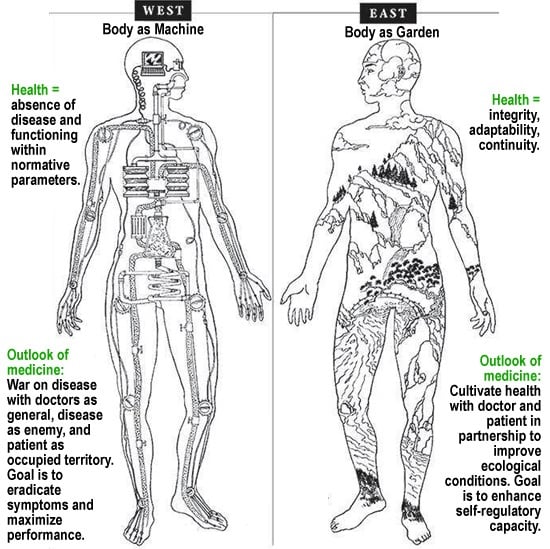
https://www.amcollege.edu/hubfs/westvseast_medicine.jpg |
|
--- |
|
[img] |
|
https://images.theconversation.com/files/322764/original/file-20200325-194438-1… |
|
en.wikipedia.org/wiki/Hydroxychloroquine#Side_effects |
|
[quote]The most serious adverse effects affect the eye, with |
|
dose-related retinopathy as a concern even after |
|
hydroxychloroquine use is discontinued.[2] |
|
... |
|
adverse effects include the acute symptoms, plus altered eye |
|
pigmentation, acne, anemia, bleaching of hair, blisters in mouth |
|
and eyes, blood disorders, convulsions, vision difficulties, |
|
diminished reflexes, emotional changes, excessive coloring of |
|
the skin, hearing loss, hives, itching, liver problems or liver |
|
failure, loss of hair, muscle paralysis, weakness or atrophy, |
|
nightmares, psoriasis, reading difficulties, tinnitus, skin |
|
inflammation and scaling, skin rash, vertigo, weight loss, and |
|
occasionally urinary incontinence.[2] Hydroxychloroquine can |
|
worsen existing cases of both psoriasis and porphyria.[2] |
|
Children may be especially vulnerable to developing adverse |
|
effects from hydroxychloroquine.[2][/quote] |
|
en.wikipedia.org/wiki/Azithromycin#Adverse_effects |
|
[quote]Occasionally, people have developed cholestatic hepatitis |
|
or delirium. Accidental intravenous overdose in an infant caused |
|
severe heart block, resulting in residual |
|
encephalopathy.[30][31] |
|
In 2013 the FDA issued a warning that azithromycin "can cause |
|
abnormal changes in the electrical activity of the heart that |
|
may lead to a potentially fatal irregular heart rhythm." The FDA |
|
noted in the warning a 2012 study that found the drug may |
|
increase the risk of death, especially in those with heart |
|
problems[/quote] |
|
Duh! |
|
--- |
|
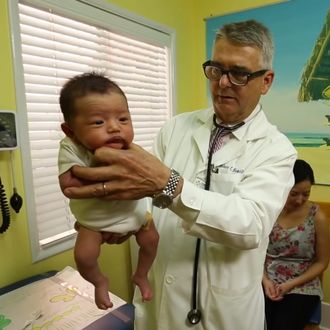
Here is a perfect microcosm of Western medicine (and Western |
|
civilization more generally): |
|
www.dailymail.co.uk/femail/article-3342362/Doctor-magic-touch-Pa |
|
ediatrician-reveals-secret-hold-baby-stop-crying-time.html |
|
[quote]An American paediatrician claims to have found a miracle |
|
way of holding an infant to make it stop crying. |
|
Dr Robert C Hamilton, of Santa Monica, California, says his |
|
technique, dubbed 'The Hold', works every time without |
|
fail.[/quote] |
|
https://pyxis.nymag.com/v1/imgs/c75/ec7/a353aa7036b16398760067413fb3db70b4-04-b… |
|
Sure, it "works" in that it mechanically short-circuits the |
|
crying reaction. (For that matter, he could dunk the infant head |
|
first into water for a similar effect.) This makes it in fact a |
|
initiation of violence upon the infant, who is being |
|
mechanically prevented from crying (despite being upset) by |
|
being placed without consent into this position by a stronger |
|
adult, no less than it is violent to use force to make an infant |
|
cry (see below). And insofar that it is a technique prescribed |
|
(like all Western medical prescriptions) for infants in general, |
|
it has already failed to treat each infant as an individual, |
|
never addressing why the infant is crying in the first place, |
|
which will differ in each individual situation, but which I |
|
guarantee is not because the infant wants to be put in a |
|
submission hold by an adult! |
|
A crying infant is trying to communicate distress and ask for |
|
help. The compassionate response is to find the source of its |
|
distress and remove it, thereby removing its need to cry any |
|
more. When I am babysitting, I immediately look around and |
|
identify what in the vicinity caused the infant to cry, and fix |
|
the situation ASAP (whether by taking away a distressing object, |
|
giving to the infant a wanted object, etc.). It is all about |
|
satisfying the infant and thus radically ending its distress. Of |
|
course, this requires a certain level of empathic sensitivity. |
|
Lacking such sensitivity, Western medicine prefers to treat the |
|
infant as a brain attached to a nervous system attached to a |
|
respiratory system attached to etc. to be manually manipulated |
|
in such ways as to smother whatever symptoms it wants to |
|
smother. |
|
And to top it off, can you guess why the infant being subjected |
|
to 'The Hold' was crying in the first place? |
|
[quote]An infant who has just received a shot at Dr Hamilton's |
|
practice is crying[/quote] |
|
Yep, Hamilton was also the one who violently made the infant cry |
|
by injecting chemicals into it (again without its consent). This |
|
is Western civilization: initiate violence that caused the |
|
distress to begin with, and then initiate more violence to make |
|
the sufferer unable to express it. From the perspective of our |
|
True Left way of babysitting, Hamilton (and by extension Western |
|
civilization as a whole) is the object requiring removal. |
|
(It goes without saying that the ultimate way to ensure no |
|
infants ever cry is to stop them from being born in the first |
|
place.) |
|
--- |
|
www.reuters.com/article/us-health-coronavirus-vaccines-insight/a |
|
s-pressure-for-coronavirus-vaccine-mounts-scientists-debate-risk |
|
s-of-accelerated-testing-idUSKBN20Y1GZ |
|
[quote]Studies have suggested that coronavirus vaccines carry |
|
the risk of what is known as vaccine enhancement, where instead |
|
of protecting against infection, the vaccine can actually make |
|
the disease worse when a vaccinated person is infected with the |
|
virus. The mechanism that causes that risk is not fully |
|
understood and is one of the stumbling blocks that has prevented |
|
the successful development of a coronavirus vaccine.[/quote] |
|
I told you so. |
|
But even if vaccines have no adverse effects, they are still |
|
evil for the following reason: |
|
[quote]Coronavirus vaccine developers are still required to |
|
conduct routine animal testing to make sure the vaccine itself |
|
is not toxic and is likely to help the immune system respond to |
|
the virus.[/quote] |
|
Some Western history: |
|
en.wikipedia.org/wiki/History_of_animal_testing#In_medicine |
|
[quote]In the 1880s and 1890s, Emil von Behring isolated the |
|
diphtheria toxin and demonstrated its effects in guinea pigs. He |
|
went on to demonstrate immunity against diphtheria in animals in |
|
1898 by injecting a mix of toxin and antitoxin. |
|
... |
|
In 1921, Frederick Banting tied up the pancreatic ducts of dogs |
|
and discovered that the isolates of pancreatic secretion could |
|
be used to keep dogs with diabetes alive. |
|
... |
|
In the 1940s, Jonas Salk used rhesus monkey cross-contamination |
|
studies to isolate the three forms of the polio virus |
|
... |
|
Also in the 1940s, John Cade tested lithium salts in guinea pigs |
|
in a search for pharmaceuticals with anticonvulsant properties. |
|
... |
|
In the 1950s the first safer, volatile anaesthetic halothane was |
|
developed through studies on rodents, rabbits, dogs, cats and |
|
monkeys.[29] This paved the way for a whole new generation of |
|
modern general anaesthetics � also developed by animal studies |
|
... |
|
In the 1970s, leprosy multi-drug antibiotic treatments were |
|
refined using leprosy bacteria grown in armadillos and were then |
|
tested in human clinical trials. Today, the nine-banded |
|
armadillo is still used to culture the bacteria that causes |
|
leprosy[/quote] |
|
etc. etc. |
|
NEVER FORGIVE. NEVER FORGET. |
|
#Post#: 2284-------------------------------------------------- |
|
Re: Medical decolonization |
|
By: 90sRetroFan Date: November 17, 2020, 2:08 am |
|
--------------------------------------------------------- |
|
OLD CONTENT contd. |
|
This is the sensitivity that most humans (except competent |
|
non-Western medics and a few others) have lost, and that is |
|
becoming rarer even among non-Western medics due to |
|
Westernization: |
|
en.wikipedia.org/wiki/Zoopharmacognosy |
|
[quote]Zoopharmacognosy is a behaviour in which non-human |
|
animals apparently self-medicate by selecting and ingesting or |
|
topically applying plants, soils, insects, and psychoactive |
|
drugs to prevent or reduce the harmful effects of pathogens and |
|
toxins.[1][2] The term derives from Greek roots zoo ("animal"), |
|
pharmacon ("drug, medicine"), and gnosy ("knowing"). |
|
An example of zoopharmacognosy occurs when dogs eat grass to |
|
induce vomiting. However, the behaviour is more diverse than |
|
this. Animals ingest or apply non-foods such as clay, charcoal |
|
and even toxic plants and invertebrates, apparently to prevent |
|
parasitic infestation or poisoning.[3] |
|
... |
|
The methods by which animals self-medicate vary, but can be |
|
classified according to function as prophylactic (preventative, |
|
before infection or poisoning) or therapeutic (after infection, |
|
to combat the pathogen or poisoning).[4] The behaviour is |
|
believed to have widespread adaptive significance.[5] |
|
... |
|
Many parrot species in the Americas, Africa, and Papua New |
|
Guinea consume kaolin or clay, which both releases minerals and |
|
absorbs toxic compounds from the gut.[12] |
|
... |
|
Ants infected with Beauveria bassiana, a fungus, selectively |
|
consume harmful substances (reactive oxygen species, ROS) upon |
|
exposure to a fungal pathogen, yet avoid these in the absence of |
|
infection.[16] |
|
... |
|
Great apes often consume plants that have no nutritional values |
|
but which have beneficial effects on gut acidity or combat |
|
intestinal parasitic infection.[1] |
|
Chimpanzees sometimes select bitter leaves for chewing. Parasite |
|
infection drops noticeably after chimpanzees chew leaves of pith |
|
(Vernonia amygdalina), which have anti-parasitic activity |
|
against schistosoma, plasmodium and Leishmania. Chimpanzees |
|
don't consume this plant on a regular basis, but when they do |
|
eat it, it is often in small amounts by individuals that appear |
|
ill.[18] Jane Goodall witnessed chimpanzees eating particular |
|
bushes, apparently to make themselves vomit.[citation needed] |
|
There are reports that chimpanzees swallow whole leaves of |
|
particular rough-leaved plants such as Aneilema aequinoctiale; |
|
these remove parasitic worms from their intestines.[19] |
|
Chimpanzees sometimes eat the leaves of the herbaceous Desmodium |
|
gangeticum. Undigested, non-chewed leaves were recovered in 4% |
|
of faecal samples of wild chimpanzees and clumps of sharp-edged |
|
grass leaves in 2%. The leaves have a rough surface or |
|
sharp-edges and the fact they were not chewed and excreted whole |
|
indicates they were not ingested for nutritional purposes. |
|
Furthermore, this leaf-swallowing was restricted to the rainy |
|
season when parasite re-infections are more common, and |
|
parasitic worms (Oesophagostomum stephanostomum) were found |
|
together with the leaves.[9] |
|
Chimpanzees, bonobos, and gorillas eat the fruits of Aframomum |
|
angustifolium. Laboratory assays of homogenized fruit and seed |
|
extracts show significant anti-microbial activity.[20] |
|
Illustrating the medicinal knowledge of some species, apes have |
|
been observed selecting a particular part of a medicinal plant |
|
by taking off leaves and breaking the stem to suck out the |
|
juice.[21] |
|
Anubis baboons (Papio anubis) and hamadryas baboons (Papio |
|
hamadryas) in Ethiopia use fruits and leaves of Balanites |
|
aegyptiaca to control schistosomiasis.[22] Its fruits contain |
|
diosgenin, a hormone precursor that presumably hinders the |
|
development of schistosomes.[4] |
|
African elephants (Loxodonta africana) apparently self-medicate |
|
to induce labour by chewing on the leaves of a particular tree |
|
from the family Boraginaceae; Kenyan women brew a tea from this |
|
tree for the same purpose.[23] |
|
... |
|
Indian wild boars selectively dig up and eat the roots of |
|
pigweed which humans use as an anthelmintic. Mexican folklore |
|
indicates that pigs eat pomegranate roots because they contain |
|
an alkaloid that is toxic to tapeworms.[26] |
|
... |
|
About 70% of domestic cats are especially attracted to, and |
|
affected by the plant Nepeta cataria, otherwise known as catnip. |
|
Wild cats, including tigers, are also affected, but with unknown |
|
percentage. The first reaction of cats is to sniff. Then, they |
|
lick and sometimes chew the plant and after that rub against it, |
|
with their cheeks and the whole body by rolling over. |
|
... |
|
Many animals eat soil or clay, a behaviour known as geophagy. |
|
Clay is the primary ingredient of kaolin.[34] It has been |
|
proposed that for primates, there are four hypotheses relating |
|
to geophagy in alleviating gastrointestinal disorders or |
|
upsets:[35] |
|
soils adsorb toxins such as phenolics and secondary metabolites |
|
soil ingestion has an antacid action and adjusts the gut pH |
|
soils act as an antidiarrhoeal agent |
|
soils counteract the effects of endoparasites. |
|
Furthermore, two hypotheses pertain to geophagy in supplementing |
|
minerals and elements: |
|
soils supplement nutrient-poor diets |
|
soils provide extra iron at high altitudes |
|
Tapirs, forest elephants, colobus monkeys, mountain gorillas and |
|
chimpanzees seek out and eat clay, which absorbs intestinal |
|
bacteria and their toxins and alleviates stomach upset and |
|
diarrhoea.[36] Cattle eat clay-rich termite mound soil, which |
|
deactivates ingested pathogens or fruit toxins.[1] |
|
... |
|
A female capuchin monkey in captivity was observed using tools |
|
covered in a sugar-based syrup to groom her wounds and those of |
|
her infant.[37][38] |
|
North American brown bears (Ursos arctos) make a paste of Osha |
|
roots (Ligusticum porteri) and saliva and rub it through their |
|
fur to repel insects or soothe bites. This plant, locally known |
|
as "bear root", contains 105 active compounds, such as coumarins |
|
that may repel insects when topically applied. Navajo Indians |
|
are said to have learned to use this root medicinally from the |
|
bear for treating stomach aches and infections.[20][39][/quote] |
|
Non-Western medicine is basically just humans doing the same. |
|
This is what we need to get back to. |
|
But can you guess what Westerners did after noticing |
|
zoopharmacognosy? Yep, more cruel animal experimentation to |
|
"confirm" (what has been totally obvious to everyone else since |
|
ancient times) that the animals really are doing |
|
zoopharmacognosy: |
|
[quote]A study on domestic sheep (Ovis aries) has provided clear |
|
experimental proof of self-medication via individual |
|
learning.[6] Lambs in a treatment group were allowed to consume |
|
foods and toxins (grain, tannins, oxalic acid) that lead to |
|
malaise (negative internal states) and then allowed to eat a |
|
substance known to alleviate each malaise (sodium bentonite, |
|
polyethylene glycol and dicalcium phosphate, respectively). |
|
Control lambs ate the same foods and medicines, but this was |
|
disassociated temporally so they did not recuperate from the |
|
illness. After the conditioning, lambs were fed grain or food |
|
with tannins or oxalates and then allowed to choose the three |
|
medicines. The treatment animals preferred to eat the specific |
|
compound known to rectify the state of malaise induced by the |
|
food previously ingested. However, control animals did not |
|
change their pattern of use of the medicines, irrespective of |
|
the food consumed before the choice.[27] Other ruminants learn |
|
to self-medicate against gastrointestinal parasites by |
|
increasing consumption of plant secondary compounds with |
|
antiparasitic actions.[17] |
|
Standard laboratory cages prevent mice from performing several |
|
natural behaviours for which they are highly motivated. As a |
|
consequence, laboratory mice sometimes develop abnormal |
|
behaviours indicative of emotional disorders such as depression |
|
and anxiety. To improve welfare, these cages are sometimes |
|
enriched with items such as nesting material, shelters and |
|
running wheels. Sherwin and Olsson[28] tested whether such |
|
enrichment influenced the consumption of Midazolam, a drug |
|
widely used to treat anxiety in humans. Mice in standard cages, |
|
standard cages but with unpredictable husbandry, or enriched |
|
cages, were given a choice of drinking either non-drugged water |
|
or a solution of the Midazolam. Mice in the standard and |
|
unpredictable cages drank a greater proportion of the anxiolytic |
|
solution than mice from enriched cages, presumably because they |
|
had been experiencing greater anxiety.[/quote] |
|
FUCK YOU. |
|
--- |
|
Americans should especially look into reviving pre-colonial New |
|
World medicine, which uses local herbs rather than Old World |
|
herbs: |
|
en.wikipedia.org/wiki/Native_American_ethnobotany |
|
en.wikipedia.org/wiki/Chumash_traditional_medicine |
|
[quote]List of Chumash medicinal herbs[edit] |
|
The climate of the Chumash territory supported a variety of |
|
plant species, many of which were used in medicine. The |
|
following list provides a sampling of commonly used plants in |
|
Chumash healing practices, but cannot be considered complete.[2] |
|
Chumash Medicinal Herbs |
|
Plant |
|
Uses |
|
Common Yarrow |
|
Toothache, cuts, excessive bleeding |
|
Sacapellote |
|
Cough, cold, lung congestion, asthma, constipation |
|
Chamise |
|
Childbirth and menstrual complications |
|
Ribbonwood (Red Shanks) |
|
Toothache, gangrene, cold, tetanus, spasms, lockjaw, paralysis, |
|
ulcers, sore throats |
|
Maidenhair Fern |
|
Blood disorders, regulation of menstruation, bleeding, internal |
|
injuries, kidney and liver problems |
|
Coffee Fern |
|
See Maidenhair Fern |
|
Agave |
|
Boils |
|
Wild Onion |
|
Appetite stimulant, sores, insect repellant, snake and insect |
|
bites |
|
Scarlet Pimpernel |
|
Disinfectant, eczema, ringworm |
|
Yerba Mansa |
|
Cuts, sores, rheumatism, venereal disease, cough, cold, asthma, |
|
kidney problems |
|
Coastal Sagebrush |
|
Headache, paralysis, poison-oak rash, disinfectant |
|
Mugwort |
|
Cauterizing wounds, skin lesions, blisters, rheumatism, |
|
headache, toothache, asthma, measles, burns, infections |
|
California Croton |
|
Colds |
|
Coyote Brush (Chaparral Broom) |
|
Poison-oak rash |
|
Spurge |
|
Fever, snake and spider bites |
|
Pineapple Weed |
|
Gastrointestinal disorders, regulation of menstruation, |
|
dysentery, inflammation, fever |
|
Soap Plant |
|
Consumption |
|
Spineflower |
|
Fever, warts, skin diseases |
|
Creek Clematis |
|
Ringworm, skin disruptions, venereal disease, colds, sore throat |
|
Wild Gourd |
|
Purgative, rheumatism, nosebleed, |
|
Durango Root |
|
Sore throat |
|
Toloache (Jimsonweed) |
|
Pain relief |
|
Rattlesnake Weed |
|
Rattlesnake bite |
|
Coastal Wood Fern |
|
Wounds, sprains, bruises |
|
California Fuchsia |
|
Cuts, sores, sprains |
|
Yerba Santa |
|
Colds, chest pain, cough, fever |
|
California Buckwheat |
|
Rheumatism, irregular menstruation, respiratory problems |
|
California Poppy |
|
Lice, colic, toothache, stomachache, analgesic |
|
Sneezeweed |
|
Colds, flu, scurvy |
|
Sticky Cinquefoil |
|
Fever, stomach problems, Spanish flu, |
|
Wedge-Leaved Horkelia |
|
See Stick Cinquefoil |
|
California Juniper |
|
Rheumatism, genito-urinary disorders |
|
Peppergrass |
|
Diarrhea, dysentery |
|
Giant Rye |
|
Gonnorhea |
|
Chuchupate |
|
pain relief, stomachache, flatulence, headache, rheumatism |
|
Climbing Penstemon |
|
Runny nose, sore throats, wounds |
|
Laurel Sumac |
|
Dysentery |
|
Bull Mallow |
|
Colds, cough, fever, stomach problems |
|
Cheeseweed |
|
See Bull Mallow |
|
... |
|
Spanish colonization[edit] |
|
1769 marked the beginning of Spanish military and religious |
|
missions to assimilate Native Chumash in the Alta region of |
|
California, roughly around modern-day Santa Barbara. This date |
|
also coincides with apparent changes to the Chumash environment |
|
and way of life that invoked declines in Chumash health. Prior |
|
to colonization, the Chumash enjoyed ecological abundance and |
|
diversity even during cyclical droughts and El Ni�o events, |
|
indicating a millennia-long period of acclimatization to their |
|
environment. However, this stability was significantly altered |
|
by European contact.[9] |
|
... |
|
The effect of Spanish overpopulation and resource destruction is |
|
documented by a Spanish missionary, Father Gregorio Fernandez, |
|
in 1803. This letter documents the increasing number of Chumash |
|
migrants to Spanish missions�not because of increasing Christian |
|
beliefs�but because of the devastation of Chumash agricultural |
|
plants. This effect was greatest on the Chumash staple of the |
|
acorn, caused primarily by overexploitation of Spanish |
|
cattle-grazing. The religious conversion of Chumash also |
|
corresponds to documented disease increases and poorer health |
|
from the vitality and healthfulness prior to colonization, which |
|
was even recorded by early Spanish conquistadors.[9][/quote] |
|
en.wikipedia.org/wiki/Brazilian_traditional_medicine |
|
[quote]There is growing interest in Brazilian medicine as the |
|
Amazon rainforest is the largest tropical forest in the world, |
|
and is home to immense biodiversity, including cures or |
|
treatments for many ailments. Japanese scientists have found |
|
strong anticancer activity in Brazilian traditional remedies.[2] |
|
In one study in 1997 published in The American Journal of |
|
Chinese Medicine, only 122 species existing in Brazil could be |
|
related to the Chinese species (or 14.35% of the samples).,[3] |
|
which means the vast majority of species are not known to |
|
Chinese traditional medicine. Thousands and possibly millions of |
|
species remain unstudied and/or susceptible to extinction by |
|
habitat destruction.[/quote] |
|
--- |
|
https://www.youtube.com/watch?v=xhYbpHoCFuE |
|
--- |
|
Still trust Western hospitals? |
|
www.yahoo.com/news/hungarian-doctor-left-boy-catastrophically-16 |
|
0248264.html |
|
[quote]A Hungarian doctor who injected a four-year-old with a |
|
potentially lethal dose of acid because he could not read the |
|
label has claimed a requirement to learn English at his age is |
|
discrimination. |
|
Dr Gyorgy Rakoczy, 65, argued that he was being put at a |
|
disadvantage because older people find it harder to learn new |
|
languages. |
|
The consultant paediatric surgeon was initially suspended in |
|
2012 after he wrongly injected the unnamed boy with a |
|
potentially lethal amount of carbolic acid when he misread a |
|
label in an incident three years earlier. |
|
The boy was left with 'catastrophic' internal injuries and |
|
required a colostomy bag, having originally been admitted for a |
|
suspected haemorrhoid. |
|
He required over 30 corrective operations, including the removal |
|
of a section of his bowel. |
|
Despite the incident, Rakoczy returned to work at the Royal |
|
Manchester Children's Hospital but he later failed English |
|
language tests in reading, writing, listening and speaking and |
|
was reported to the General Medical Council over concerns about |
|
his grasp of the language. |
|
... |
|
The tribunal determined that Dr Rakoczy fitness to practice is |
|
still impaired due to his lack of knowledge of the English |
|
language but allowed him to continue to work with conditions for |
|
12 months.[/quote] |
|
It should be noted that injection is unique to Western medicine: |
|
en.wikipedia.org/wiki/Hypodermic_needle#History |
|
[quote]Christopher Wren performed the earliest confirmed |
|
experiments with crude hypodermic needles, performing |
|
intravenous injection into dogs in 1656.[7] These experiments |
|
consisted of using animal bladders (as the syringe) and goose |
|
quills (as the needle) to administer drugs such as opium |
|
intravenously to dogs.[/quote] |
|
The cruelty to animals involved in injection research should be |
|
our first reason to refuse injections. |
|
[quote]Wren and others' main interest was to learn if medicines |
|
traditionally administered orally would be effective |
|
intravenously. In the 1660s, J. D. Major of Kiel and J. S. |
|
Elsholtz of Berlin were the first to experiment with injections |
|
in humans.[6][8] These early experiments were generally |
|
ineffective and in some cases fatal. Injection fell out of favor |
|
for two centuries. |
|
The 19th century saw the development of medicines that were |
|
effective in small doses, such as opiates and strychnine. This |
|
spurred a renewed interest in direct, controlled application of |
|
medicine. "Some controversy surrounds the question of priority |
|
in hypodermic medication."[9] Francis Rynd is generally credited |
|
with the first successful injection in 1844.[10][11] Alexander |
|
Wood�s main contribution was the all-glass syringe in 1851, |
|
which allowed the user to estimate dosage based on the levels of |
|
liquid observed through the glass.[12] Wood used hypodermic |
|
needles and syringes primarily for the application of localized, |
|
subcutaneous injection (localized anesthesia) and therefore was |
|
not as interested in precise dosages.[8] Simultaneous to Wood's |
|
work in Edinburgh, Charles Pravaz of Lyon also experimented with |
|
sub-dermal injections in sheep using a syringe of his own |
|
design. Pravaz designed a syringe measuring 3 cm (1.18 in) long |
|
and 5 mm (0.2 in) in diameter; it was made entirely of |
|
silver.[13] Charles Hunter, a London surgeon, is credited with |
|
the coining of the term "hypodermic" to describe subcutaneous |
|
injection in 1858.[/quote] |
|
The second reason we should refuse injections is because our |
|
bodies were never meant to absorb foreign substances other than |
|
via the digestive system or the breathing system (including the |
|
skin), something which all non-Western medical systems trivially |
|
understood, but which Western medicine ignores. This is why |
|
young children are automatically averse to injections (but are |
|
violently forced by Western medics to be subjected to injections |
|
anyway). Yet instead of taking a hint from children's distressed |
|
reactions to injections to deduce that injections are wrong, in |
|
a perfect example of Western insensitivity, Western medicine |
|
proceeds to treat children's fear of injections as a phobia |
|
itself requiring overcoming: |
|
en.wikipedia.org/wiki/Psychosocial_treatment_of_needle_phobia_in |
|
_children |
|
And no, children are not afraid of needles, Westerner, they are |
|
afraid of injections. Children typically find acupuncture very |
|
fun: |
|
[img] |
|
https://lh3.googleusercontent.com/proxy/N9GUI5nTke6qC45Oig2JbPBlladRVlR9cG5eUwv… |
|
--- |
|
I made an observation many years ago on white females I met at |
|
the local sports club. Out of ten, at least five of them had had |
|
hip replacement due to osteoporosis which is attributed to lack |
|
of calcium and exercise. As they were definitely keen on sports, |
|
I was perplexed because they were at the same time also lovers |
|
of dairy products which are supposed to be rich in calcium. It |
|
made me wonder why they would have osteoporosis in the first |
|
place. |
|
Why I am suddenly reminded of this after so many years is |
|
because I am recently told that contrary to the advice of many |
|
western doctors, drinking milk is detrimental to the bones |
|
because dairy food makes the entire system acidic. In the |
|
self-help process to neutralize the acidity, calcium in the |
|
bones being alkaline would be released into the system. On |
|
balance therefore, the more milk you drink, the more calcium is |
|
drained from the bones back into the system to bring down the PH |
|
level, thus ending up with brittle bones. This has answered that |
|
query of mine from actual observation on real cases from long ag |
|
#Post#: 2594-------------------------------------------------- |
|
Re: Medical decolonization |
|
By: guest27 Date: December 1, 2020, 11:39 am |
|
--------------------------------------------------------- |
|
I believe in emotion. Nothing is meaningful without emotion, |
|
feeling, or intuition; not our reason, not our beliefs, not |
|
anything. And I've never seen my depression as a "disease", it's |
|
a symptom, and I'm very glad to suffer depression for a bit of |
|
noble pessimism, and because it "motivated" me to leave the rat |
|
race, despite the painful cost of my cherished social status and |
|
material success. It led me to enlightenment and insight, |
|
because I ended up spending a lot of time with myself |
|
ascetically, and nothing to push or pull me. Ultimately it led |
|
me to Aryanism. |
|
Antidepressants: I've been prescribed pretty much everything, |
|
and honestly? I think hard drugs are safer and more effective |
|
than antidepressants, in a sense (not that 'psychedelics' are |
|
hard drugs btw; they're absolutely not). Explanation: You can |
|
safely take a moderately strong opioid infrequently, whereas for |
|
antidepressants to have any effect you're forced into chronic |
|
use, which necessarily causes physical addiction. And |
|
antidepressants aren't "inspirational", they're not "happy |
|
pills", they don't offer joy or wellbeing, they just take the |
|
edge off things, in hopes to function as a long-term recovery |
|
aid (whether they even do this is dubious). You might as well |
|
just meditate for 15 mins a day. |
|
I'm really glad to see some psilocybin-sympathy, it's really |
|
impressive what those little mushrooms can do and how safe they |
|
are. |
|
From my understanding, psilocybin increases global brain |
|
connectivity (yet reduces its total activity, paradoxically), |
|
granting us a more "whole" perspective, while simultaneously |
|
relaxing certain connections (particularly in areas responsible |
|
for ego, planning, decision-making), and strengthening or |
|
creating others (like creating cross-talk between sensory |
|
regions, and increasing activity in areas associated with |
|
emotion and memory), resulting in a very dream-like pattern of |
|
activity. It has great power to break one out of old and |
|
unsatisfactory thinking patterns, and bring buried issues to the |
|
surface which can now be dealt with in a novel way. Very very |
|
therapeutic, I suspect (and in my personal experience) even for |
|
physical conditions where there's miscommunication between the |
|
brain and body. |
|
Edit: I just learned that psilocybin specifically reduces |
|
activity in the Default Mode Network, which is the network |
|
adults default to any time they're not engaged in external |
|
activities. It's the ruminating, self-absorbed, non-present, |
|
easily-bored mind. The DMN is even more overbearing in people |
|
with depression or ADHD. When the DMN is down, the brain reverts |
|
to its long-forgotten, childlike pattern of brain activity - |
|
which is also seen in meditation and dreaming. As children, |
|
neuronal connections are based on proximity rather than, as |
|
adults, functionality; which sounds more efficient and probably |
|
explains why on psilocybin, global brain connectivity increases |
|
despite a reduction in total brain activity/blood flow. |
|
[img] |
|
https://external-content.duckduckgo.com/iu/?u=http%3A%2F%2Fupload.wikimedia.org… |
|
#Post#: 3035-------------------------------------------------- |
|
Re: Medical decolonization |
|
By: 90sRetroFan Date: December 26, 2020, 10:25 pm |
|
--------------------------------------------------------- |
|
Trust Western medicine at your own peril: |
|
https://twitter.com/epigenwhisp/status/1342933849911697409<br |
|
/>(video at link) |
|
https://gab.com/system/media_attachments/files/060/801/437/small/46c9d513c726af… |
|
#Post#: 3420-------------------------------------------------- |
|
Re: Medical decolonization |
|
By: 90sRetroFan Date: January 16, 2021, 10:35 pm |
|
--------------------------------------------------------- |
|
How's that Western medicine working for you? |
|
https://www.dhakatribune.com/health/coronavirus/2021/01/16/23-die-in-norway-aft… |
|
[quote]Besides those who died, nine had serious side effects � |
|
including allergic reactions, strong discomfort and severe fever |
|
� while seven had less serious ones, including severe pain at |
|
the injection site.[/quote] |
|
#Post#: 4275-------------------------------------------------- |
|
Re: Medical decolonization |
|
By: acc9 Date: February 17, 2021, 12:31 am |
|
--------------------------------------------------------- |
|
https://principia-scientific.com/uk-government-releases-shocking-report-on-covi… |
|
https://medicalkidnap.com/2021/01/26/cna-nursing-home-whistleblower-seniors-are… |
|
/>dying-like-flies-after-covid-injections-speak-out/ |
|
More information on Covid vaccine injections respectively in the |
|
UK and US.... |
|
#Post#: 4276-------------------------------------------------- |
|
Re: Medical decolonization |
|
By: guest27 Date: February 17, 2021, 3:07 am |
|
--------------------------------------------------------- |
|
What about the animals tortured and killed in coronavirus |
|
vaccine testing? Western medicine is non-vegan and should be |
|
rejected on ethical grounds as much as possible. |
|
https://www.google.com/url?sa=t&source=web&rct=j&url=https://www.crueltyfreeeur… |
|
[quote]Six rhesus monkeys were injected with the vaccine before |
|
being exposed to the Covid-19 virus. A control group of three |
|
non-vaccinated monkeys were also exposed to the virus. All the |
|
monkeys were monitored for 7 days for signs of infection before |
|
being killed and dissected. |
|
[/quote] |
|
[quote]Ten rhesus monkeys were injected with two different doses |
|
of the vaccine three times over a two-week period. The Covid-19 |
|
virus was then injected directly into their lungs through a tube |
|
down their windpipes. A control group of five non-vaccinated |
|
monkeys were also infected with the virus. |
|
Seven days later, the monkeys were killed and dissected. All the |
|
unvaccinated monkeys developed severe pneumonia before they were |
|
killed.[/quote] |
|
https://youtu.be/BymUKDp-omQ |
|
***************************************************** |
|
Next Page |