|
Return Create A Forum - Home |
 |
--------------------------------------------------------- |
|
True Left |
 |
https://trueleft.createaforum.com |
|
--------------------------------------------------------- |
|
***************************************************** |
|
Return to: Mythical World |
|
***************************************************** |
|
#Post#: 1892-------------------------------------------------- |
|
Aryan pet food |
|
By: 90sRetroFan Date: October 31, 2020, 12:51 am |
|
--------------------------------------------------------- |
|
OLD CONTENT |
|
www.sciencedaily.com/releases/2019/02/190214153031.htm |
|
[quote]This is the conclusion of a research study led by |
|
Universitat Aut�noma de Barcelona (UAB) and the University of |
|
Barcelona (UB), which provides new data to describe and |
|
understand the presence of dogs in sacred and funerary spaces of |
|
the middle Neolithic in the Iberian Peninsula, and gets an |
|
insight on the relation between humans and these animals. The |
|
study has been published in the Journal of Archaeological |
|
Science: Reports. |
|
The study analyses the remains of twenty-six dogs found in |
|
funerary structures from four sites and necropolises of the |
|
Barcelona region, and has conducted an isotopic analysis for |
|
eighteen of them, to determine whether the relation with their |
|
owners included other aspects, such as a control of their diet. |
|
... |
|
The isotopic study of the remains and its comparison with |
|
humans' and other herbivorous animals' diet in the site shows |
|
the diet of most of these animals was similar to the diet of |
|
humans, with a high presence of cereal, such as corn, and |
|
vegetables. In two puppies and two adult dogs, nutrition was |
|
mainly vegetarian and only a few cases had a diet rich in animal |
|
protein. |
|
"These data show a close coexistence between dogs and humans, |
|
and probably, a specific preparation of their nutrition, which |
|
is clear in the cases of a diet based on vegetables. They would |
|
probably do so to obtain a better control of their tasks on |
|
security and to save the time they would have to spend looking |
|
for food. This management would explain the homogeneity of the |
|
size of the animals," says Eul�lia Subir�, researcher in the |
|
Research Group on Biological Anthropology (GREAB) of UAB. |
|
... |
|
Regarding food, there are only a few studies, with some cases of |
|
mixed diets in France, Anatolia and China. "Recently, we saw |
|
dogs have ten genes with a key function for starch and fat |
|
digestion, which would make the carbohydrates assimilation more |
|
efficient than its ancestor's, the wolf. Our study helps |
|
reaching the conclusion that during the Neolithic, several |
|
vegetables were introduced to their nutrition," notes Eul�lia |
|
Subir�.[/quote] |
|
Contrast with dogs used (for much longer) as hunting assistants |
|
by Gentiles and (for somewhat less long) herding assistants by |
|
Turanians, hence who would have had a meat-heavy diet. |
|
--- |
|
www.plantbasednews.org/opinion/have-humans-evolved-carnivores-he |
|
rbivores |
|
[quote]Geochemical analysis of grains and pulses from Neolithic |
|
sites confirms that, like their predecessors, early farmers |
|
relied much more heavily on plant protein than previously |
|
thought. |
|
Relatively recent genetic changes that helped include the |
|
increased production of amylase, an enzyme in our saliva that |
|
helps us digest the starchy carbohydrates found in bread, rice, |
|
and other wholegrains. |
|
Interestingly, domesticated dogs produce much more amylase than |
|
wolves from whom they evolved � not in their saliva but from |
|
their pancreases � allowing them, too, to thrive on starch-rich |
|
diets.[/quote] |
|
https://www.youtube.com/watch?v=MG9XVMK0L1Y |
|
--- |
|
www.discovermagazine.com/planet-earth/dogs-accompanied-the-first |
|
-farmers-to-europe |
|
[quote]Farm Dog, Meet Forager Dog |
|
Agriculture arose about 11,000 years ago in the Fertile Crescent |
|
in a region that today includes Iran and Iraq. Hundreds of years |
|
later, farmers from that region migrated to Anatolia, or the |
|
Asian part of Turkey. From there, many of them headed north into |
|
southeastern Europe. |
|
Tagging along on this epic migration were dogs originally bred |
|
in the Near East. The scientists learned this by analyzing |
|
mitochondrial DNA sequences from 99 ancient European and Near |
|
Eastern dog remains spanning from the beginnings of dog |
|
domestication to about 3,500 years ago. They discovered that the |
|
farm dogs in southeastern Europe possessed mitochondrial |
|
haplogroup D � found in canines in the Near East, but not in |
|
dogs originating in Europe. |
|
Before the farmers started arriving in southeast Europe about |
|
8,200 years ago, the mountains, rivers and valleys in that |
|
region were occupied only by hunter-gatherers. The |
|
hunter-gatherers had dogs as well, but, according to the |
|
researchers, their animals possessed mitochondrial haplogroup C, |
|
which is not found in Near East dogs. That means the farmers� |
|
and foragers� dogs were part of two different groups, says |
|
Ollivier. |
|
Other than interaction along the Danube River between Romania |
|
and Serbia, a region known today as the Iron Gates, the |
|
hunter-gatherers and first farmers in southeast and central |
|
Europe rarely met, says Joachim Burger, an archaeologist at |
|
Mainz University in Germany who was not part of the study. |
|
That changed by about 7,000 years ago, he says, when DNA |
|
evidence reveals the groups were mixing to the extent of mating |
|
and raising families. |
|
Meanwhile, the farm dogs were replacing the forager dogs in |
|
Europe. The haplogroup C animals, those with European roots, |
|
decrease, while haplogroup D dogs, with Near Eastern roots, |
|
increase, say Ollivier. |
|
Ollivier and her co-lead author of the paper, Anne Tresset, |
|
director of the National Center for Scientific Research in |
|
France, are continuing to study the early European farm dogs. |
|
They are discovering that, like people, the animals adapted to |
|
an agriculture diet, which might include cereals, peas and |
|
lentils. |
|
Ollivier sees this as further evidence of the human and canine |
|
connection. �Dog history reflects human history,� she says. |
|
[/quote] |
|
--- |
|
www.nature.com/articles/hdy201648 |
|
[quote]Adaptations allowing dogs to thrive on a diet rich in |
|
starch, including a significant AMY2B copy number gain, |
|
constituted a crucial step in the evolution of the dog from the |
|
wolf. It is however not clear whether this change was associated |
|
with the initial domestication, or represents a secondary shift |
|
related to the subsequent development of agriculture. Previous |
|
efforts to study this process were based on geographically |
|
limited data sets and low-resolution methods, and it is |
|
therefore not known to what extent the diet adaptations are |
|
universal among dogs and whether there are regional differences |
|
associated with alternative human subsistence strategies. Here |
|
we use droplet PCR to investigate worldwide AMY2B copy number |
|
diversity among indigenous as well as breed dogs and wolves to |
|
elucidate how a change in dog diet was associated with the |
|
domestication process and subsequent shifts in human |
|
subsistence. We find that AMY2B copy numbers are bimodally |
|
distributed with high copy numbers (median 2nAMY2B=11) in a |
|
majority of dogs but no, or few, duplications (median 2nAMY2B=3) |
|
in a small group of dogs originating mostly in Australia and the |
|
Arctic. We show that this pattern correlates geographically to |
|
the spread of prehistoric agriculture and conclude that the diet |
|
change may not have been associated with initial domestication |
|
but rather the subsequent development and spread of agriculture |
|
to most, but not all regions of the globe.[/quote] |
|
--- |
|
www.ancient-origins.net/news-history-archaeology/neolithic-chine |
|
se-0013698 |
|
[quote]Researchers in China have found evidence that Stone Age |
|
people had a close relationship with hares. While they never |
|
domesticated them as they did with dogs, it appears that humans |
|
changed the behaviors of these small mammals. The reasons for |
|
prehistoric human interaction with hares may be a result of |
|
cultural and religious beliefs, and this is allowing us to |
|
understand the world of Neolithic Chinese people. |
|
... |
|
Based on the levels of isotopes, they found that they mostly ate |
|
wild plants. However, it appears that the hares also consumed |
|
millet in large quantities over a long period, on average 20% of |
|
their diet consisted of this cereal. |
|
... |
|
Antiquity reports that �human influence on ecological niches can |
|
drive rapid changes in the diet, behavior and evolutionary |
|
trajectories of small mammals.� The research team�s analysis |
|
revealed that the hares� diet was at least supplemented by human |
|
agriculture produce. This suggests a commensal relationship, |
|
between hares and humans. |
|
Antiquity states that this involved �animals benefiting from a |
|
relationship with humans, which neither benefits nor harms the |
|
latter.� This probably influenced the behavior of the hares, and |
|
they found a niche for themselves in the new environment created |
|
by the growing of millet in the area. |
|
... |
|
The latest research from China indicates the hares began to |
|
gather around farming communities for food, and this led to the |
|
development of a symbiotic relationship. |
|
The results from one hare were of special interest to the team. |
|
The isotope analysis found that the hare had consumed a great |
|
deal of millet. Its diet was similar to a domesticated pig from |
|
the period. While many hares were hunted at this time, this |
|
mammal was fed and possibly protected by the local humans. The |
|
research team leader, Pengfei Sheng from Fudan University, |
|
stated according to an Antiquity Press Statement , �we found a |
|
pet-like human-hare relationship beyond the hunter and the |
|
hunted in Neolithic China.�[/quote] |
|
We were protecting the hares (and pigs too!) from the Gentiles |
|
who hunted them. |
|
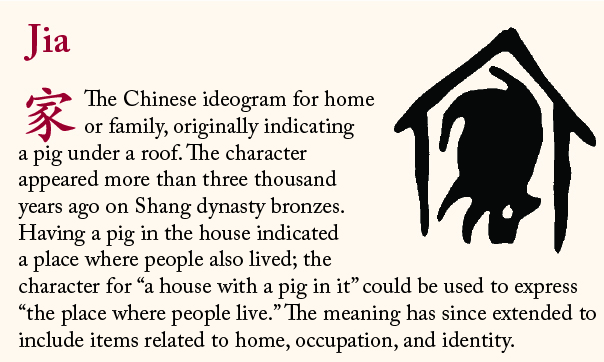
Speaking of pigs, some etymology: |
|
https://www.laphamsquarterly.org/sites/default/files/jia.jpg |
|
https://i.pinimg.com/originals/ae/9a/95/ae9a958e0b711f64d40504c0c580d29f.png |
|
#Post#: 1896-------------------------------------------------- |
|
Re: Aryan pet food |
|
By: 90sRetroFan Date: October 31, 2020, 1:11 am |
|
--------------------------------------------------------- |
|
https://science.sciencemag.org/content/370/6516/557 |
|
[quote]Expansions of steppe pastoralists associated with the |
|
Yamnaya and Corded Ware cultures into Late Neolithic and Bronze |
|
Age Europe transformed the ancestry of human populations (43, |
|
45, 46). To test whether dog ancestry was similarly affected, we |
|
analyzed a 3.8-ka-old dog from the eastern European steppe |
|
associated with the Bronze Age Srubnaya culture. Although its |
|
ancestry resembles that of western European dogs (Fig. 1C and |
|
fig. S10), it is an outlier in the center of PC1�PC2 space (Fig. |
|
1B). A Corded Ware�associated dog (4.7 ka ago) from Germany, |
|
hypothesized to have steppe ancestry (14), can be modeled as |
|
deriving 51% of its ancestry from a source related to the |
|
Srubnaya steppe dog and the rest from a Neolithic European |
|
source (data file S1) (30). We obtain similar results for a |
|
Bronze Age Swedish dog (45%; 3.1 ka ago), but not a Bronze Age |
|
Italian dog (4 ka ago). |
|
Despite this potential link between the steppe and the Corded |
|
Ware dog, most later European dogs display no particular |
|
affinity to the Srubnaya dog. Modern European dogs instead |
|
cluster with Neolithic European dogs (Fig. 1B) and do not mirror |
|
the lasting ancestry shift seen in humans after the pastoralist |
|
expansion (Fig. 3A). Earlier and additional steppe dog genomes |
|
are needed to better understand this process, but the relative |
|
continuity between Neolithic and present-day individuals |
|
suggests that the arrival of steppe pastoralists did not result |
|
in persistent large-scale shifts in the ancestry of European |
|
dogs.[/quote] |
|
Dogs >>>>>>>>>>>> Homo Hubris |
|
***************************************************** |