 |
Return Create A Forum - Home |
 |
--------------------------------------------------------- |
|
IL2 Air Combat! |
 |
https://il2freemodding.createaforum.com |
|
--------------------------------------------------------- |
|
***************************************************** |
|
Return to: Plane of the Week Articles |
|
***************************************************** |
|
#Post#: 14702-------------------------------------------------- |
|
Plane of the Week: The Gloster Gladiator |
|
By: vonofterdingen Date: December 14, 2020, 2:02 pm |
|
--------------------------------------------------------- |
|
https://i.postimg.cc/1419mgcH/Screen-Hunter-585.png |
|
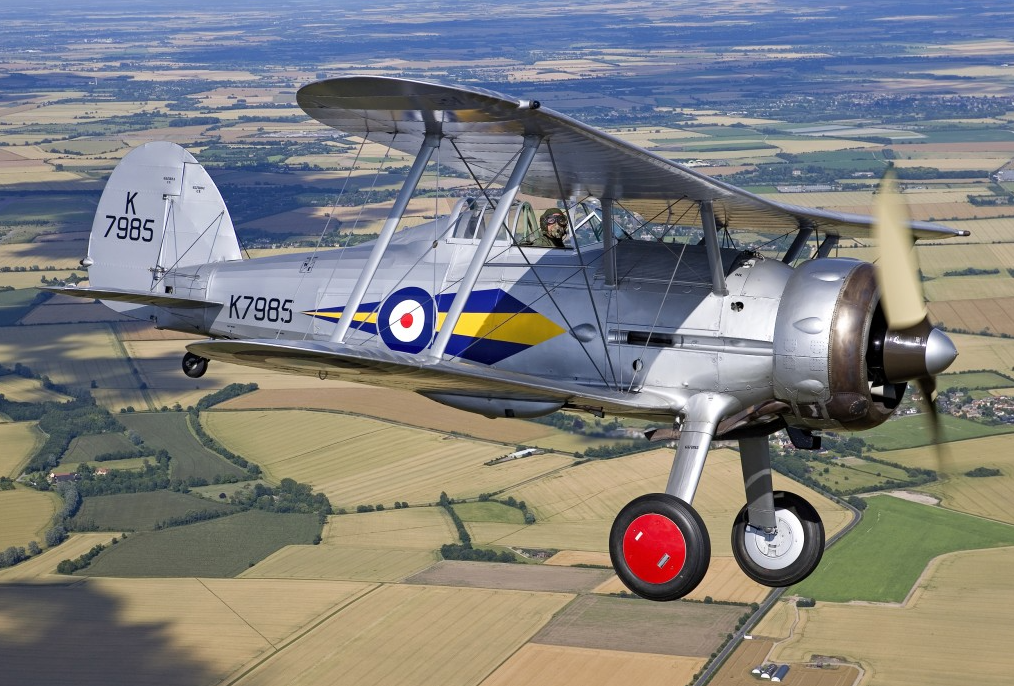
The Gloster Gladiator was one of those aircraft that was well |
|
on its way toward obsolescence at the start of the second world |
|
war, yet was very important historically. Its biplane design |
|
showed the aircraft�s role as a transition between WW1 and WW2. |
|
Though it was not competitive against German fighters of the |
|
period, the Gladiator saw plenty of service with the RAF in |
|
Africa, the Med, and the middle east, as well as serving in the |
|
air forces of countless countries such as Finland, Norway, |
|
China, and Belgium. But perhaps the Gladiator�s finest hour was |
|
in the skies over Malta, where the now famous Gladiators Faith, |
|
Hope, and Charity held off the Regia Aeronautica. Though |
|
somewhat apocryphal, the Malta story is the stuff of legends. |
|
From Wikipedia |
|
The Gloster Gladiator was a British-built biplane fighter. It |
|
was used by the Royal Air Force (RAF) and the Fleet Air Arm |
|
(FAA) (as the Sea Gladiator variant) and was exported to a |
|
number of other air forces during the late 1930s. |
|
Developed privately as the Gloster SS.37, it was the RAF's |
|
last biplane fighter aircraft and was rendered obsolete by newer |
|
monoplane designs even as it was being introduced. Though often |
|
pitted against more formidable foes during the early days of the |
|
Second World War, it acquitted itself reasonably well in combat. |
|
The Gladiator saw action in almost all theatres during the |
|
Second World War, with a large number of air forces, some of |
|
them on the Axis side. The RAF used it in France, Norway, |
|
Greece, the defence of Malta, the Middle East, and the brief |
|
Anglo-Iraqi War (during which the Royal Iraqi Air Force was |
|
similarly equipped). Other countries deploying the Gladiator |
|
included China against Japan, beginning in 1938; Finland (along |
|
with Swedish volunteers) against the Soviet Union in the Winter |
|
War and the Continuation War; Sweden as a neutral non-combatant |
|
(although Swedish volunteers fought for Finland against USSR as |
|
stated above); and Norway, Belgium, and Greece resisting Axis |
|
invasion of their respective lands. |
|
The South African pilot Marmaduke "Pat" Pattle was the top |
|
Gladiator ace with 15 victories with the type. |
|
In February 1937, No. 72 Squadron, based at Tangmere, became |
|
the first squadron to be equipped with the Gladiator; No. 72 |
|
operated the type until April 1939, longer than any other |
|
home-based frontline unit. Between March and April 1937, No. 3 |
|
Squadron at Kenley also received Gladiators from the remainder |
|
of the first production batch, replacing their obsolete Bristol |
|
Bulldogs. Initial service with the type proved the Vickers guns |
|
to be problematical; the Gladiator was quickly armed with .303 |
|
in (7.7 mm) Browning machine guns, which were substantially more |
|
popular, leading to the other guns often only being resorted to |
|
if deemed necessary. On 27 March 1937, No. 54 Squadron at |
|
Hornchurch became the first unit to receive Browning-armed |
|
Gladiators. |
|
By September 1937, all eight Gladiator squadrons had achieved |
|
operational status and had formed the spearhead of London's air |
|
defences. Difficulties with introducing the type had been |
|
experienced. Although the Gladiator was typically well liked by |
|
pilots, the accident rate during operational training on the |
|
type was so high that a small replacement batch of 28 Gladiator |
|
Mk IIs was hurriedly produced. Most accidents were caused by |
|
pilots being caught out by the fighter's increased wing loading, |
|
and many aviators had little experience in landing aircraft with |
|
such a wide flap area. The aircraft had a tendency to stall more |
|
abruptly, frequently dropping a wing while doing so. The |
|
Gladiator very easily entered a flat spin, and great skill was |
|
needed to recover. |
|
During 1938, the RAF had begun to receive its first |
|
deliveries of the Hurricane and Spitfire monoplanes; an emphasis |
|
was soon placed on quickly re-equipping half of the Gladiator |
|
squadrons with either of these monoplane types. By the outbreak |
|
of the Second World War, the Gladiator had largely been replaced |
|
by the Hurricane and Spitfire in front-line RAF service. The |
|
introduction of these aircraft had been eased by the presence of |
|
the Gladiator, squadrons that had operated Gladiators prior to |
|
converting to the monoplane types experienced a noticeably |
|
improved accident record than those who converted from older |
|
types such as the Gauntlet. Experiences such as operating the |
|
Gladiator's landing flaps and familiarisation with its sliding |
|
hood have been attributed to having favourably impacted pilot |
|
conversion. |
|
Although, by 1941, all Gladiators had been withdrawn from |
|
front-line duties defending the British Isles, a need to defend |
|
Britain's trade routes throughout the overseas territories of |
|
the British Empire had been recognised and therefore the RAF |
|
redeployed many of its Gladiators to the Middle East to defend |
|
the theatre and the crucial Suez Canal. The Gladiator saw |
|
considerable action during early stages of the war, including |
|
participating in the action in the French and Norwegian |
|
campaigns, in addition to various peripheral campaigns. |
|
[img width=1024 |
|
height=674] |
|
https://i.postimg.cc/HLNjGkKS/Screen-Hunter-586.png[/img] |
|
In October 1937, the Chinese Central Government ordered 36 |
|
Gladiator Is, which were delivered in two crated batches to |
|
Guangzhou via Hong Kong. The Chinese Gladiators used the |
|
American M1919 Browning machine gun to fire American .30-06 |
|
Springfield ammunition, the main ammunition of the Chinese |
|
Nationalist Air Force. By February 1938, these aircraft had been |
|
assembled into two squadrons and the Chinese pilots familiarised |
|
themselves with them. The Gloster Gladiator had its combat d�but |
|
on 24 February 1938. That day, in the Nanking area, |
|
Chinese-American Capt John Wong Sun-Shui (nicknamed 'Buffalo') |
|
shot down an A5M Claude navy fighter, the first victim of a |
|
Gladiator. Wong is believed to have shot down a second A5M, for |
|
the wrecks of two Japanese fighters were found. During that |
|
clash, Chinese Gladiators lost two of their number. |
|
Chinese Gladiators scored several more victories over |
|
Japanese aircraft from 1938 to 1940 during the Second |
|
Sino-Japanese War. In China Gladiators were used extensively |
|
before the start of 1940 by the 28th, 29th and 32nd squadrons of |
|
the 3rd Group. Chinese aviators considered the Gladiator an |
|
excellent fighter in its class but pilots soon found it |
|
increasingly difficult to hold their own against the modern A5M, |
|
and because of a lack of spare parts due to an arms embargo the |
|
surviving Gladiators were mostly relegated to training. When |
|
newer Japanese aircraft such as the Mitsubishi A6M Zero entered |
|
the theatre, the Gladiators' days were numbered. American-born |
|
Chinese pilot John "Buffalo" Wong, the first Gladiator flying |
|
ace and first American fighter ace of the Second World War, was |
|
eventually shot down in combat with A6M Zeros on 14 March 1941 |
|
and died two days later from his injuries. He and Arthur Chin |
|
were among a group of 15 Chinese Americans who formed the |
|
original group of American volunteer combat aviators in China. |
|
During the Winter War, the Finnish Air Force (FAF) obtained |
|
30 Mk II fighters from the UK. Ten of the aircraft were donated |
|
while the other 20 were bought by the FAF; all were delivered |
|
between 18 January and 16 February 1940, the first entering |
|
service on 2 February 1940. The Finnish Gladiators served until |
|
1945 but they were outclassed by modern Soviet fighters during |
|
the Continuation War and the aircraft was mostly used for |
|
reconnaissance from 1941. The Finnish Air Force obtained 45 |
|
aerial victories by 22 pilots with the aircraft during the |
|
Winter War and one victory during the Continuation War. Twelve |
|
Gladiators were lost in combat during the Winter War and three |
|
during the Continuation War. Two pilots became aces with this |
|
aircraft: Oiva Tuominen (6.5 victories with Gladiators) and |
|
Paavo Berg (five victories). |
|
Besides the FAF Gladiators, the Swedish Voluntary Air Force, |
|
responsible for the air defence of northernmost Finland during |
|
the later part of the Winter War, was also equipped with |
|
Gladiator fighters, known as J8s (Mk Is) and J8As (Mk IIs). The |
|
Flying Regiment F 19 arrived in Finnish Lapland on 10 January |
|
1940 and remained there until the end of hostilities. It fielded |
|
12 Gladiator Mk II fighters, two of which were lost during the |
|
fighting and five Hawker Hart dive bombers, plus a |
|
Raab-Katzenstein RK-26 liaison aircraft and a Junkers F.13 |
|
transport aircraft. The aircraft belonged to and were crewed by |
|
the Swedish Air Force but flew with Finnish nationality |
|
markings. The Swedish Gladiators scored eight aerial victories |
|
and destroyed four aircraft on the ground. One concern was |
|
expressed when F 19's executive officer Captain Bj�rn Bjuggren |
|
wrote in his memoirs, that the tracer rounds of the Gladiator's |
|
machine guns would not ignite the gasoline when penetrating the |
|
fuel tanks of Soviet bombers. |
|
At the beginning of the Second World War, during what was |
|
known as the "Phoney War", Britain deployed the British |
|
Expeditionary Force (BEF) into France to fight alongside the |
|
French army. As part of this force, RAF units operating various |
|
aircraft were dispatched to contribute, including two Gladiator |
|
squadrons. Initial air operations on either side were limited by |
|
the winter weather; however, immediately following Germany's |
|
commencement of the Manstein Plan and its invasion of the Low |
|
Countries on 10 May 1940, the BEF's Gladiators participated in |
|
the Dyle Plan, an unsuccessful counterattack on German forces. |
|
From 10 May 1940 to 17 May, the Gladiators were in continuous |
|
demand on the front line, quickly losing numerous aircraft and |
|
their crews in the rapid action. On 18 May 1940, a Luftwaffe |
|
bombing raid destroyed many of the BEF's Gladiators and |
|
Hurricanes on the ground at Vitry-en-Artois, shortly after which |
|
the BEF's withdrawal to Dunkirk for evacuation to mainland |
|
Britain began. |
|
Gladiators typically flew patrol flights that led to occasional |
|
clashes with Luftwaffe reconnaissance aircraft. On 17 October |
|
1940, British Gladiators scored their first success when No 607 |
|
Squadron "B" Flight shot down a Dornier Do 18 flying boat |
|
('8L+DK' of 2.KuFlGr 606), on the North Sea. On 10 April 1941, |
|
804 NAS took off from Hatston, in Orkney, to intercept a group |
|
of approaching German aircraft. Lt Cdr J. C. Cockburn was |
|
credited with one destroyed and Blue Section with a "damaged". |
|
At Malta, a stock of 18 Sea Gladiators from 802 Naval Air |
|
Squadron had been delivered by HMS Glorious, in early 1940. |
|
Three were later shipped out to take part in the Norwegian |
|
Campaign and another three were sent to Egypt. By April, Malta |
|
was in need of fighter protection and it was decided to form a |
|
flight of Gladiators at RAF Hal Far, to be composed of RAF and |
|
FAA personnel. Several Sea Gladiators were assembled and |
|
test-flown. In the siege of Malta in 1940, for ten days the |
|
fighter force defending Malta was the Hal Far Fighter Flight, |
|
giving rise to a myth that three aircraft, named Faith, Hope and |
|
Charity, formed the entire fighter cover of the island. The |
|
aircraft names came into use after the battle. More than three |
|
aircraft were operational, though not always at the same time; |
|
others were used for spare parts.[55] No 1435 Flight, which |
|
later assumed control of Malta's air defence, took on the names |
|
Faith, Hope and Charity for its aircraft upon its reformation as |
|
the air defence unit in the Falkland Islands in 1988. |
|
The Italian air force units deployed against Malta should |
|
have easily defeated the Gladiators but its manoeuvrability and |
|
good tactics won several engagements, often starting with a dive |
|
on Savoia-Marchetti SM.79 Sparviero bombers before the Fiat |
|
CR.42 and Macchi MC.200 escort fighters could react. On 11 June |
|
1940, a Gladiator damaged a Macchi and on 23 June, a Gladiator |
|
flown by George Burges, managed to shoot down an MC.200.[56] |
|
Another successful pilot over Malta was "Timber" Woods who |
|
managed to shoot down two S.79s and two CR.42s, also claiming a |
|
Macchi hit on 11 June and another S.79 damaged. The Gladiators |
|
forced Italian fighters to escort bombers and reconnaissance |
|
aircraft. Although the Regia Aeronautica had started with a |
|
numerical advantage and air superiority, during the summer of |
|
1940 the situation was reversed, with Hurricanes being delivered |
|
as fast as possible and gradually taking over the island's air |
|
defence. |
|
By June, two of the Gladiators had crashed and two more were |
|
assembled.[59] Charity was shot down on 31 July 1940.[60][61] |
|
Its pilot, Flying Officer Peter Hartley, scrambled at 09.45 with |
|
fellow pilots F. F. Taylor and Flight Lieutenant "Timber" Woods, |
|
to intercept an SM.79, escorted by nine CR.42s from 23� Gruppo. |
|
During a dogfight a CR.42 flown by Serg. Manlio Tarantino shot |
|
down Hartley's Gladiator (N5519), badly burning him.[62] Woods |
|
shot down Antonio Chiodi, commander of the 75a Squadriglia five |
|
miles east of Grand Harbour. Chiodi was subsequently awarded a |
|
posthumous Medaglia d�Oro al Valor Militare, Italy's highest |
|
military award. In May 2009, the remains of Charity and others |
|
were the subject of an underwater search by NATO minesweepers. |
|
Hope (N5531) was destroyed on the ground by enemy bombing in May |
|
1941. The fuselage of Faith is on display at the National War |
|
Museum, Fort St Elmo, Valletta today. The fate of at least five |
|
more Gladiators that saw action over Malta is not as well |
|
documented. |
|
The Finnish Air Force was the last to use the Gloster biplane |
|
in combat. It was under Finnish insignia that the Gladiator |
|
achieved its last air victory. During the Continuation War, |
|
against the Soviets, Glosters supported the advance of the |
|
Karelian Army around Lake Ladoga. On 15 February 1943, 1st Lt |
|
H�kan Str�mberg of LLv 16, during a reconnaissance mission along |
|
the Murmansk railway, between the White Sea and the Lake Onega, |
|
spotted, on Karkijarvi, a Soviet Polikarpov R-5 taking off. |
|
Stromberg dived on it and shot it down into the forest near its |
|
airfield with two bursts. This was the last confirmed victory in |
|
the Gladiator. |
|
[img width=1024 |
|
height=623] |
|
https://i.postimg.cc/3RDN3HQ3/Screen-Hunter-587.png[/img] |
|
In game� |
|
I do not like flying the Gladiator at all. For one thing, I |
|
do not like biplanes in IL-2, due in part to the limited |
|
visibility. If I do have to fly a biplane, I prefer the Fiat and |
|
Polikarpov varieties. They seem faster and mor maneuverable than |
|
the Gladiator. For my part, I appreciate the Gladiator most as |
|
an easy opponent. The Gladiator does appear in some fine IL-2 |
|
campaigns though, covering theaters such as Syria, East |
|
Africa/Somalia, and the Mediterranean. In those early war |
|
theaters it is more competitive. And of course, there have been |
|
some fine campaigns covering the Faith, Hope, and Charity story |
|
at Malta. |
|
#Post#: 14704-------------------------------------------------- |
|
Re: Plane of the Week: The Gloster Gladiator |
|
By: DHumphrey Date: December 14, 2020, 2:26 pm |
|
--------------------------------------------------------- |
|
Excellent article Von ... another great PoW !!! |
|
I enjoy flying this aircraft in the game, one thing though is |
|
that you have to use the "Shift + F1" feature to give you a good |
|
site picture before you shoot. I normally use this when I'm |
|
close, roughly .20 - .25 away from the enemy and while I'm on |
|
their six. |
|
I've used this plane many times in some campaigns I've produced. |
|
It fought well in North Africa and also in Greece. |
|
Here is one of my campaigns where you'll fly the Gladiator |
|
during the first few missions. :) |
|
https://www.mission4today.com/index.php?name=Downloads3&file=details&id=2662 |
|
https://i.ibb.co/HTBttc9/dawtital.jpg |
|
#Post#: 14705-------------------------------------------------- |
|
Re: Plane of the Week: The Gloster Gladiator |
|
By: cafs Date: December 14, 2020, 2:57 pm |
|
--------------------------------------------------------- |
|
The final RAF biplane fighter, but not a great one. Von, I do |
|
not like flying biplanes on IL-2 for the same reason, horrible |
|
visibility from the cockpit. |
|
Malta's Gladiators came from, at least, 10 cratered Royal Navy |
|
Sea Gladiators kept as a reserve for the RN carriers. The myth |
|
was created because just a Vic of Gladiators flew the |
|
interception missions over the island, sometimes only a pair |
|
were scrambled. |
|
Thanks Von. |
|
#Post#: 14706-------------------------------------------------- |
|
Re: Plane of the Week: The Gloster Gladiator |
|
By: JG51_Ruski Date: December 14, 2020, 4:50 pm |
|
--------------------------------------------------------- |
|
Great article Von ..Thank you for the work always welcome |
|
#Post#: 14970-------------------------------------------------- |
|
Re: Plane of the Week: The Gloster Gladiator |
|
By: Beowolff Date: December 28, 2020, 10:01 am |
|
--------------------------------------------------------- |
|
Super article! I LOVE biplanes and I really love the Glad... |
|
however, as Cafs pointed out I don't particularly like flying |
|
them in IL2 because of the cockpit messing with my vision. |
|
However, the Gladiator does a fair job when compared to similar |
|
aircraft and if i really CONCENTRATE I can usually hold my own |
|
against most enemy aircraft. |
|
Super article, Von! You do a GREAT job with this! Many thanks! |
|
S! ;) |
|
Beo |
|
***************************************************** |



![https://i.postimg.cc/HLNjGkKS/Screen-Hunter-586.png[/img]](https://i.postimg.cc/HLNjGkKS/Screen-Hunter-586.png[/img])
![https://i.postimg.cc/3RDN3HQ3/Screen-Hunter-587.png[/img]](https://i.postimg.cc/3RDN3HQ3/Screen-Hunter-587.png[/img])
