 |
Return Create A Forum - Home |
 |
--------------------------------------------------------- |
|
IL2 Air Combat! |
 |
https://il2freemodding.createaforum.com |
|
--------------------------------------------------------- |
|
***************************************************** |
|
Return to: Plane of the Week Articles |
|
***************************************************** |
|
#Post#: 12473-------------------------------------------------- |
|
Plane of the Week: CAC Boomerang |
|
By: vonofterdingen Date: September 14, 2020, 3:32 pm |
|
--------------------------------------------------------- |
|
https://i.postimg.cc/BbGk9gst/Screen-Hunter-418.png |
|
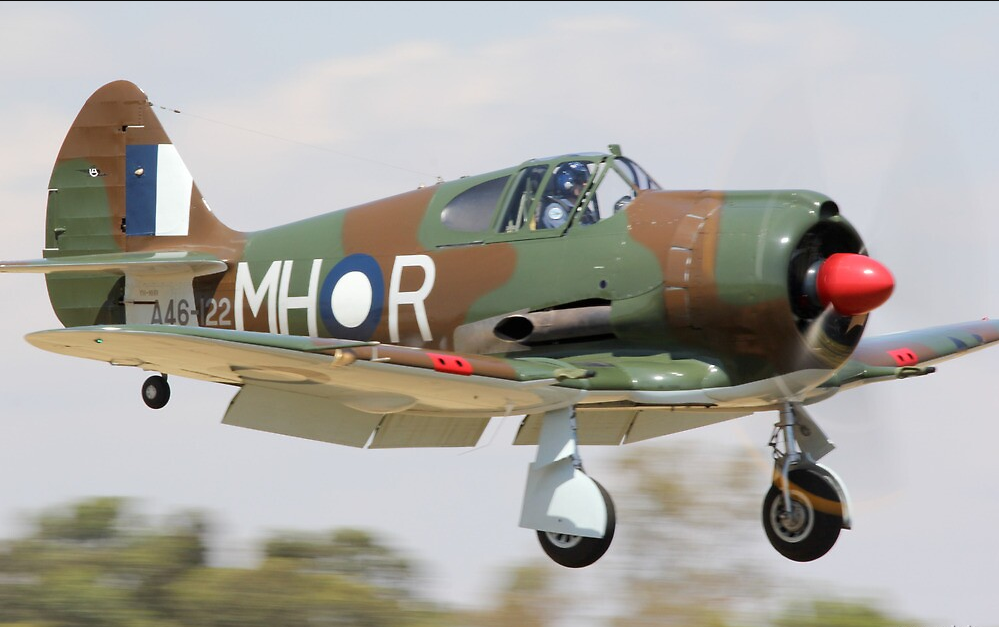
The Commonwealth Aircraft Corporation (CAC) Boomerang was |
|
more of a novelty in WW2 aircraft history, but it was a very |
|
interesting novelty indeed. As war broke out in the Pacific, |
|
both England and the US were hard pressed initially to supply |
|
Australia with the aircraft it needed for its own defense. As a |
|
result, the Australian government encouraged the development of |
|
a self-sufficient aircraft industry. Eventually US and English |
|
aircraft supplied to Australia superseded the Boomerang in the |
|
fighter capacity, but its versatility made it useful as a ground |
|
attack aircraft, and in other support roles. |
|
From Wikipedia |
|
The CAC Boomerang is a fighter aircraft designed and |
|
manufactured in Australia by the Commonwealth Aircraft |
|
Corporation between 1942 and 1945. Approved for production |
|
shortly following the Empire of Japan's entry into the Second |
|
World War, the Boomerang was rapidly designed as to meet the |
|
urgent demands for fighter aircraft to equip the Royal |
|
Australian Air Force (RAAF). It was the first combat aircraft |
|
designed and constructed in Australia. |
|
Different variants of the Boomerang were manufactured under a |
|
series of corresponding production contract numbers CA-12, |
|
CA-13, CA-14 and CA-19, the aircraft supplied under each |
|
subsequent contract would incorporate various modifications, |
|
typically aimed at improving the aircraft's performance. The |
|
Boomerang was handicapped by the available engine variant, which |
|
gave low power at altitude and resulted in the aircraft proving |
|
to be slower than contemporary fighter aircraft. The Boomerang |
|
rarely engaged in aerial combat. During early wartime |
|
operations, the Boomerang was mainly dispatched to equip |
|
home-based squadrons, freeing up other fighters for use |
|
overseas. In later service, the Boomerang would commonly be used |
|
for ground support duties, cooperating with Allied army units, |
|
in addition to secondary roles such as aerial reconnaissance and |
|
air sea rescue. |
|
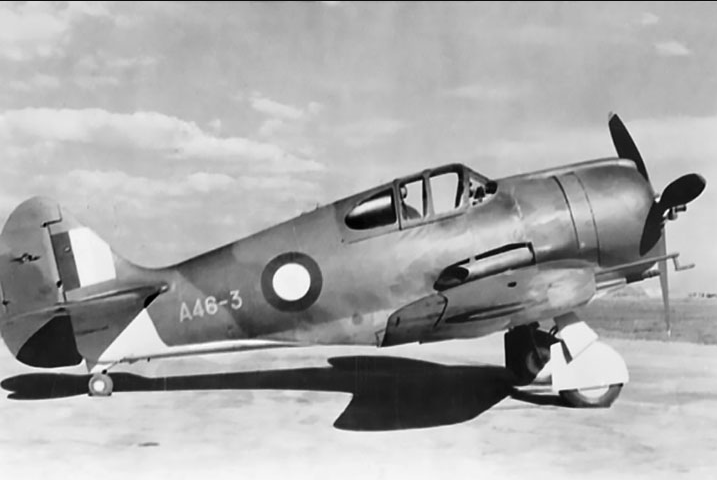
On 19 October 1942, CA-12 A46-6 (bu. no. 829) became the |
|
first Boomerang to reach a training/conversion unit, it was |
|
immediately put to use training pilots when it was transferred |
|
to No. 2 OTU, from 1 AD. In the training role, while generally |
|
being considered to be a success according to Rene, pilots |
|
without previous operational experience had difficulty |
|
transitioning from the Wirraway to the Boomerang due to its poor |
|
forward visibility, the reflector gun sight was subsequently |
|
relocated to improve pilot vision. |
|
No. 83 Squadron became the first fighter unit to receive |
|
Boomerangs, when several were delivered to it � replacing |
|
Airacobras � at Strathpine Airfield, in Strathpine, Queensland, |
|
on 10 April 1943. A few weeks afterward, CA-12s were also |
|
received by a frontline air defence unit, No. 84 Squadron which |
|
was stationed on Horn Island Airfield, in Torres Strait. The |
|
third Boomerang fighter unit, No. 85 Squadron � like No. 83 |
|
Squadron � was performing home defence duties, at RAAF Guildford |
|
(known later as Perth Airport); the Boomerangs replaced the |
|
squadron's Buffaloes. |
|
On 16 May 1943, the first encounter between the Boomerang |
|
while on aerial patrol duties and Japanese aircraft occurred; a |
|
pair of Boomerangs, flown by Flying Officer Johnstone and |
|
Sergeant Stammer, spotted three Mitsubishi G4M 'Betty' bombers |
|
and opened fire upon them at 250 yards, resulting in little |
|
apparent damage and the enemy's withdrawal.[18] On the evening |
|
of 20 May 1943, Flight Lieutenant Roy Goon became the first |
|
Boomerang pilot to scramble on the Australian mainland against |
|
Japanese bombers. Goon, part of a No. 85 Squadron detachment at |
|
RAAF Learmonth, near Exmouth, Western Australia, undertaking air |
|
defence of the Allied naval base at Exmouth Gulf (codenamed |
|
"Potshot"), took off to intercept Japanese bombers. After Goon |
|
had sighted them, the bombers dropped their payloads wide of |
|
their target and left the area. The majority of standing patrols |
|
were uneventful. |
|
No. 84 Squadron had been deployed to a US Army Air Forces |
|
bomber base on Horn Island off the coast of Northern Australia |
|
in a measure to address Japanese air raids and the continuing |
|
shortage of fighters in this area, which were required for an |
|
intended small scale offensive in New Guinea. The squadron was |
|
only modestly successful in this role however. The Boomerang's |
|
low top speed and poor high altitude performance meant that No. |
|
84 could drive off enemy attacks but rarely could get close |
|
enough to Japanese aircraft to bring their guns to bear. There |
|
were not many air raids in this area, and after using Boomerangs |
|
for eight months, No. 84 Squadron upgraded to the Kittyhawk. In |
|
addition to its air defence operations, No. 84 also provided |
|
cover for all shipping in the area during this time, including |
|
within 20 miles of Merauke, Papua Province. |
|
https://i.postimg.cc/BbgYWfMw/Screen-Hunter-419.png |
|
While RAAF records show that the Boomerang was never recorded |
|
as having destroyed any enemy aircraft, the type proved to be |
|
more useful in its capacity as a light ground attack aircraft |
|
used by Army co-operation squadrons, often replacing the lightly |
|
armed Wirraway in this role. In this vital mission, the |
|
Boomerang directly contributed to the extensive ground war in |
|
the jungles of the South West Pacific theatre was often |
|
characterised by widely dispersed, small unit actions, which |
|
typically fought at close quarters and with uncertain front |
|
lines. In addition to strafing Japanese ground forces with |
|
cannon and machine gun fire, Boomerangs would often deploy smoke |
|
bombs to mark valuable targets for other units to attack. The |
|
aircraft was also used for artillery spotting, aerial supply |
|
drops, tactical reconnaissance, and anti-malarial spraying. |
|
The aircraft proved to be ideal in this ground attack role |
|
due to a number of qualities that it possessed. The Boomerang |
|
had the range to go wherever it was needed when it was based |
|
close to ground operations; had heavy armament; was agile and |
|
easy to fly, meaning that pilots could get close to ground |
|
targets, avoid ground fire and rough terrain; and featured |
|
extensive armour plating along with a wood and aluminium |
|
airframe that could withstand significant battle damage. Some of |
|
the aircraft were shot down, including two accidental "kills" by |
|
US forces, and many were damaged during accidents while landing, |
|
often because the Boomerang was prone to ground looping. |
|
No. 4 Squadron and No. 5 Squadron flew Boomerangs in New |
|
Guinea, the Solomon Islands Campaign and Borneo Campaign, also |
|
in the close support role, with marked success. Flying in pairs |
|
(one to observe the ground, the other to observe the air around |
|
them), their tasks included bombing, strafing, close infantry |
|
support and artillery spotting. When attacking larger enemy |
|
formations, Boomerangs often operated in conjunction with larger |
|
aircraft. In this role, the Boomerang would get in close to |
|
confirm the identity of the target and mark it with a 20 lb (9 |
|
kg) smoke bomb with the "cooperating" aircraft delivering the |
|
major ordnance from a safer distance. A partnership between No. |
|
5 Squadron Boomerangs and Royal New Zealand Air Force Corsair |
|
fighter bombers during the Bougainville Campaign was said to be |
|
particularly effective. |
|
[img width=1024 |
|
height=572] |
|
https://i.postimg.cc/wvpfYV9t/Boomerang.jpg[/img] |
|
In game� |
|
The Boomerang is a bit of a plodding plane. It is slow, has a |
|
low service ceiling, and is not particularly well armed. Even |
|
early Japanese bombers can escape the Boomerang in most |
|
scenarios. On the other hand, however, it is rugged and serves |
|
well as a stable gun platform. As such, it is a good choice in a |
|
ground attack role, where it excelled historically. If you like |
|
ground attack (I do) this is a fun plane to take island hopping |
|
against Japanese ground forces. Just take some P-40s along for |
|
fighter cover. |
|
If you do not already have the Boomerang you can get one here |
|
https://il2freemodding.createaforum.com/ww2-allied-(single-engine)/boomerangs-w… |
|
|
|
#Post#: 12476-------------------------------------------------- |
|
Re: Plane of the Week: CAC Boomerang |
|
By: ben_wh Date: September 14, 2020, 6:32 pm |
|
--------------------------------------------------------- |
|
von, |
|
Good write-up on the Boomerang. |
|
In-game: this aircraft as well as the Wirraway can really |
|
benefit from mods that more closely integrate close air support |
|
in the game better: e.g. marking target for another aircraft to |
|
attack, artillery spotting among others. There are already maps |
|
that provides the right battlefields for these planes - |
|
Solomons, NGNB, Hollandia and Borneo. |
|
Cheers, |
|
#Post#: 12496-------------------------------------------------- |
|
Re: Plane of the Week: CAC Boomerang |
|
By: Beowolff Date: September 15, 2020, 2:59 pm |
|
--------------------------------------------------------- |
|
Super job on (to me) a super plane. Always loved this bird! |
|
Few her in the old Microsoft flight game too as an add-on! |
|
Thanks! Great work, Von! |
|
S! |
|
***************************************************** |



![https://i.postimg.cc/wvpfYV9t/Boomerang.jpg[/img]](https://i.postimg.cc/wvpfYV9t/Boomerang.jpg[/img])