 |
Return Create A Forum - Home |
 |
--------------------------------------------------------- |
|
IL2 Air Combat! |
 |
https://il2freemodding.createaforum.com |
|
--------------------------------------------------------- |
|
***************************************************** |
|
Return to: Plane of the Week Articles |
|
***************************************************** |
|
#Post#: 12226-------------------------------------------------- |
|
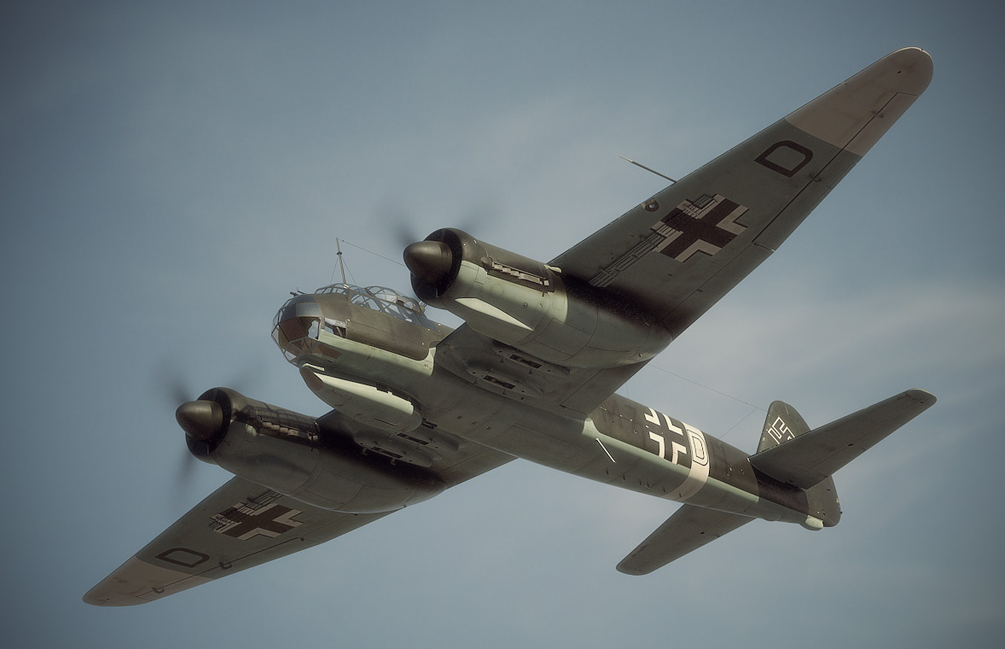
Plane of the Week: Junkers Ju-88 |
|
By: vonofterdingen Date: August 17, 2020, 4:56 pm |
|
--------------------------------------------------------- |
|
https://i.postimg.cc/MpMtc4rL/Screen-Hunter-387.png |
|
Some aircraft designs just click. Things just go right and a |
|
particular design excels in a variety of different roles. The |
|
Junkers Ju-88 is such a design. This aircraft was in production, |
|
with its fundamental design unchanged, throughout the war. It |
|
served as a bomber, torpedo plane, heavy fighter, recce, night |
|
fighter, and dive bomber. I can�t think of a more versatile |
|
aircraft of this period, and it performed very well in all of |
|
its roles and variants. |
|
From Wikipedia: |
|
The Junkers Ju 88 was a German World War II Luftwaffe |
|
twin-engined multirole combat aircraft. Junkers Aircraft and |
|
Motor Works (JFM) designed the plane in the mid-1930s as a |
|
so-called Schnellbomber ("fast bomber") that would be too fast |
|
for fighters of its era to intercept. It suffered from technical |
|
problems during its development and early operational periods |
|
but became one of the most versatile combat aircraft of the war. |
|
Like a number of other Luftwaffe bombers, it served as a bomber, |
|
dive bomber, night fighter, torpedo bomber, reconnaissance |
|
aircraft, heavy fighter and at the end of the war, as a flying |
|
bomb. |
|
Despite a protracted development, it became one of the |
|
Luftwaffe's most important aircraft. The assembly line ran |
|
constantly from 1936 to 1945 and more than 15,000 Ju 88s were |
|
built in dozens of variants, more than any other twin-engine |
|
German aircraft of the period. Throughout production the basic |
|
structure of the aircraft remained unchanged. |
|
In October 1937 Generalluftzeugmeister Ernst Udet had ordered |
|
the development of the Ju 88 as a heavy dive bomber. This |
|
decision was influenced by the success of the Ju 87 Stuka in |
|
this role. The Junkers development center at Dessau gave |
|
priority to the study of pull-out systems and dive brakes.[13] |
|
The first prototype to be tested as a dive bomber was the Ju 88 |
|
V4 followed by the V5 and V6. These models became the planned |
|
prototype for the A-1 series. The V5 made its maiden flight on |
|
13 April 1938, and the V6 on 28 June 1938. Both the V5 and V6 |
|
were fitted with four-blade propellers, an extra bomb bay and a |
|
central "control system". As a dive bomber, the Ju 88 was |
|
capable of pinpoint deliveries of heavy loads; however, despite |
|
all the modifications, dive bombing still proved too stressful |
|
for the airframe, and in 1943, tactics were changed so that |
|
bombs were delivered from a shallower, 45� diving angle. |
|
Aircraft and bomb sights were accordingly modified and dive |
|
brakes were removed. With an advanced Stuvi dive-bombsight, |
|
accuracy remained very good for its time. Maximum bomb load of |
|
the A-4 was 3,000 kg (6,600 lb), but in practice, standard bomb |
|
load was 1,500�2,000 kg (3,310�4,410 lb).[14] Junkers later used |
|
the A-4 airframe for the A-17 torpedo carrier. However, the |
|
variant lacked the undernose Bola gondola for a ventral gun |
|
position. |
|
The Ju 88C series of standard fighter-bomber versions from |
|
the C-2 onwards culminated in the Ju 88 C-6, applying experience |
|
acquired with the A-4 bomber, equipped with the same Jumo 211J |
|
engines but replacing the "beetle's eye" nose glazing with a |
|
smoothly curved all-metal nose, pierced only by the barrels of |
|
its forward-firing offensive armament. The C-6 was used mostly |
|
as fighter-bomber and therefore assigned to bomber units. As a |
|
reaction to the increasing number of attacks on German shipping, |
|
especially on U-boats in the Bay of Biscay, from July 1942 it |
|
started flying anti-shipping patrols and escort missions from |
|
bases in France.[15] V./Kampfgeschwader 40 being formed to |
|
operate the C-6. |
|
The Ju 88P was a specialized variant for ground attack and to |
|
function as a bomber destroyer, designed starting from 1942[20] |
|
and produced in small numbers, using examples of the Bordkanone |
|
heavy calibre aviation autocannon series, which required the |
|
omission of the Bola undernose gondola for clearance. The |
|
prototype, derived from a standard Ju 88 A-4, was armed with a |
|
7.5 cm anti-tank gun derived from the 7.5 cm PaK 40 installed in |
|
a large conformal gun pod under the fuselage. This was followed |
|
by a small batch of Ju 88 P-1, which standardized the solid |
|
sheet metal nose of the C version for all known examples of the |
|
P-series, and used the new 7.5 cm PaK 40L semi-automatic gun, |
|
also known as the Bordkanone BK 7,5, which was also meant for |
|
use in both the later Henschel Hs 129B-3 dedicated anti-armor |
|
aircraft, and a never-achieved production version of the He |
|
177A-3/R5 ground-attack Flak-suppression Stalingradtyp |
|
field-improvised version. The Ju 88P-1 was produced in some 40 |
|
units, but with the massive cannon installation resulting in a |
|
slow and vulnerable aircraft,[20] it was soon replaced by the Ju |
|
88 P-2, featuring two Bordkanone 3.7 cm BK 3,7 guns, whose |
|
higher muzzle velocity proved useful against the Russian tanks |
|
in the Eastern Front. This aircraft was used by |
|
Erprobungskommando 25. The Ju 88 P-3 also used the twin BK 3,7 |
|
guns, and added further armor for the crew, and was delivered at |
|
one Staffel of the Nachtschlachtgruppen 1, 2, 4, 8 and 9 for |
|
night attacks in the Eastern Front, in northern Norway (NSGr 8) |
|
and Italy (NSGr 9).[20] Finally, the Ju 88 P-4 mounted a |
|
smaller-volume ventral gun pod housing a 5 cm auto-loading |
|
Bordkanone BK 5 cannon (the same ordnance used for the |
|
field-improvised handful of Stalingradtyp He 177As created) and, |
|
in some cases, 6.5 cm solid propellant rockets.[ |
|
The aircraft of V./KG 40 (which was redesignated |
|
I./Zerst�rergeschwader 1 in 1943) were a significant threat to |
|
antisubmarine aircraft and operated as escort fighters for the |
|
more vulnerable Focke-Wulf Fw 200 Condor maritime patrol |
|
bombers. Between July 1942 and July 1944, the Ju 88s of KG 40 |
|
and ZG 1 were credited with 109 confirmed air-to-air victories, |
|
at a cost of 117 losses. They were finally deployed against the |
|
Allied Invasion of Normandy in June 1944, incurring heavy losses |
|
for little effect before being disbanded on 5 August 1944. |
|
Only 12 Ju 88s saw action during the invasion of Poland. The |
|
unit Erprobungskommando 88 (Ekdo 88) was responsible for testing |
|
new bomber designs and their crews under hostile conditions. |
|
They selected 12 aircraft and their crews and attached them to |
|
1./Kampfgeschwader 25. As a result of its small operational |
|
numbers, the type made no impact. |
|
The Luftwaffe committed II./Kampfgeschwader 30 to the |
|
campaign under X. Fliegerkorps for Operation Weser�bung. The |
|
unit was equipped with Ju 88s and engaged Allied shipping as its |
|
main target. On 9 April 1940, Ju 88s of KG 30 dive-bombed, in |
|
cooperation with high-level bombing Heinkel He 111s of KG 26, |
|
and helped damage the battleship HMS Rodney and sink the |
|
destroyer HMS Gurkha. However, the unit lost four Ju 88s in the |
|
action, the highest single loss of the aircraft in combat |
|
The Luftwaffe's order of battle for the French campaign |
|
reveals all but one of the Luftwaffe's Fliegerkorps (I. |
|
Fliegerkorps) contained Ju 88s in the combat role. The mixed |
|
bomber units, including the Ju 88, of Kampfgeschwader 51 (under |
|
the command of Luftflotte 3) helped claim between 233 and 248 |
|
Allied aircraft on the ground between 10�13 May 1940.[29] The Ju |
|
88 was particularly effective at dive-bombing. Between 13�24 |
|
May, I. and II./KG 54 flew 174 attack against rail systems, |
|
paralysing French logistics and mobility. On 17 June 1940, |
|
Junkers Ju 88s (mainly from Kampfgeschwader 30) destroyed a |
|
"10,000 tonne ship", the 16,243 grt ocean liner RMS Lancastria, |
|
off Saint-Nazaire, killing some 5,800 Allied personnel. Some 133 |
|
Ju 88s were pressed into the Blitzkrieg, but very high combat |
|
losses and accidents forced a quick withdrawal from action to |
|
re-train crews to fly this very high-performance aircraft. Some |
|
crews were reported to be more scared of the Ju 88 than the |
|
enemy, and requested a transfer to an He 111 unit. By this time, |
|
major performance deficiencies in the A-1 led to an all-out |
|
effort in a major design rework. The outcome was a longer, 20.08 |
|
m (65 ft ​10 1⁄2 in) wingspan, from extended rounded |
|
wing tips that had already been standardised on the A-4 version, |
|
that was deemed needed for all A-1s; thus the A-5 was born. |
|
Surviving A-1s were modified as quickly as possible, with new |
|
wings to A-5 specifications. |
|
The Battle of Britain proved very costly. Its higher speed |
|
did not prevent Ju 88 losses from exceeding those of its Dornier |
|
Do 17 and Heinkel He 111 stablemates despite being deployed in |
|
smaller numbers than either. Ju 88 losses over Britain in 1940 |
|
totaled 303 aircraft between July and October 1940. Do 17 and He |
|
111 losses for the same period were 132 and 252 machines |
|
destroyed respectively. |
|
Of all the losses suffered by the Ju 88 at that time, |
|
however, a number were due to the tricky behavior of the plane, |
|
especially when compared with the proven He 111, and to the |
|
crews' lack of experience on the type � many having converted to |
|
the Ju 88 only shortly before. Of the 39 losses recorded for |
|
July 1940, for example, only 20 were due to enemy action. The |
|
others being written off in training accidents, crashes, or |
|
malfunctions over mainland Europe. A series of field |
|
modifications were made to make the Ju 88 less vulnerable, |
|
including the replacement of the single MG 15 rear machine gun |
|
by a twin-barreled MG 81Z machine gun and the fitting of |
|
additional cockpit armour. |
|
The flagship Ju 88 A-4 went into service during the closing |
|
days of the Battle of Britain. Although slower than the A-1, it |
|
solved nearly all of the troubles of the A-1. The A-4 actually |
|
saw additional improvements including more powerful engines but, |
|
unlike other aircraft in the Luftwaffe, did not see a model code |
|
change. The Ju 88 C-series also benefited from the A-4 changes. |
|
By the summer of 1941, most of the units equipped with the |
|
Dornier Do 17 were upgrading to the Ju 88. With a few |
|
exceptions, most of the German bomber units were now flying the |
|
He 111 and Ju 88. The Ju 88 was to prove a very capable and |
|
valuable asset to the Luftwaffe in the east. The Ju 88 units met |
|
with instant success, attacking enemy airfields and positions at |
|
low level and causing enormous losses for little damage in |
|
return. 3./Kampfgeschwader 3 attacked Pinsk airfield in the |
|
morning of the 22 June 1941. It caught, and claimed destroyed, |
|
60 Soviet bombers on the ground. The 39 SBAP Regiment of the 10 |
|
Division SAD actually lost 43 Tupolev SBa and five Petlyakov |
|
Pe-2s. Ju 88s from Kampfgeschwader 51 destroyed over 100 |
|
aircraft after dispatching 80 Ju 88s to hit airfields. In |
|
general the Soviet aircraft were not dispersed and the Luftwaffe |
|
found them easy targets.[37] A report from the Soviet 23rd Tank |
|
Division of the 12th Armoured Corps described a low-level attack |
|
by Ju 88s on 22 June, resulting in the loss of 40 tanks. |
|
However, the Ju 88s were to suffer steady attritional losses. At |
|
0415 on 22 June 1941, III./KG 51 attacked the airfield at |
|
Kurovitsa. Despite destroying 34 Polikarpov I-153s, the Ju 88s |
|
were intercepted by 66 ShAP I-153s. Six Ju 88s were shot down |
|
before the German fighter escort dealt with the threat.[38] By |
|
the end of the first day of the campaign, Ju 88 losses amounted |
|
to 23 destroyed. |
|
[img width=1024 |
|
height=644] |
|
https://i.postimg.cc/cLphfmpL/Screen-Hunter-389.png[/img] |
|
Due to the lack of sufficient numbers of Ju 87 Stukas, the Ju |
|
88 was employed in the direct ground support role. This resulted |
|
in severe losses from ground fire. Kampfgeschwader 1, |
|
Kampfgeschwader 76 and Kampfgeschwader 77 reported the loss of |
|
18 Ju 88s over enemy territory on 23 June. KG 76 and KG 77 |
|
reported the loss of a further four Ju 88s, of which 12 were |
|
100% destroyed.[40] |
|
In the north, the VVS North-Western Front lost 465 aircraft |
|
on the ground, 148 of them bombers, to the Ju 88s of KG 1. A |
|
further 33 were damaged. Out of a total of 1,720 aircraft |
|
deployed by the VVS Northern Front on 22 June,[41] it lost 890 |
|
and a further 187 suffered battle damage in eight days. The Ju |
|
88s units helped virtually destroy Soviet airpower in the |
|
northern sector. |
|
Again, the Ju 88 demonstrated its dive-bombing capability. |
|
Along with He 111s from KG 55, Ju 88s from KG 51 and 54 |
|
destroyed some 220 trucks and 40 tanks on 1 July, which helped |
|
repulse the Soviet South Western Front's offensive. The Ju 88s |
|
destroyed most rail links during interdiction missions in the |
|
area, allowing Panzergruppe 1 to maintain the pace of its |
|
advance. |
|
Ju 88 units operating over the Baltic states during the |
|
battle for Estonia inflicted severe losses on Soviet shipping, |
|
with the same dive-bombing tactics used over Norway, France and |
|
Britain. KGr 806 sank the Soviet destroyer Karl Marx on 8 August |
|
1941 in Loksa Bay Tallinn.[44] On 28 August the Ju 88s had more |
|
success when KG 77 and KGr 806 sank the 2,026 grt steamer |
|
Vironia, the 2,317 grt Lucerne, the 1,423 grt Atis Kronvalds and |
|
the ice breaker Kri�jānis Valdemārs (2,250 grt). The |
|
rest of the Soviet "fleet", were forced to change course. This |
|
took them through a heavily mined area. As a result, 21 Soviet |
|
warships, including five destroyers, struck mines and sank. On |
|
29 August, the Ju 88s accounted for the transport ships Vtoraya |
|
Pyatiletka (3,974 grt), Kalpaks (2,190 grt) and Leningradsovet |
|
(1,270 grt) sunk. In addition, the ships Ivan Papanin, Saule, |
|
Kazakhstan and the Serp i Molot were damaged. Some 5,000 Soviet |
|
soldiers were lost.[45] |
|
On 2 December 1943, 105 Ju 88 A-4s, armed with bombs and |
|
motobomba circling torpedoes, attacked the Allied-held port of |
|
Bari, Italy. The attacking force achieved complete surprise and |
|
sunk over 20 Allied ships in the overcrowded harbour, including |
|
the U.S. Liberty ship John Harvey, which was carrying mustard |
|
gas. About 1,000 people were killed and another 1,000 wounded; |
|
many fatalities and injuries were as a result of the release of |
|
mustard gas. The attacking force lost one aircraft; the Allies |
|
had not assigned any fighters to guard Bari as they thought the |
|
Luftwaffe incapable of striking in this strength at this stage |
|
of the war. The port was completely closed for three weeks from |
|
the damage of the raid, and |
|
In April 1943, as Finland was fighting its Continuation War |
|
against the USSR, the Finnish Air Force bought 24 Ju 88s from |
|
Germany.[47] The aircraft were used to equip No. 44 Sqn, which |
|
had previously operated Bristol Blenheims, but these were |
|
instead transferred to No. 42 Sqn. Due to the complexity of the |
|
Ju 88, the FAF spent most of 1943 training crews on the |
|
aircraft, and conducted only a handful of bombing missions. The |
|
most notable was a raid on the Lehto partisan village on 20 |
|
August 1943 (in which the whole squadron participated), and a |
|
raid on the Lavansaari air field (leaving seven Ju 88 damaged |
|
from forced landing in inclement weather). In the summer of |
|
1943, the Finns noted stress damage on the wings. This had |
|
occurred when the aircraft were used in dive bombing. |
|
Restrictions followed: the dive brakes were removed and it was |
|
only allowed to dive at a 45-degree angle (compared to 60�80 |
|
degrees previously). In this way, they tried to spare the |
|
aircraft from unnecessary wear. |
|
One of the more remarkable missions was a bombing raid on 9 |
|
March 1944 against Soviet Long Range Aviation bases near |
|
Leningrad, when the Finnish aircraft, including Ju 88s, followed |
|
Soviet bombers returning from a night raid on Tallinn, catching |
|
the Soviets unprepared and destroying many Soviet bombers and |
|
their fuel reserves, and a raid against the Aerosan base at |
|
Petsnajoki on 22 March 1944.[48] The whole bomber regiment took |
|
part in the defence against the Soviets during the fourth |
|
strategic offensive. All aircraft flew several missions per day, |
|
day and night, when the weather permitted. |
|
[img width=1024 |
|
height=577] |
|
https://i.postimg.cc/KzF5HYvX/Screen-Hunter-390.png[/img] |
|
[font=verdana] |
|
In game� |
|
I do not fly this plane often myself, but it is one of those |
|
aircraft that is represented in almost every campaign I fly that |
|
involves the Luftwaffe on either side. I did play it in a |
|
campaign once, though I regret that I do not recall the name. |
|
The campaign was for a squadron of Ju-88s attacking Fleet Air |
|
Arm bombers on ASW duties over the Bay of Biscayne. It was a |
|
blast to fly the Ju-88 as a heavy fighter in that role. Most of |
|
my experience with this plane, however, has been as a hunter in |
|
a Yak-1 or P-40. It is good fun that way too![/font] |
|
#Post#: 12227-------------------------------------------------- |
|
Re: Plane of the Week: Junkers Ju-88 |
|
By: JG51_Ruski Date: August 17, 2020, 5:10 pm |
|
--------------------------------------------------------- |
|
Good show Von Thank You !!!! |
|
#Post#: 12229-------------------------------------------------- |
|
Re: Plane of the Week: Junkers Ju-88 |
|
By: larsresult Date: August 18, 2020, 4:11 am |
|
--------------------------------------------------------- |
|
Good choice Von. A plane that looks right and feels right. |
|
#Post#: 12233-------------------------------------------------- |
|
Re: Plane of the Week: Junkers Ju-88 |
|
By: cafs Date: August 18, 2020, 7:49 am |
|
--------------------------------------------------------- |
|
The workhorse of the Luftwaffe, much like RAF's DH Mosquito or |
|
VVS' Petlyakov Pe-2. Within the USAAF the |
|
medium-bomber/torpedo-bomber/heavy or night-fighter work were |
|
split between the B-25 Mitchell/B-26 Marauder/A-20 Boston, |
|
respectively. 👍👍 |
|
#Post#: 12235-------------------------------------------------- |
|
Re: Plane of the Week: Junkers Ju-88 |
|
By: DHumphrey Date: August 18, 2020, 12:15 pm |
|
--------------------------------------------------------- |
|
Nice article Von ... thanks for sharing !!! :) |
|
#Post#: 12246-------------------------------------------------- |
|
Re: Plane of the Week: Junkers Ju-88 |
|
By: ben_wh Date: August 19, 2020, 5:19 pm |
|
--------------------------------------------------------- |
|
Thank you, von, for the write-up. |
|
Eric Brown had very high praise for the Ju-88 in 'Wings of the |
|
Luftwaffe'. Its versatility is a very useful virtue for the |
|
Luftwaffe, having to fight on multiple fronts with widely |
|
different combat requirements. |
|
In game, this versatility is reflected: you can fly the Ju-88 |
|
(with mods, in different variants) as a level bomber, dive |
|
bomber, day fighter (destroyer), night fighter, ground attack |
|
aircraft, torpedo bomber, balloon cable cutter(!) among others. |
|
Even then, there are still variants that is not yet represented |
|
- which underscores its truly diverse roles. |
|
This is one of those planes in game that can showcase both the |
|
versatility of its real-life, historical self as well as the |
|
versatility of the IL-2 game engine. |
|
Cheers, |
|
#Post#: 12248-------------------------------------------------- |
|
Re: Plane of the Week: Junkers Ju-88 |
|
By: vonofterdingen Date: August 20, 2020, 1:00 am |
|
--------------------------------------------------------- |
|
I had not heard of the cable cutting role. I can see how that |
|
could be important but how did the cutting mechanism work? It |
|
sounds like dangerous work! |
|
#Post#: 12249-------------------------------------------------- |
|
Re: Plane of the Week: Junkers Ju-88 |
|
By: larsresult Date: August 20, 2020, 4:41 am |
|
--------------------------------------------------------- |
|
The Ju88A-5 was the first model equipped with a cable cutting |
|
device which was a metal frame projecting in front of the nose |
|
and was used for cutting the cables of barrage balloons during |
|
the Battle of Britain. It didn't always work and so was not very |
|
popular with crews as they had to fly among the balloons and the |
|
weight slowed the aircraft down. |
|
Robert Forsyth's two volume set published by Air Classics/ Ian |
|
Allan on the Ju88 gives more details and diagrams. |
|
#Post#: 12252-------------------------------------------------- |
|
Re: Plane of the Week: Junkers Ju-88 |
|
By: ben_wh Date: August 20, 2020, 9:25 am |
|
--------------------------------------------------------- |
|
[quote author=vonofterdingen link=topic=1746.msg12248#msg12248 |
|
date=1597903251] |
|
I had not heard of the cable cutting role. I can see how that |
|
could be important but how did the cutting mechanism work? It |
|
sounds like dangerous work! |
|
[/quote] |
|
https://youtu.be/n2kxk8USflU |
|
#Post#: 12254-------------------------------------------------- |
|
Re: Plane of the Week: Junkers Ju-88 |
|
By: vonofterdingen Date: August 20, 2020, 2:49 pm |
|
--------------------------------------------------------- |
|
Holy smokes. Nice demonstration Ben! I would never want that |
|
job! I can understand why it was not popular with crews, Lars. |
|
***************************************************** |
|
Next Page |



![https://i.postimg.cc/cLphfmpL/Screen-Hunter-389.png[/img]](https://i.postimg.cc/cLphfmpL/Screen-Hunter-389.png[/img])
![https://i.postimg.cc/KzF5HYvX/Screen-Hunter-390.png[/img]](https://i.postimg.cc/KzF5HYvX/Screen-Hunter-390.png[/img])