 |
Return Create A Forum - Home |
 |
--------------------------------------------------------- |
|
IL2 Air Combat! |
 |
https://il2freemodding.createaforum.com |
|
--------------------------------------------------------- |
|
***************************************************** |
|
Return to: Plane of the Week Articles |
|
***************************************************** |
|
#Post#: 12158-------------------------------------------------- |
|
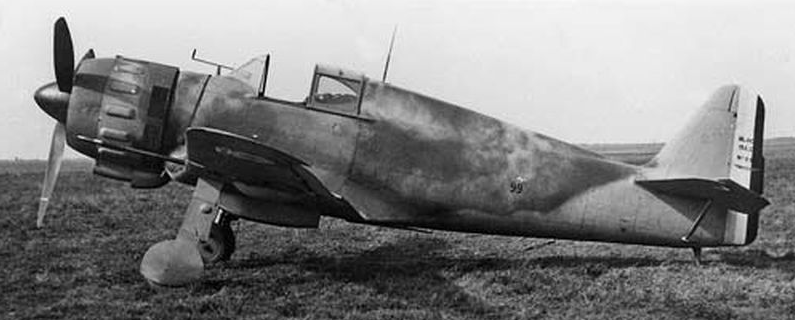
Plane of the Week: Bloch MB.152 |
|
By: vonofterdingen Date: August 10, 2020, 3:24 pm |
|
--------------------------------------------------------- |
|
[img width=1024 |
|
height=548] |
|
https://i.postimg.cc/L54DVMPd/Screen-Hunter-383.png[/img] |
|
France was just not quite prepared for WW2. They prepared to |
|
fight a ground war in the style of WW1 and were behind other |
|
nations in their development of modern aircraft. These were two |
|
fatal errors. With a couple exceptions, like the Dewoitine 520, |
|
French fighters and those they bought from the US were obsolete |
|
at the war�s start. The Bloch MB.152 is an example of how the |
|
French went wrong. |
|
From Wikipedia: |
|
On 13 July 1934, the Service Technique A�ronautique |
|
(Aeronautical Technical Service) of the French Air Force issued |
|
the "C1 design" requirement for a new and completely modern |
|
single-seat interceptor fighter. Envisioned to make use of a |
|
monoplane layout and a retractable undercarriage, the |
|
prospective fighter aircraft was to serve as a replacement for |
|
the French Air Force's existing inventory of Dewoitine D.371, |
|
Dewoitine D.500, and Loire 46 aircraft. Amongst the various |
|
aviation companies who took interest in the specification, to |
|
which the potential for a large production order was attached, |
|
was French aircraft manufacturer Soci�t� des Avions Marcel |
|
Bloch. |
|
The design team, headed by Maurice Roussel, was assembled at |
|
Bloch's Courbevoie facility in Paris. They designed an all-metal |
|
stressed skin monoplane, powered by a single 930 hp Gnome-Rh�ne |
|
14Kfs radial engine and armed with a pair of wing-mounted |
|
Hispano-Suiza-built HS.404 cannon. During September 1935, |
|
construction of the type's first prototype, designated as the |
|
Bloch 150-01, commenced. |
|
Although the C.1 competition was ultimately won by a rival |
|
design, the Morane-Saulnier M.S.406, it was decided to |
|
independently continue with the design's development. During |
|
1936, these efforts culminated in the first attempted flight of |
|
the MB.150.01 prototype; unfortunately, the aircraft proved |
|
unable to leave the ground during the attempt. In the ensuing |
|
disappointment work on the design was temporarily halted, but |
|
development was resumed during early 1937. Following the |
|
implementation of various modifications, consisting of a |
|
strengthened wing of greater area, revised undercarriage |
|
arrangement and the installation of a 701 kW (940 hp) |
|
Gnome-Rhone 14N-0 radial engine with a three-blade constant |
|
speed propeller, on 29 September 1937, the MB.150 finally |
|
conducted its maiden flight. |
|
Months later, the MB.150.01 was handed over to the Centre |
|
d'Essais du Materiel Aerien (CEMA) for service trials; during |
|
one such official test flight in December 1937, a maximum |
|
recorded speed of 434 km/h (269 mph) was attained. As a result |
|
of the CEMA flights, the prototype's performance proved to be |
|
sufficiently interesting as to warrant further development. This |
|
brought, at the beginning of 1938, a small increase in the |
|
aircraft's wing span, the replacement of the twin wing-mounted |
|
radiators by a single unit installed between the wheel wells, |
|
and the installation of an improved 14N-7 engine, which led to |
|
the prototype being re-designated as the MB.150.01M (M standing |
|
for modified). During spring 1938, further trials of the |
|
modified aircraft were performed by CEMA. |
|
By this point, wider circumstances within France, such as the |
|
declining diplomatic situation between the European powers and |
|
the enactment of several urgent re-equipment programmes for the |
|
French Air Force, proved favourable for the MB.150. |
|
Specifically, on 15 March 1938, one such programme, referred to |
|
as Plan V, was adopted, calling for the near-unrealistic |
|
delivery of 940 modern fighter aircraft to the Air Force within |
|
the space of a year. Even the most optimistic projections saw |
|
285 M.S.406 fighters delivered; while the MB.150 was deemed to |
|
have not yet completed development, it was decided to include |
|
the type within the production. |
|
Accordingly, on 7 April 1938, upon the completion of trials |
|
in late spring 1938, the newly formed manufacturing consortium |
|
SNCASO received an initial order for a pre-production batch of |
|
25 aircraft which, upon successful completion of the MB.150's |
|
development programme, was followed by the confirmation of a |
|
sizable order for 450 aircraft.[4] Initially, 300 aircraft were |
|
to be delivered to the French Air Force by 1 April 1939; this |
|
was later cut down to 206 aircraft. In reality, only a single |
|
aircraft had been delivered by the prescribed deadline; other |
|
aircraft types also proved similarly unable to attain the tight |
|
delivery dates. |
|
On 26 September 1939, the first modified MB.152s were |
|
delivered to the French Air Force; the first of these fighters |
|
were allocated to active squadrons by early October and, by |
|
mid-November 1939, two separate Groupes de Chasse (fighter |
|
groups) had been equipped with 26 MB.152s each. At this point, |
|
the type still demonstrated some unfavourable flight |
|
characteristics, such as during steep dives. Meanwhile, |
|
increasing numbers of MB.151 aircraft were being delivered to be |
|
squadrons for training purposes in advance of their anticipated |
|
conversion to the MB.152. During the initial stage of the |
|
conflict, known as the Phoney War, very few engagements between |
|
the MB.152 and the aircraft of the Luftwaffe occurred; in this |
|
period, only a single kill of a Junkers Ju 88 was recorded. |
|
https://i.postimg.cc/3JSSnW9t/ScreenHunter_382.png |
|
During the Battle of France, a mixture of MB.151s and MB.152s |
|
equipped nine Groupes de Chasse; the MB.152 was the most |
|
numerous aircraft remaining in service during the final weeks |
|
prior to the signing of the Armistice of 22 June 1940. They |
|
proved to be tough aircraft, able to withstand considerable |
|
battle damage, rapidly reach high speeds during a dive, and |
|
functioned well as a gunnery platform; in air combat they were |
|
outmatched by the Messerschmitt Bf 109E on almost every count |
|
and proved slower than the twin-engined Bf 110. All Blochs units |
|
suffered heavy losses. In the week of heavy air fighting between |
|
10 and 17 May, it was almost commonplace for a Bloch squadron to |
|
take off with eight or nine aircraft and come back with only two |
|
or three. On their side, the pilots of Bloch MB.152s claimed at |
|
least 188 enemy aircraft, for the loss of about 86 Blochs. But |
|
on the third week in May the Bloch units had been decimated and |
|
were pulled back to the Paris area to reform. In comparison |
|
with its other French contemporaries, according to aviation |
|
author Michel Cristesco: "the MB.152 was the least successful in |
|
combat and the one that suffered the heaviest losses". The type |
|
suffered some numerous issues and shortcomings; these problems |
|
included poor agility, unreliable guns, a relatively low range |
|
(600 km [370 mi] compared to 660 km for the Bf 109E) and being |
|
considerably underpowered. Writing of its faults, Cristesco |
|
attributed two major points for its short performance; its |
|
inadequate manoeuvrability and its range. |
|
Following the Armistice, a total of six groups continued to |
|
fly in the Vichy French Air Force until this was disbanded on 1 |
|
December 1942, the aircraft being passed over to the Royal |
|
Romanian Air Force by the Germans. By April 1941, the German |
|
Armistice Commission had agreed with a proposal to standardise |
|
the Vichy Air Force onto the Dewoitine D.520, resulting in all |
|
other single-engine fighters being phased out. The Germans |
|
seized around 173 fighters, 83 of which being reportedly |
|
serviceable, which were impressed into service with the |
|
Luftwaffe. Chrisesco alleged that around 95 MB.152s were |
|
secretly modified during late 1941 � early 1942 with a |
|
rear-fuselage fuel tank, giving them the range to cross the |
|
Mediterranean Sea to freedom. |
|
Though the Greek government had ordered 25 MB.151s, actually |
|
only nine of these were actually exported to Greece by the time |
|
of the Armistice being signed. Those that were delivered were |
|
still in the process of working up when the Greco-Italian War |
|
broke out, leading to the wider Balkan Campaign between the |
|
major European fighters. The MB.151 fighters flew with the 24th |
|
Moira Dioxis (Fighter Squadron) of the Hellenic Royal Air Force, |
|
stationed at Elefsina against the Italians and Germans, scoring |
|
several air-to-air victories until 19 April 1941, when the last |
|
of Greece's MB.151s was shot down.[17] At one stage, the |
|
Bulgarian government was in the process of negotiating the |
|
acquisition of MB.152 fighters with the Vichy government. During |
|
February 1943, a contract for delivery of 20 aircraft was |
|
signed, but this was vetoed by the German authorities, which by |
|
now had a controlling say within Vichy French politics. Instead, |
|
Bulgaria later received a series of Dewoitine D.520s to meet |
|
their needs. |
|
[img width=1024 |
|
height=646] |
|
https://i.postimg.cc/wj1WPHGg/ScreenHunter_381.png[/img] |
|
In game� |
|
In my experience the Block MB.152 is best experienced in game |
|
as an adversary. For those that like early war/fall of France |
|
scenarios and also love a challenge, this is your ride. |
|
Personally I like Phony War and Battle of France campaigns, but |
|
I would prefer to be in just about any other aircraft on the |
|
allied side. The Bloch also served in Greece but alas, that |
|
theater is underrepresented in the campaigns we have available |
|
currently. But the Bloch is underpowered, under-gunned, and |
|
difficult to fly, at least in my experience. Even a Bf-110 will |
|
find the Bloch an easy target. Still, it serves us as an |
|
interesting bit of history. |
|
|
|
#Post#: 12171-------------------------------------------------- |
|
Re: Plane of the Week: Bloch MB.152 |
|
By: cafs Date: August 12, 2020, 10:43 am |
|
--------------------------------------------------------- |
|
"But the Bloch is underpowered, under-gunned, and difficult to |
|
fly, at least in my experience. Even a Bf-110 will find the |
|
Bloch an easy target. Still, it serves us as an interesting bit |
|
of history." |
|
The plain truth, the classic "A good looking aircraft is a good |
|
aircraft" does not apply to this plane. |
|
#Post#: 12174-------------------------------------------------- |
|
Re: Plane of the Week: Bloch MB.152 |
|
By: vonofterdingen Date: August 12, 2020, 4:34 pm |
|
--------------------------------------------------------- |
|
That made me laugh, and oh so true Cafs. |
|
#Post#: 12186-------------------------------------------------- |
|
Re: Plane of the Week: Bloch MB.152 |
|
By: ben_wh Date: August 13, 2020, 4:51 pm |
|
--------------------------------------------------------- |
|
von, |
|
Thanks for the write-up. The 152 is an underdog even among the |
|
French fighters during Battle of France (e.g. compared with |
|
D520, Hawk-75, MS206) - so an underdog among underdogs. |
|
In game, though, if flying against Bf-109E-1 (which was still |
|
common in BoF) this is not as much as a sitting duck as you'd |
|
expect. Part of the reason is the engine overheating issue of |
|
the early 109s in-game, and the E-1 also had an armament issue |
|
in-game. |
|
Cheers, |
|
#Post#: 12187-------------------------------------------------- |
|
Re: Plane of the Week: Bloch MB.152 |
|
By: vonofterdingen Date: August 13, 2020, 6:20 pm |
|
--------------------------------------------------------- |
|
That's interesting Ben. The Greeks has Blochs too, didn't they? |
|
Does anyone happen to know how they fared against the italians? |
|
#Post#: 12188-------------------------------------------------- |
|
Re: Plane of the Week: Bloch MB.152 |
|
By: ben_wh Date: August 13, 2020, 8:22 pm |
|
--------------------------------------------------------- |
|
von, |
|
Not sure how the Greek 152 fared against the Italians, but per |
|
your notes above the Greek had only several 152s operational so |
|
not sure that would have made a substantial difference. That |
|
said, the Royal Hellenic Air Force overall had a good showing |
|
against the Italian's initial attack though. |
|
Thanks again for the write-up. |
|
Cheers, |
|
***************************************************** |



![https://i.postimg.cc/L54DVMPd/Screen-Hunter-383.png[/img]](https://i.postimg.cc/L54DVMPd/Screen-Hunter-383.png[/img])
![https://i.postimg.cc/wj1WPHGg/ScreenHunter_381.png[/img]](https://i.postimg.cc/wj1WPHGg/ScreenHunter_381.png[/img])