|
Return Create A Forum - Home |
 |
--------------------------------------------------------- |
|
IL2 Air Combat! |
 |
https://il2freemodding.createaforum.com |
|
--------------------------------------------------------- |
|
***************************************************** |
|
Return to: Plane of the Week Articles |
|
***************************************************** |
|
#Post#: 11857-------------------------------------------------- |
|
Plane of the Week: Bristol Beaufort |
|
By: vonofterdingen Date: July 13, 2020, 2:47 pm |
|
--------------------------------------------------------- |
|
[img width=1024 |
|
height=645] |
|
https://i.postimg.cc/KzpB0GrG/Screen-Hunter-355.png[/img] |
|
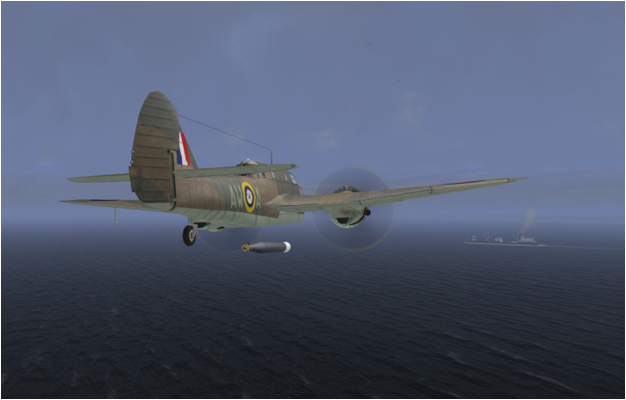
Lars and I just finished a campaign for the Beaufort so I |
|
could not resist doing a feature on it for the Plane of the |
|
Week. Cafs� Beaufort skinpack first sparked my interest in the |
|
plane, and it so happened that I had become interested in |
|
torpedo bombers at that same time. The Beaufort was an important |
|
early-war torpedo plane and bomber that saw a great amount of |
|
action in Europe, the Mediterranean, and the Pacific. |
|
https://i.postimg.cc/6qkxKdkG/Torpedo-run.png |
|
From Wikipedia: |
|
The Bristol Beaufort (manufacturer designation Type 152) was |
|
a British twin-engined torpedo bomber designed by the Bristol |
|
Aeroplane Company, and developed from experience gained |
|
designing and building the earlier Blenheim light bomber. At |
|
least 1,180 Beauforts were built by Bristol and other British |
|
manufacturers. |
|
The Australian government's Department of Aircraft Production |
|
(DAP) also manufactured variants of the Beaufort. These are |
|
often known collectively as the DAP Beaufort. More than 700 |
|
Australian-built Beauforts saw service with the Royal Australian |
|
Air Force in the South West Pacific theatre, where they were |
|
used until the end of the war. |
|
Beauforts first saw service with Royal Air Force Coastal |
|
Command and then the Royal Navy Fleet Air Arm from 1940. They |
|
were used as torpedo bombers, conventional bombers and |
|
mine-layers until 1942, when they were removed from active |
|
service and were then used as trainer aircraft until being |
|
declared obsolete in 1945. Beauforts also saw considerable |
|
action in the Mediterranean; Beaufort squadrons based in Egypt |
|
and on Malta helped interdict Axis shipping supplying Rommel's |
|
Deutsches Afrikakorps in North Africa. |
|
Although it was designed as a torpedo-bomber, the Beaufort |
|
was more often used as a medium day bomber. The Beaufort also |
|
flew more hours in training than on operational missions and |
|
more were lost through accidents and mechanical failures than |
|
were lost to enemy fire. The Beaufort was adapted as a |
|
long-range heavy fighter variant called the Beaufighter, which |
|
proved to be very successful and many Beaufort units eventually |
|
converted to the Beaufighter |
|
A total of 1,013 Taurus powered Mark Is were produced and a |
|
number of changes were introduced into the line. The original |
|
curved perspex bomb aimers' nose panels were replaced by flat, |
|
non-distorting panels from the 10th production aircraft. |
|
Successive Marks of the Bristol Taurus engine were installed: |
|
starting with the Taurus III, the more reliable Taurus IIs were |
|
used whenever possible. Initially Beauforts with the Taurus II |
|
engines were designated Beaufort Mk.II, while those with other |
|
Taurus Marks continued to be Beaufort Mk.Is. Finally all |
|
Taurus-engined Beauforts became Mk.Is with the introduction of |
|
the Wasp-powered Beaufort Mk.II. The Taurus Mk.IIs were modified |
|
to Mk.IIa, which later became the Taurus Mk.VI. All of these |
|
versions produced 860�900 hp (640�670 kW). The final marks of |
|
Taurus engines used were the more powerful 1,130 hp (840 kW) XII |
|
and XVIs. The Taurus engines drove de Havilland Type DH5/19 |
|
constant speed propellers. |
|
As Beaufort units entered service, it was found that the |
|
defensive armament was inadequate and extra .303 in (7.7 mm) |
|
Vickers GO machine guns were fitted; two on a gimbal mounting in |
|
the forward nose and single guns on pivots on either beam. A |
|
remotely controlled .303 in (7.7 mm) Browning machine gun was |
|
fitted, firing to the rear under the nose. Housed in a clear |
|
blown transparency, it was found to be of little use and most |
|
operational units soon discarded them. |
|
Fairey-Youngman pneumatic dive brakes were fitted to the wing |
|
trailing edges of several Beaufort IIs. After adverse reports |
|
from pilots these were locked shut. It was found that the curved |
|
alloy extensions on the trailing edges improved the flight |
|
characteristics and similar panels were fitted on all later |
|
production Beauforts. |
|
When it became apparent that the Taurus engines had problems, |
|
planning commenced to re-engine the aircraft with 1,200 hp (890 |
|
kW) Pratt & Whitney R-1830 Twin-Wasp radials, which were of |
|
similar diameter and slightly lighter, driving Hamilton Standard |
|
bracket-type variable-pitch propellers. There was no guaranteed |
|
supply of the Twin Wasp and production reverted to the |
|
Taurus-engined Mark Is after 165 Beaufort Mark IIs had been |
|
built, starting with AW244, which first flew in September 1941. |
|
Performance with the Twin-Wasps was marginally improved: maximum |
|
speed went up from 271 to 277 mph (436 to 446 km/h) and the |
|
service ceiling increased from 16,500 to 18,000 ft (5,000 to |
|
5,500 m). Normal range was reduced from 1,600 to 1,450 mi (2,570 |
|
to 2,330 km). |
|
Other modifications introduced on the Mk II used on late Mk |
|
Is included replacing the elongated direction finding antenna |
|
with a loop aerial enclosed in a clear, tear-drop fairing on the |
|
top of the cabin. ASV Mk III was added with yagi antennae under |
|
the nose and wings and a Bristol B1.Mk.V turret with two .303 in |
|
(7.7 mm) Browning machine guns was fitted. The final |
|
British-built version of the Beaufort was the Pratt & |
|
Whitney-powered T.Mk.II, with 250 produced from August 1943. In |
|
this version, the turret was removed and faired over. The last |
|
ever Beaufort was a T.Mk.II, which left the Bristol Banwell |
|
factory on 25 November 1944. |
|
Although it did see some use as a torpedo bomber, including |
|
attacks on the battleships Scharnhorst and Gneisenau while in |
|
port in Brest, the Beaufort more often used bombs in European |
|
service. |
|
In early 1940, 22 Squadron equipped with Vildebeests, began |
|
to receive Beauforts. The Beaufort was a much faster, heavier |
|
aircraft than the biplane and the crews needed a great deal of |
|
training in torpedo-dropping, using new techniques required by |
|
the Beaufort. The lighter, slower Vildebeest was able to dive |
|
then flatten out before launching the torpedo; Beauforts carried |
|
too much speed after diving so it needed a longer, level |
|
approach to the torpedo drop. Because of this, and because of a |
|
shortage of torpedoes, the squadron's first operations consisted |
|
of laying magnetic mines ("Gardening" in RAF parlance) and |
|
dropping conventional bombs. As an alternative to the torpedo, |
|
the Beaufort could carry a 2,000 lb (910 kg) bomb using a |
|
purpose built carrier. On one of its first bombing sorties, on 7 |
|
May 1940, a Beaufort dropped the first British 2,000 lb (910 kg) |
|
bomb, at a German cruiser anchored off Norderney. |
|
The first Beaufort operation took place on the night of 15/16 |
|
April, when nine Beauforts laid mines in the Schillig Roads |
|
(north of Wilhelmshaven). One Beaufort failed to return. A |
|
second unit, 42 Squadron began to re-equip with Beauforts, |
|
starting in April. The Beaufort still had teething problems and |
|
after some Beauforts were lost in mysterious circumstances, a |
|
Court of Enquiry in June 1940 concluded that the Taurus engines |
|
were still unreliable and both operational squadrons were |
|
grounded until the engines could be modified. |
|
The first RAF torpedo attack of the war came on 11 September |
|
1940, when five aircraft of 22 Squadron attacked a convoy of |
|
three merchant ships off Ostend (Oostende in Belgium). One |
|
torpedo hit a 6,000 long tons (6,100 t) ship. Four days later, |
|
the first "Rover" was mounted; a Rover was an armed |
|
reconnaissance mission carried out against enemy shipping by a |
|
small number of aircraft operating independently. "Rovers" |
|
became a major part of Beaufort operations over the next 18 |
|
months. Other more hazardous operations were to follow, with one |
|
Beaufort pilot being awarded a posthumous VC. |
|
The only other UK based units to be equipped and fly |
|
operationally with the Beaufort, 86 Squadron and 217 Squadron, |
|
were operational by the middle of 1941. Beauforts also equipped |
|
some Commonwealth Article XV squadrons serving within the RAF |
|
but because of supply shortages, were replaced by other aircraft |
|
types before the units flew operationally. |
|
A successful torpedo drop required that the approach run to |
|
the target needed to be straight and at a speed and height where |
|
the torpedo would enter the water smoothly: too high or too low |
|
and the torpedo could "porpoise" (skip through the water), dive |
|
or even break up. Height over the water had to be judged without |
|
the benefit of a radio altimeter and misjudgement was easy, |
|
especially in calm conditions. For the Beauforts using the |
|
18-inch (450-mm) Mk XII aerial torpedo, the average drop-height |
|
was 68 ft (21 m) and the average range of release was 670 yd |
|
(610 m). During the run-in, the aircraft was vulnerable to |
|
defensive anti-aircraft fire and it took courage to fly through |
|
it with no chance of evasive manoeuvres. The Beaufort's optimum |
|
torpedo dropping speed was a great deal higher than that of the |
|
Vildebeests it replaced, and it took practice to judge the range |
|
and speed of the target ship. A ship the size and speed of |
|
Scharnhorst would look huge, filling the windscreen at well over |
|
1 mi (1.6 km) and it was easy to underestimate the range. In |
|
action, torpedoes were often released too far away from the |
|
target, although there was one recorded instance of a torpedo |
|
being released too close. For safety reasons, torpedo warheads |
|
had a set distance (usually about 300 yd (270 m) from the |
|
release point before they were armed. It also took some distance |
|
for the torpedo to settle to its running depth. Once the torpedo |
|
had been dropped, if there was room, a sharp turn away from the |
|
enemy was possible: more often than not the aircraft had to fly |
|
around or over the ship, usually at full-throttle and below mast |
|
height. A sharp pull-up could be fatal as it exposed a large |
|
area of the aircraft to anti-aircraft guns. |
|
Some of the Beaufort's actions were attacks on warships of |
|
the German Kriegsmarine. The first attack was on 21 June 1940, |
|
when nine Beauforts of 42 Squadron attacked the German |
|
battleship Scharnhorst off the Norwegian coast. No torpedoes |
|
were available at RAF Wick and a dive bombing attack was carried |
|
out using two 500 lb (230 kg) bombs. The Beauforts encountered |
|
Messerschmitt Bf 109s protecting the battleship and only four |
|
returned; shortly after, Beauforts were grounded for |
|
modifications to their Taurus engines. |
|
In early April 1941, after an air raid on Brest by Bomber |
|
Command, the German battleship Gneisenau had to move out of |
|
dry-dock because of an un-exploded bomb. Photo reconnaissance |
|
revealed that the ship was in the inner harbour. An estimated |
|
1,000 flak guns of all calibres protected the base and adding |
|
complication to the danger was the realisation that Gneisenau |
|
was only about 500 yd (460 m) from a harbour mole, requiring |
|
extremely accurate torpedo drops. The aircraft would be forced |
|
into a steep banking turn during the escape to avoid rising |
|
ground surrounding the harbour. In spite of these dangers 22 |
|
Squadron, based at RAF St Eval, was ordered to make a torpedo |
|
attack, timed to take place just after dawn on 6 April 1941. It |
|
was planned to attack the torpedo nets thought to be protecting |
|
the ship, using three Beauforts armed with bombs; another three |
|
Beauforts would then attack the ship with torpedoes. Following |
|
heavy rain that had drenched the airfield, the bomb-carrying |
|
aircraft became bogged down. Because of a sea mist, the other |
|
three Beauforts arrived at Brest independently; one, flown by |
|
F/O Kenneth Campbell, managed to penetrate the harbour and |
|
torpedo Gneisenau but was shot down immediately afterwards. |
|
Campbell was awarded the VC and his Observer, Sergeant J. P. |
|
Scott of Canada, the Distinguished Flying Medal. The other two |
|
crew members were Sgts R. W. Hillman and W. Mallis; all were |
|
lost. |
|
During the famous Operation Cerberus, the "Channel Dash" by |
|
Scharnhorst and Gneisenau and the heavy cruiser Prinz Eugen, |
|
which took place from 12 February 1942, three Beaufort units, |
|
with 33 serviceable aircraft were available: 22 Squadron was |
|
under orders to move to Singapore. 42 Squadron, based at |
|
Leuchars in Scotland, was supposed to move to Manston but had |
|
been delayed by snow. Only 86 and 217 squadrons were in position |
|
to attack the German ships. Of the 33 Beauforts, 28 eventually |
|
set out to attack the German ships: 13 failed to find them, |
|
three were shot down and on one the torpedo failed to release. |
|
Only 11 Beauforts sighted the battleships and launched |
|
torpedoes, none of which struck a target. One of the conclusions |
|
reached by a later Court of Inquiry was that a faster, |
|
longer-ranged torpedo bomber than the Beaufort was needed.[46] |
|
Bristol was already working on a torpedo-carrying conversion of |
|
the Beaufighter (a development of the Beaufort airframe) and |
|
were later to develop the Brigand. |
|
The first Beaufort unit in the Mediterranean was 39 Squadron, |
|
which reformed in Egypt in January 1941. Initially equipped with |
|
Bristol Blenheims and Martin Marylands, the unit started |
|
re-equipping with Beaufort Mk.Is the following August. The first |
|
operation in which Beauforts took part was an attack on an |
|
Italian convoy on 28 January 1942. The three Beauforts of 39 |
|
Squadron included in a large strike force succeeded in crippling |
|
the 14,000 long tons (14,000 t) merchant ship Victoria, which |
|
was then sunk by Albacores. |
|
In another operation, during the early hours of 15 June 1942, |
|
nine Beauforts of 217 Squadron, which had just flown in from |
|
England, took off from RAF Luqa, Malta to intercept ships of the |
|
Regia Marina, which had sailed from Taranto. Few of the Beaufort |
|
crews had experience in night-flying: four aircraft failed to |
|
find the rendezvous and set out independently. One, flown by |
|
Flying Officer Arthur Aldridge discovered the Italian Fleet some |
|
200 mi (320 km) to the east of Malta. Like Loviett's attack on |
|
Lūtzow, his Beaufort was mistaken for a friendly aircraft |
|
by Italian lookouts. Aldridge torpedoed and crippled the heavy |
|
cruiser Trento, whose anti-aircraft fire started only after the |
|
Beaufort had escaped.[55] The main formation of Beauforts then |
|
came in to attack, having been guided in by the gunfire. In the |
|
confusion and the smokescreen that had been laid by the Italian |
|
warships, 217 Squadron claimed several torpedo hits for the loss |
|
of one Beaufort, which belly-landed at Luqa. In spite of the |
|
claims, none of the other ships had been hit. Trento was sunk |
|
later by two torpedoes fired by the submarine HMS Umbra, which |
|
had witnessed the aerial attack. |
|
Over the next 11 months, the Beaufort force, now usually |
|
accompanied by Beaufighters, was instrumental in crippling the |
|
convoy supply lines that were vital to Rommel's Afrika Korps. At |
|
night, torpedo-carrying Vickers Wellingtons of 38 Squadron also |
|
played an important part in attacking convoys. |
|
During the first years of World War II, the Australian |
|
government found itself unable to procure twin-engine bomber |
|
aircraft for home duties in Australia. It was decided that the |
|
Australian Department of Aircraft Production (DAP) would build |
|
Beauforts under licence, for the Royal Australian Air Force |
|
(RAAF). |
|
By late 1941, British authorities had also ordered 180 |
|
Australian-built Beauforts for the RAF Far East Command, for use |
|
in East Asia. In particular, DAP Beauforts were to replace the |
|
extremely outdated (1928) Vickers Vildebeests operated by No. |
|
100 Squadron RAF at Singapore. Q Flight, a detachment from 100 |
|
Squadron was based in Australia for operational conversion |
|
purposes. |
|
When Japan entered the war and invaded Malaya on 8 December |
|
1941, about 20 DAP Beauforts had been completed and delivered to |
|
Q Flight in Australia. Only six Australian-built Beauforts |
|
reached Singapore, just after hostilities began. Over Malaya and |
|
Singapore, 100 Squadron continued to operate Vildebeests,[67] |
|
suffering severe losses. One Beaufort, attached to Air |
|
Headquarters, Singapore as a reconnaissance aircraft was |
|
attacked, during its first sortie, by Japanese fighters, |
|
severely damaged and written-off. The RAF decided that the |
|
Beaufort lacked sufficient performance and armament to defend |
|
itself against late model fighters, and that 100 Squadron's |
|
crews lacked sufficient training and experience on the type. As |
|
Japanese forces approached Singapore in early 1942, RAF bases |
|
there were abandoned; the remaining Beauforts and 100 Squadron |
|
personnel were evacuated to Australia.[24] All Australian-built |
|
Beauforts previously scheduled for British squadrons were |
|
subsequently delivered to the RAAF. |
|
The first Beaufort unit formed in Australia, on 25 February |
|
1942 was No. 100 Squadron RAAF, so named because it was formed |
|
partly from members of its RAF counterpart. In the light of the |
|
problems encountered by the first Beauforts based at Singapore, |
|
the unit was carefully trained and slowly brought up to |
|
operational status. Its first operational sorties were carried |
|
out on 25 June when a Japanese ship heading towards Lae, New |
|
Guinea was attacked by five Beauforts operating from Port |
|
Moresby, which resulted in three Beauforts hitting the ship with |
|
bombs, with one Beaufort being damaged by anti-aircraft fire. |
|
Out of two Beauforts that carried out a diversionary attack on |
|
Lae, one failed to return. |
|
Production at DAP continued to increase, reaching almost one |
|
a day in 1943. The Beaufort served with 19 RAAF squadrons and |
|
played an important role in the South West Pacific Area, as a |
|
maritime patrol/strike aircraft and bomber. Aviation historian |
|
William Green has written that the Beaufort's "part in the |
|
defeat of the Japanese forces in the South-West Pacific was |
|
probably of greater importance than that of any other single |
|
aircraft type.� |
|
https://i.postimg.cc/hvzRNC5B/title.png |
|
In game� |
|
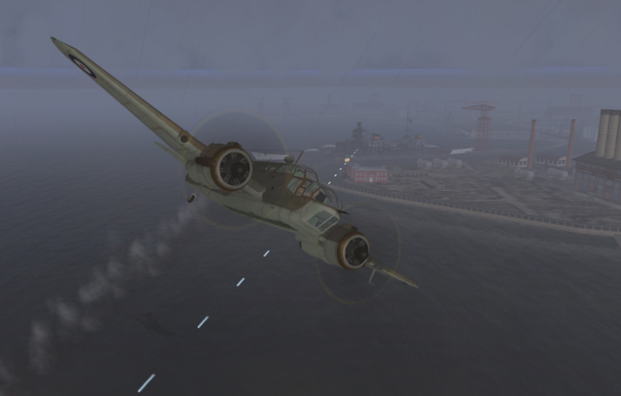
Torpedo bombing is a serious challenge in IL-2, as it was in |
|
real life. My early attempts to learn torpedo bombing on a US |
|
Navy Avenger were disastrous. The Beaufort is a very stable |
|
torpedo dropping platform. I also learned to use the |
|
CommsTechnical key sequence to obtain the correct speed |
|
and altitude parameters to use to properly drop a torpedo. The |
|
Beaufort is also a good bombing platform though I found I had |
|
the best success at lower altitudes. Best of all it makes for |
|
some fun campaign building! |
|
#Post#: 11860-------------------------------------------------- |
|
Re: Plane of the Week: Bristol Beaufort |
|
By: MADMICK71 Date: July 13, 2020, 8:19 pm |
|
--------------------------------------------------------- |
|
Thanks, enjoy your articles. |
|
Reminds me of a terrible accident at Jervis Bay NSW Australia :- |
|
[font=Verdana] |
|
https://www.ozatwar.com/nsw29.htm[/font] |
|
Regards |
|
Mick. |
|
#Post#: 11861-------------------------------------------------- |
|
Re: Plane of the Week: Bristol Beaufort |
|
By: vonofterdingen Date: July 13, 2020, 9:13 pm |
|
--------------------------------------------------------- |
|
What a terrible tragedy. Thanks for sharing this story Mick. |
|
#Post#: 12020-------------------------------------------------- |
|
Re: Plane of the Week: Bristol Beaufort |
|
By: Beowolff Date: July 31, 2020, 4:39 pm |
|
--------------------------------------------------------- |
|
Yes... sad story... but a great read on Von's POTW article. |
|
Great job, friend! |
|
***************************************************** |



![https://i.postimg.cc/KzpB0GrG/Screen-Hunter-355.png[/img]](https://i.postimg.cc/KzpB0GrG/Screen-Hunter-355.png[/img])