 |
Return Create A Forum - Home |
 |
--------------------------------------------------------- |
|
IL2 Air Combat! |
 |
https://il2freemodding.createaforum.com |
|
--------------------------------------------------------- |
|
***************************************************** |
|
Return to: Plane of the Week Articles |
|
***************************************************** |
|
#Post#: 11738-------------------------------------------------- |
|
Plane of the Week: Grumman F6F Hellcat |
|
By: vonofterdingen Date: June 29, 2020, 4:49 pm |
|
--------------------------------------------------------- |
|
https://i.postimg.cc/L6nc9896/Screen-Hunter-301.png |
|
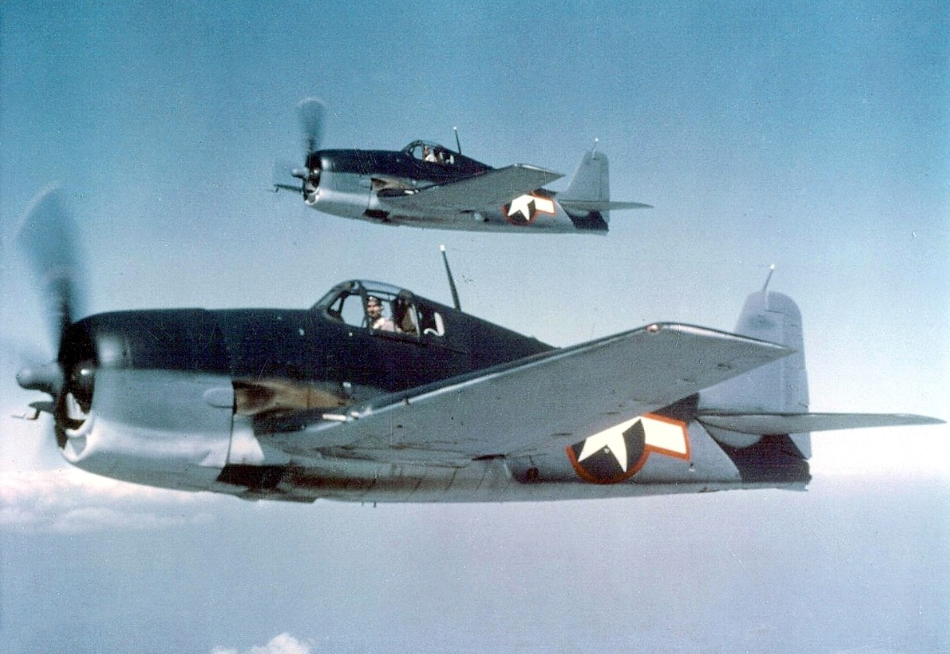
Our Plane of the Week this week is a true icon of the Pacific |
|
war: the Grumman F6F Hellcat. After suffering severe losses at |
|
the hands of the Japanese Zero fighter of the early war years, |
|
the Hellcat gave US navy pilots an aircraft that ended the |
|
Zero�s period of dominance. The Hellcat was fast, maneuverable, |
|
and sturdy. It was good climbing characteristics, especially |
|
considering its weight, and was a good aircraft for carrier |
|
landings. In short, it replaced the Zero as the air superiority |
|
fighter in the PTO. |
|
From Wikipedia: |
|
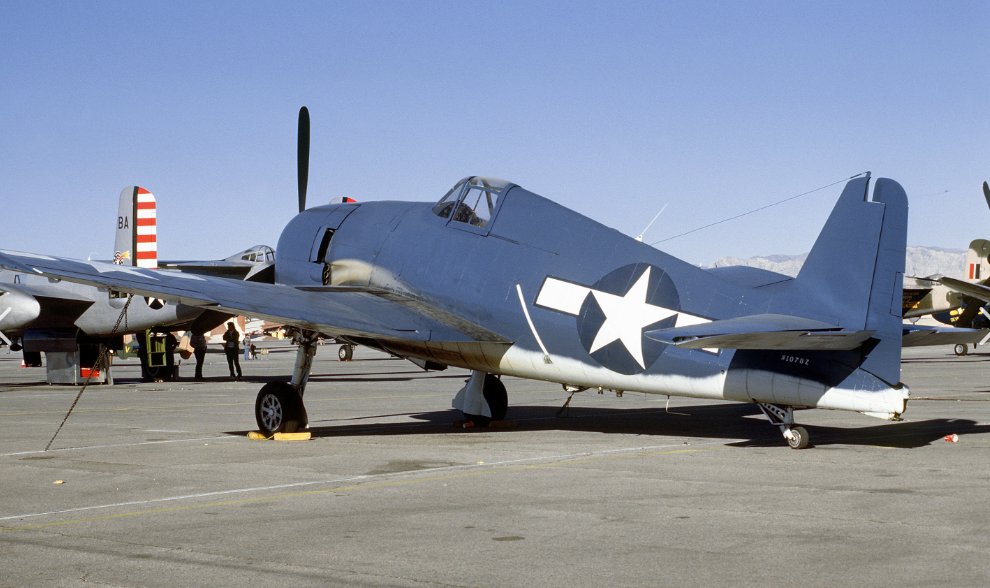
The Grumman F6F Hellcat is an American carrier-based fighter |
|
aircraft of World War II. Designed to replace the earlier F4F |
|
Wildcat and to counter the Japanese Mitsubishi A6M Zero, it was |
|
the United States Navy's dominant fighter in the second half of |
|
the Pacific War, outdueling the faster Vought F4U Corsair, which |
|
had problems with carrier landings. |
|
Powered by a 2,000 hp (1,500 kW) Pratt & Whitney R-2800 |
|
Double Wasp, the same powerplant used for both the Corsair and |
|
the United States Army Air Forces (USAAF) Republic P-47 |
|
Thunderbolt fighters, the F6F was an entirely new design, but it |
|
still resembled the Wildcat in many ways.[4] Some military |
|
observers tagged the Hellcat as the "Wildcat's big brother". |
|
The F6F made its combat debut in September 1943, and was best |
|
known for its role as a rugged, well-designed carrier fighter, |
|
which was able to outperform the A6M Zero and help secure air |
|
superiority over the Pacific theater. A total of 12,275 were |
|
built in just over two years. |
|
Hellcats were credited with destroying a total of 5,223 enemy |
|
aircraft while in service with the U.S. Navy, U.S. Marine Corps, |
|
and Royal Navy Fleet Air Arm. This was more than any other |
|
Allied naval aircraft. Postwar, the Hellcat was phased out of |
|
front-line service, but remained in service as late as 1954 as a |
|
night fighter. |
|
The F6F series was designed to take damage and get the pilot |
|
safely back to base. A bullet-resistant windshield and a total |
|
of 212 lb (96 kg) of cockpit armor was fitted, along with armor |
|
around the oil tank and oil cooler. A 250 US gal (950 l) |
|
self-sealing fuel tank was fitted in the fuselage. Standard |
|
armament on the F6F-3 consisted of six .50 in (12.7 mm) M2/AN |
|
Browning air-cooled machine guns with 400 rounds per gun. A |
|
center-section hardpoint under the fuselage could carry a single |
|
150 US gal (570 l) disposable drop tank, while later aircraft |
|
had single bomb racks installed under each wing, inboard of the |
|
undercarriage bays; with these and the center-section hard point |
|
late model F6F-3s could carry a total bomb load in excess of |
|
2,000 lb (910 kg). Six 5 in (127 mm) high-velocity aircraft |
|
rockets (HVARs) could be carried � three under each wing on |
|
"zero-length" launchers. |
|
The U.S. Navy much preferred the more docile flight qualities |
|
of the F6F compared with the Vought F4U Corsair, despite the |
|
superior speed of the Corsair. This preference was especially |
|
noted during carrier landings, a critical success requirement |
|
for the Navy, in which the Corsair was fundamentally flawed in |
|
comparison. The Corsair was thus released by the Navy to the |
|
Marine Corps, which without the need to worry about carrier |
|
landings, used the Corsair to immense effect in land-based |
|
sorties. The Hellcat remained the standard USN carrier-borne |
|
fighter until the F4U series was finally cleared for U.S. |
|
carrier operations in late 1944 (the carrier landing issues had |
|
by now been tackled largely due to use of Corsair by the Royal |
|
Navy Fleet Air Arm). In addition to its good flight qualities, |
|
the Hellcat was easy to maintain and had an airframe tough |
|
enough to withstand the rigors of routine carrier operations. |
|
Like the Wildcat, the Hellcat was designed for ease of |
|
manufacture and ability to withstand significant damage. |
|
VF-82 Grumman F6F-5 ready for launch from USS Bennington off |
|
Okinawa in May 1945: Most of the F6F-5s built were painted |
|
overall glossy sea blue. |
|
The Hellcat first saw action against the Japanese on 1 |
|
September 1943, when fighters off USS Independence shot down a |
|
Kawanishi H8K "Emily" flying boat. Soon after, on 23 and 24 |
|
November, Hellcats engaged Japanese aircraft over Tarawa, |
|
shooting down a claimed 30 Mitsubishi Zeros for the loss of one |
|
F6F. Over Rabaul, New Britain, on 11 November 1943, Hellcats and |
|
F4U Corsairs were engaged in day-long fights with many Japanese |
|
aircraft including A6M Zeros, claiming nearly 50 aircraft. |
|
https://i.postimg.cc/pVGNMFt6/Screen-Hunter-302.png |
|
When trials were flown against a captured A6M5 model Zero, |
|
they showed that the Hellcat was faster at all altitudes. The |
|
F6F out-climbed the Zero marginally above 14,000 ft (4,300 m) |
|
and rolled faster at speeds above 235 mph (378 km/h). The |
|
Japanese fighter could out-turn its American opponent with ease |
|
at low speed and enjoyed a slightly better rate of climb below |
|
14,000 ft (4,300 m). The trials report concluded: Do not |
|
dogfight with a Zero 52. Do not try to follow a loop or |
|
half-roll with a pull-through. When attacking, use your superior |
|
power and high speed performance to engage at the most favorable |
|
moment. To evade a Zero 52 on your tail, roll and dive away into |
|
a high speed turn. |
|
Hellcats were the major U.S. Navy fighter type involved in the |
|
Battle of the Philippine Sea, where so many Japanese aircraft |
|
were shot down that Navy aircrews nicknamed the battle the |
|
"Great Marianas Turkey Shoot". The F6F accounted for 75% of all |
|
aerial victories recorded by the U.S. Navy in the Pacific.[41] |
|
Radar-equipped Hellcat night fighter squadrons appeared in early |
|
1944. |
|
A formidable opponent for the Hellcat was the Kawanishi N1K, |
|
but it was produced too late and in insufficient numbers to |
|
affect the outcome of the war. |
|
[img width=1024 |
|
height=687] |
|
https://i.postimg.cc/0yShSXKT/Screen-Hunter-303.png[/img] |
|
In game� |
|
It is hard not to like the Hellcat in IL-2. It is fast, |
|
well-armed, rugged, and well mannered in maneuvers. Personally |
|
I prefer the F6F over the Vought Corsair due to the superior |
|
visibility, especially when looking up. The 6 50 caliber machine |
|
guns are devastating against Japanese aircraft and the Hellcat |
|
can absorb a lot of punishment if you get yourself in a |
|
predicament, which I tend to do. The visibility is good but |
|
after all you need to remember to use it! |
|
#Post#: 11743-------------------------------------------------- |
|
Re: Plane of the Week: Grumman F6F Hellcat |
|
By: cafs Date: June 30, 2020, 6:10 am |
|
--------------------------------------------------------- |
|
"Our Plane of the Week this week is a true icon of the Pacific |
|
war: the Grumman F6F Hellcat. After suffering severe losses at |
|
the hands of the Japanese Zero fighter of the early war years, |
|
the Hellcat gave US navy pilots an aircraft that ended the |
|
Zero�s period of dominance. The Hellcat was fast, maneuverable, |
|
and sturdy. It was good climbing characteristics, especially |
|
considering its weight, and was a good aircraft for carrier |
|
landings. In short, it replaced the Zero as the air superiority |
|
fighter in the PTO." |
|
Perfect introduction, perfect indeed. |
|
😀👍👍🏅 |
|
#Post#: 11758-------------------------------------------------- |
|
Re: Plane of the Week: Grumman F6F Hellcat |
|
By: ben_wh Date: July 1, 2020, 9:24 pm |
|
--------------------------------------------------------- |
|
von, |
|
Thank you for another good write-up. In real-life the Hellcat |
|
was simply the best carrier fighter in WW2. Some may argue that |
|
the Corsair had better performance figures in some aspects, but |
|
the Hellcat delivered a package that balance performance, |
|
ease-of-use, reliability and affordability. |
|
When flown properly, the Hellcat can dictate the fight with a |
|
Zero. As von quoted, |
|
"The trials report concluded: Do not dogfight with a Zero 52. Do |
|
not try to follow a loop or half-roll with a pull-through. When |
|
attacking, use your superior power and high speed performance to |
|
engage at the most favorable moment. To evade a Zero 52 on your |
|
tail, roll and dive away into a high speed turn." |
|
However, in-game the AI - even in ace setting - does not always |
|
behave this way. Too many times a Hellcat would try to zoom |
|
climb away from a zero without altitude advantage, when in fact |
|
the opposite would be the prudent thing to do. Note that this |
|
behavior applies to some other BnZ fighters in game as well |
|
(including the Corsair). |
|
Cheers, |
|
#Post#: 11762-------------------------------------------------- |
|
Re: Plane of the Week: Grumman F6F Hellcat |
|
By: vonofterdingen Date: July 2, 2020, 12:06 am |
|
--------------------------------------------------------- |
|
Good points Ben. Periodically I come across Claire Chennault's |
|
recommendations on how to fly the P-40 against the Zero. That |
|
wise advice works very well with most allied planes in game. |
|
#Post#: 11769-------------------------------------------------- |
|
Re: Plane of the Week: Grumman F6F Hellcat |
|
By: ben_wh Date: July 2, 2020, 12:18 pm |
|
--------------------------------------------------------- |
|
von, |
|
In game, Chennault's recommendations work especially well |
|
against the Ki-43 and to a large degree against the Zero as |
|
well. |
|
If only we can teach share these recommendations with the AI as |
|
well... |
|
Again thanks for the good reading and discussion. |
|
#Post#: 11770-------------------------------------------------- |
|
Re: Plane of the Week: Grumman F6F Hellcat |
|
By: DHumphrey Date: July 2, 2020, 2:08 pm |
|
--------------------------------------------------------- |
|
Another great article Von � very well done !!! :) |
|
For those interested: |
|
http://www.mission4today.com/index.php?name=Downloads3&file=details&id=2666 |
|
#Post#: 11776-------------------------------------------------- |
|
Re: Plane of the Week: Grumman F6F Hellcat |
|
By: Beowolff Date: July 4, 2020, 3:55 am |
|
--------------------------------------------------------- |
|
You've put on a great article here, my old friend! ;D ;D |
|
Many thanks for it! |
|
I LOVE this plane...though will admit I seldom fly it (and I |
|
can't tell you why. D'oh!) It's a superb machine, a Zero |
|
killer par excellence... I 'should' fly it more and hopefully I |
|
will now. Definitely this article encourages me to do so. |
|
Thanks again. |
|
Beo |
|
***************************************************** |



![https://i.postimg.cc/0yShSXKT/Screen-Hunter-303.png[/img]](https://i.postimg.cc/0yShSXKT/Screen-Hunter-303.png[/img])