 |
Return Create A Forum - Home |
 |
--------------------------------------------------------- |
|
IL2 Air Combat! |
 |
https://il2freemodding.createaforum.com |
|
--------------------------------------------------------- |
|
***************************************************** |
|
Return to: Plane of the Week Articles |
|
***************************************************** |
|
#Post#: 11417-------------------------------------------------- |
|
Plane of the Week: Heinkel He-112 |
|
By: vonofterdingen Date: May 26, 2020, 5:29 pm |
|
--------------------------------------------------------- |
|
[img width=1024 |
|
height=274] |
|
https://i.postimg.cc/zvJ8sF2V/Screen-Hunter-275.png[/img] |
|
I will continue the gullwing theme this week with the Heinkel |
|
He 112. It is not a widely known aircraft and was only recently |
|
introduced to our game by the modding community. It�s a looker |
|
though, and probably would be much more famous today had it not |
|
lost a design contest to the now iconic Messerschmitt ME-109. |
|
From Wikipedia: |
|
The Heinkel He 112 is a German fighter aircraft designed by |
|
Walter and Siegfried G�nter. It was one of four aircraft |
|
designed to compete for the 1933 fighter contract of the |
|
Luftwaffe, in which it came second behind the Messerschmitt Bf |
|
109. Small numbers were used for a short time by the Luftwaffe |
|
and some were built for other countries, around 100 being |
|
completed. |
|
In the early 1930s, the German authorities started placing |
|
orders for new aircraft, initially training and utility |
|
aircraft. Heinkel, as one of the most experienced firms in the |
|
country, received contracts for a number of two-seat aircraft, |
|
including the He 45, He 46 and He 50. The company also worked on |
|
single-seat fighter designs, which culminated in the He 49 and |
|
later with the improved He 51. |
|
When the He 51 was tested in combat in the Spanish Civil War, |
|
it was shown that speed was far more important than |
|
maneuverability. The Luftwaffe took this lesson to heart and |
|
started a series of design projects for much more modern |
|
aircraft. |
|
In October 1933, Hermann G�ring sent out a letter requesting |
|
aircraft companies consider the design of a "high speed courier |
|
aircraft" � a thinly veiled request for a new fighter. Each |
|
company was asked to build three prototypes for run-off testing. |
|
By spring 1935, both the Arado and Focke-Wulf aircraft were |
|
ready, the BFW arriving in March, and the He 112 in April. |
|
In early May 1934, despite Germany being under a prohibition |
|
from the development of new military aircraft, the |
|
Reichsluftfahrtministerium (RLM) issued a request for a new |
|
single-seat monoplane fighter under the guise that the proposal |
|
was for creating a new 'sports plane'. The Technisches Amt |
|
outlined specifications, for the supply of a new fighter |
|
aircraft, that submissions for the competition had to meet |
|
certain characteristics, including; a) have an all metal |
|
construction, b) have a monoplane configuration, c) have |
|
retractable landing gear, d) be capable of achieving a top speed |
|
of at least 400 km/h (250 mph) at an altitude of 6,000 m (20,000 |
|
ft), e) endure ninety minutes at full throttle at 6,000 m |
|
(20,000 ft) f) reach an altitude of 6,000 m (20,000 ft) in seven |
|
minutes and have a service ceiling of 10,000 m (33,000 ft) g) be |
|
able to be fitted with a Junkers Jumo 210 engine h) be armed |
|
with either two 7.92mm fixed machine guns or one 20mm cannon and |
|
i) have a wing loading of less than 100 kg/m^2.[3][4] |
|
In February 1934 three companies, Arado, Bayerische |
|
Flugzeugwerke (BFW) and Heinkel, were awarded contracts to |
|
develop prototypes for the competition with a fourth company, |
|
Focke-Wulf, being awarded the contract more than six months |
|
later in September 1934. The prototypes that were eventually |
|
submitted for the competition were the Arado Ar 80, Focke-Wulf |
|
Fw 159, Heinkel He 112 and the Messerschmitt Bf 109. Heinkel |
|
had begun development of their submission in late 1933 in |
|
anticipation of the announcement. At the helm of their design |
|
project were the G�nter brothers, Siegfried and Walter, |
|
designers of the He 111, who were then working on the design for |
|
the He 112. The first prototype had its first flight in |
|
September 1935. |
|
The primary source of inspiration for the He 112 was their |
|
earlier He 70 Blitz ("Lightning") design. The Blitz was a |
|
single-engine, four-passenger aircraft originally designed for |
|
use by Lufthansa, and it, in turn, was inspired by the famous |
|
Lockheed Model 9 Orion mail plane. Like many civilian designs of |
|
the time, the aircraft was pressed into military service and was |
|
used as a two-seat bomber (although mostly for reconnaissance) |
|
and served in this role in Spain. The Blitz introduced a number |
|
of new construction techniques to the Heinkel company; it was |
|
their first low-wing monoplane, their first with retractable |
|
landing gear, their first all-metal monocoque design, and its |
|
elliptical, reverse-gull wing would be seen on a number of later |
|
projects. The Blitz could almost meet the new fighter |
|
requirements itself, so it is not surprising that the G�nters |
|
would choose to work with the existing design as much as |
|
possible. |
|
Ernst Heinkel's He 112 submission was a scaled-down version |
|
of the He 70, a fast mail-plane, sharing numerous features with |
|
it including; an all-metal construction � including its oval |
|
cross-section fuselage and two-spar monoplane wings which were |
|
covered with flush-head rivets and stressed metal skin-, similar |
|
inverted semi-elliptical gullwings and retractable landing gear. |
|
The wide-track of the undercarriage, a result of having outward |
|
retraction from the low point of the wing's gull-bend, granted |
|
the aircraft excellent ground handling for take-off and landing. |
|
The open cockpit and fuselage spine behind the headrest mounted |
|
into the deep-section fuselage offered the pilot a good view |
|
when taxiing and were included to provide excellent vision and |
|
make the biplane-trained pilots feel more comfortable. |
|
At the competing aircraft's demonstration flight for the RLM |
|
in October 1935, the thick high-lift aerofoil and open cockpit |
|
of the He 112 generated more drag than its contemporary |
|
opponent, the Bf 109, causing its performance to suffer despite |
|
being equipped with an identical engine. Whereas the Bf 109 |
|
prototype was able to clock in a top speed of 467 km/h (290 |
|
mph[10]), the He 112 could only manage 440 km/h (273 mph). The |
|
other competing aircraft, the Arado Ar 80 and the Focke-Wulf Fw |
|
159, had been plagued with problems from the outset and were |
|
outclassed by both the Bf 109 and the He 112 resulting in them |
|
being eliminated from any serious consideration. At the end of |
|
the demonstrations, Messerschmitt and Heinkel were awarded |
|
contracts to produce ten prototypes for further testing and |
|
competitive trials. |
|
At this point, the He 112 was the favorite over the "unknown" |
|
Bf 109, but opinions changed when the Bf 109 V2 arrived on 21 |
|
March. All the competitor aircraft had initially been equipped |
|
with the Rolls-Royce Kestrel engine, but the Bf 109 V2 had the |
|
Jumo. From that point on, it started to outperform the He 112 in |
|
almost every way, and even the arrival of the Jumo-engined He |
|
112 V2 on 15 April did little to address this imbalance. |
|
The He 112 had better turn performance due to its larger |
|
wing, but the Bf 109 was faster at all altitudes and had |
|
considerably better agility and aerobatic abilities. During spin |
|
tests on 2 March, the Bf 109 V2 showed no problems while the He |
|
112 V2 crashed. Repairs were made to the aircraft and it was |
|
returned in April, but it crashed again and was written off. The |
|
V1 was then returned to Heinkel on 17 April and fitted with the |
|
V2's clipped wings. |
|
https://i.postimg.cc/8ctNNfxw/Screen-Hunter-276.png |
|
Meanwhile, news came in that Supermarine had received a |
|
contract for full-scale production of the Spitfire. The Spitfire |
|
was far more advanced than any existing German aircraft and this |
|
caused a wave of concern in the high command of the Luftwaffe. |
|
Time now took on as much importance as any quality of the |
|
winning aircraft itself, and the RLM was ready to put any |
|
reasonable design into production. That design was the Bf 109, |
|
which in addition to demonstrating better performance, was |
|
considerably easier to build due to fewer compound curves and |
|
simpler construction throughout. On 12 March RLM produced a |
|
document called Bf 109 Priority Procurement which indicated |
|
which aircraft was now preferred. There were some within the RLM |
|
who still favored the Heinkel design, and as a result the RLM |
|
then sent out contracts for 10 "zero series" aircraft from both |
|
companies. |
|
Testing continued until October, at which point some of the |
|
additional zero series aircraft had arrived. At the end of |
|
September, there were four He 112s being tested, yet none was a |
|
match for the Bf 109. From October on, the Bf 109 appears to |
|
have been selected as the winner of the contest. Although no |
|
clear date is given, in Stormy Life Ernst Udet himself delivered |
|
the news to Heinkel that the Bf 109 had entered series |
|
production in 1936. He is quoted as saying, "Pawn your crate off |
|
on the Turks or the Japanese or the Romanians. They'll lap it |
|
up." With a number of air forces looking to upgrade from |
|
biplanes and various designs from the early 1930s, the |
|
possibility for foreign sales was promising. |
|
When it was clear the 112 was losing the contest to the Bf |
|
109, Heinkel offered to re-equip V6 with 20 mm cannon armament |
|
as an experimental aircraft. She was then broken down and |
|
shipped to Spain on 9 December and assigned to |
|
Versuchsjagdgruppe 88, a group within the Legion Condor devoted |
|
to testing new aircraft and joined three V-series Bf 109s which |
|
were also in testing. |
|
Wilhelm Balthasar, later a Battle of Britain ace pilot used |
|
it to attack an armoured train and an armoured car. Other pilots |
|
flew it, but the engine seized during landing in July and she |
|
was written off. |
|
During World War II, when Allied forces landed in North |
|
Africa, Spanish forces in Morocco intercepted stray aircraft of |
|
both Allied and German forces. None of these incidents resulted |
|
in losses. In 1943, one He 112 of Grupo 27 attacked the tail-end |
|
aircraft of 11 Lockheed P-38s forcing it down in Algeria after |
|
they re-entered French territory having crossed into Spanish |
|
Morocco. By 1944, the aircraft were largely grounded due to a |
|
lack of fuel and maintenance. |
|
With Romania now firmly in the German sphere of influence, |
|
her efforts to re-arm for the coming war were suddenly strongly |
|
backed. The primary concern was the air force, the FARR. Their |
|
fighter force at the time consisted of just over 100 Polish PZL |
|
P.11 aircraft, primarily the P.11b or the locally modified f |
|
model, and P.24E. Although these aircraft had been the most |
|
advanced fighters in the world in the early 1930s, by the late |
|
1930s, they were hopelessly outclassed by practically |
|
everything. |
|
In April 1939, the FARR was offered the Bf 109 as soon as |
|
production was meeting German demands. In the meantime, they |
|
could take over 24 He 112Bs that were already built. The FARR |
|
jumped at the chance and then increased the order to 30 |
|
aircraft. |
|
Late in April, a group of Romanian pilots arrived at Heinkel |
|
for conversion training, which went slowly because of the |
|
advanced nature of the He 112 in comparison to the PZL. When the |
|
training was complete, the pilots returned home in the cockpits |
|
of their new aircraft. The aircraft, all of them B-1s or B-2s, |
|
were "delivered" in this manner starting in July and ending in |
|
October. Two of the aircraft were lost, one in a fatal accident |
|
during training in Germany on 7 September, and another suffered |
|
minor damage on landing while being delivered and was later |
|
repaired at SET in Romania. |
|
When the first aircraft started arriving, they were tested |
|
competitively against the locally designed IAR.80 prototype. |
|
This interesting and little known aircraft proved to be superior |
|
to the He 112B in almost every way. At the same time, the test |
|
flights revealed a number of disadvantages of the He 112, |
|
notably the underpowered engine and poor speed. The result of |
|
the fly-off was that the IAR.80 was ordered into immediate |
|
production, and orders for any additional He 112s were |
|
cancelled. |
|
By 15 September, enough of the aircraft had arrived to |
|
re-equip Escadrila 10 and 11. The two squadrons were formed into |
|
the Grupul 5 v�n�toare (5th Fighter Group), responsible for the |
|
defense of Bucharest. In October, they were renamed as the 51st |
|
and 52nd squadrons, still forming the 5th. The pilots had not |
|
been a part of the group that had been trained at Heinkel, so |
|
they started working their way toward the He 112 using Nardi |
|
F.N.305 monoplane trainers. Training lasted until the spring of |
|
1940, when a single additional He 112 B-2 was delivered as a |
|
replacement for the one that crashed in Germany the previous |
|
September. |
|
During the troubles with Hungary, the 51st was deployed to |
|
Transylvania. Hungarian Ju 86s and He 70s started making |
|
reconnaissance flights over Romanian territory. Repeated |
|
attempts to intercept them failed because of the He 112's low |
|
speed. On 27 August, Locotenent Nicolae Polizu was over |
|
Hungarian territory when he encountered a Caproni Ca.135bis |
|
bomber flying on a training mission. Several of his 20 mm rounds |
|
hit the bomber, which was forced down safely at the Hungarian |
|
Debrecen airbase � home of the Hungarian He 112s. Polizu became |
|
the first Romanian to shoot down an aircraft in aerial combat. |
|
When Germany prepared to invade the USSR in 1941, Romania |
|
joined it in an effort to regain the territories lost the year |
|
before. The FARR was made part of Luftflotte 4, and in |
|
preparation for the invasion, Grupul 5 v�n�toare was sent to |
|
Moldavia. At the time, 24 of the He 112s were flyable. Three |
|
were left at their home base at Pipera to complete repairs, two |
|
others had been lost to accidents, and the fate of the others is |
|
unknown. On 15 June, the aircraft were moved again, to |
|
Foscani-North in northern Moldavia. |
|
With the opening of the war on 22 June, the He 112s were in |
|
the air at 1050 supporting an attack by Potez 63s of Grupul 2 |
|
bombardment on the Soviet airfields at Bolgrad and Bulg�rica. |
|
Although some flak was encountered on the way to and over |
|
Bolgrad, the attack was successful and a number of Soviet |
|
aircraft were bombed on the ground. By the time they reached |
|
Bulg�rica, fighters were in the air waiting for them, and as a |
|
result the 12 He 112s were met by about 30 I-16s. The results of |
|
this combat were mixed; Sublocotenent Teodor Moscu shot down one |
|
of a pair of I-16s still taking off. When he was pulling out, he |
|
hit another in a head-on pass and it crashed into the Danube. He |
|
was set upon by several I-16s and received several hits, his |
|
fuel tanks were punctured but did not seal. Losing fuel rapidly, |
|
he formed up with his wingman and managed to put down at the |
|
Romanian airfield at B�rlad. His aircraft was later repaired and |
|
returned to duty. Of the bombers, three of the 13 dispatched |
|
were shot down. |
|
Over the next few days, the He 112s would be used primarily |
|
as ground-attack aircraft, where their heavy armament was |
|
considered to be more important than their ability to fight in |
|
the air. Typical missions would start before dawn and would have |
|
the Heinkels strafe Soviet airbases. Later in the day, they |
|
would be sent on search and destroy missions, looking primarily |
|
for artillery and trains. |
|
Losses were heavy, most not due to combat, but simply because |
|
the aircraft were flying an average of three missions a day and |
|
were not receiving adequate maintenance. This problem affected |
|
all of the FARR, which did not have the field maintenance |
|
logistics worked out at the time. On 29 July, a report on the |
|
readiness of the air forces listed only 14 He 112s in flyable |
|
condition, and another eight repairable. As a result, the |
|
aircraft of the 52nd were folded into the 51st to form a single |
|
full strength squadron on 13 August. The men of the 52nd were |
|
merged with the 42nd who flew IAR.80s, and were soon sent home |
|
to receive IAR.80s of their own. A report from August on the He |
|
112 rated it very poorly, once again noting its lack of power |
|
and poor speed. |
|
For a time, the 51st continued in a front-line role, although |
|
it saw little combat. When Odessa fell on 16 October, the |
|
Romanian war effort ostensibly ended, and the aircraft were |
|
considered to be no longer needed at the front. 15 were kept at |
|
Odessa and the rest were released to Romania for training duty |
|
(although they seem to have seen no use). On 1 November, the |
|
51st moved to Tatarka and then returned to Odessa on the 25th, |
|
performing coastal patrol duties all the while. On 1 July 1942, |
|
the 51st returned to Pipera and stood down after a year in |
|
action. |
|
On 19 July one of the He 112s took to the air to intercept |
|
Soviet bombers in what was the first night mission by a Romanian |
|
aircraft. As the Soviets were clearly gearing up for a night |
|
offensive on Bucharest, the 51st was then re-equipped with Bf |
|
110 night fighters and became the only Romanian night fighter |
|
squadron. |
|
[img width=1024 |
|
height=564] |
|
https://i.postimg.cc/1RH9pb46/Screen-Hunter-274.png[/img] |
|
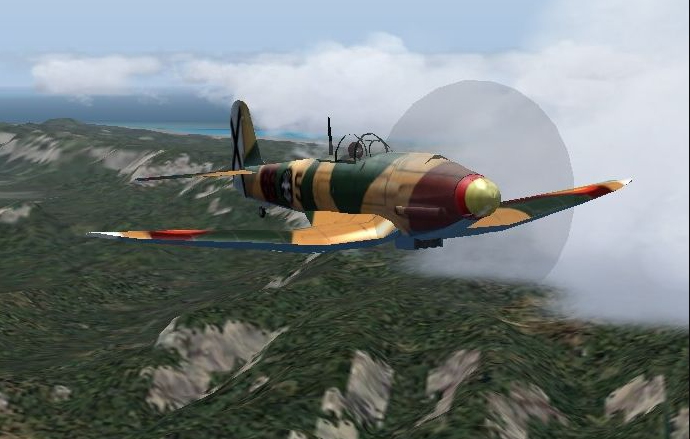
In game� |
|
I enjoy flying this plane in early war scenarios. It is |
|
reasonably fast and maneuverable, and has a useful mix of cannon |
|
and machine guns. It can be fitted with a small bomb load for |
|
ground targets. There are some Romanian campaigns available for |
|
the He-112, such as Poltava�s Romanian Barbarossa and my own |
|
Invasion of Yugoslavia (DCG). The Heinkel will hold its own |
|
against fighters of this period, including early Hawker |
|
Hurricanes. The arrival in game also got the attention of some |
|
great skin artists, so you will also find some wonderful German, |
|
Romanian, and Bulgarian skins available for this plane. |
|
#Post#: 11423-------------------------------------------------- |
|
Re: Plane of the Week: Heinkel He-112 |
|
By: Beowolff Date: May 27, 2020, 10:10 am |
|
--------------------------------------------------------- |
|
YES! What a beautiful plane! I like it a lot, as you said for |
|
early fighting... I remember always thinking this little bird |
|
was sweet and wondering why the Germans didn't do more with it. |
|
It seemed to get short-shift from everyone which is a shame. |
|
Very nice read here, Von! Thank you! |
|
S! |
|
Beo |
|
#Post#: 11428-------------------------------------------------- |
|
Re: Plane of the Week: Heinkel He-112 |
|
By: larsresult Date: May 27, 2020, 12:37 pm |
|
--------------------------------------------------------- |
|
Political manoeuvres by Willy Messerschmitt made the Bf109 the |
|
winner for the main contract. He emphasised the fuel tanks were |
|
more vulnerable for one thing, but overall the He112 was a |
|
better aircraft for the period. Not sure if it had the |
|
development potential as the Bf109 had. |
|
Who knows what the Battle of Britain would have looked like with |
|
He112 escorts instead of Bf109s. Hard to imagine but with this |
|
sim it can be done! |
|
#Post#: 11432-------------------------------------------------- |
|
Re: Plane of the Week: Heinkel He-112 |
|
By: JG51_Ruski Date: May 28, 2020, 10:27 am |
|
--------------------------------------------------------- |
|
Thank you Von for another good read and an insight to another |
|
plane I never knew about |
|
***************************************************** |



![https://i.postimg.cc/zvJ8sF2V/Screen-Hunter-275.png[/img]](https://i.postimg.cc/zvJ8sF2V/Screen-Hunter-275.png[/img])
![https://i.postimg.cc/1RH9pb46/Screen-Hunter-274.png[/img]](https://i.postimg.cc/1RH9pb46/Screen-Hunter-274.png[/img])